Reviewed · WORKSHOPS
Sal: Surf Lesson
Santa Maria gives beginners a friendly way into Cape Verdean surfing. You meet at Surf Hub Cabo Verde, walk to the beach with your board, learn the pop-up on dry land, then spend an hour trying to catch small waves under an instructor’s watch. Ruben is especially good at patient, clear coaching.
I like the way the lesson changes to fit your ability, and I like that the price includes the board, wetsuit, and surf shoes. The main catch is that high tide and good waves control the schedule, so you need to stay in touch on WhatsApp and keep some flexibility in your day.
Key points to know before you book
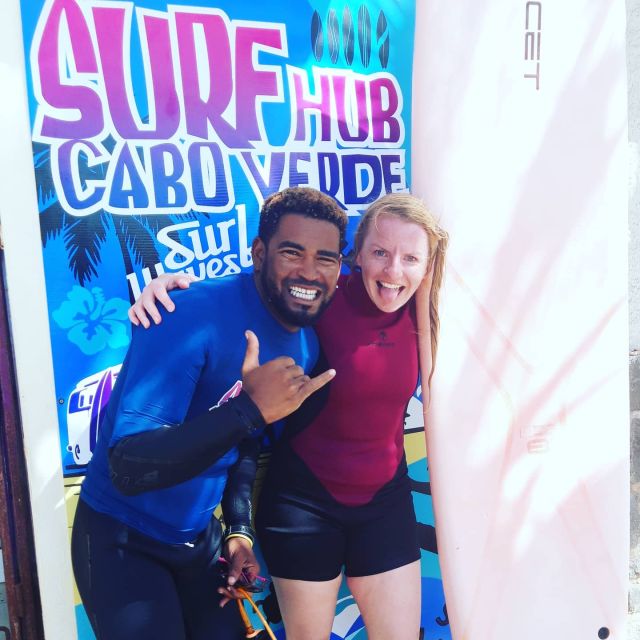
- Santa Maria Beach is the classroom: The surf school sits near the Main Square, and you walk across to a beginner-friendly section of beach.
- Dry-land practice comes first: You learn the pop-up and basic balance before heading into the water.
- The water lesson lasts one hour: Expect hands-on practice catching waves, with the instructor adjusting the session to your level.
- Private instruction can be worthwhile: A one-to-one lesson gives the instructor more time to correct your stance and timing.
- You must be able to swim: The activity is not suitable for non-swimmers, people with low fitness, or anyone with mobility impairments.
- Conditions matter: The school schedules lessons around high tide and cancels or adjusts them when the waves are not suitable.
Starting near Santa Maria’s Main Square
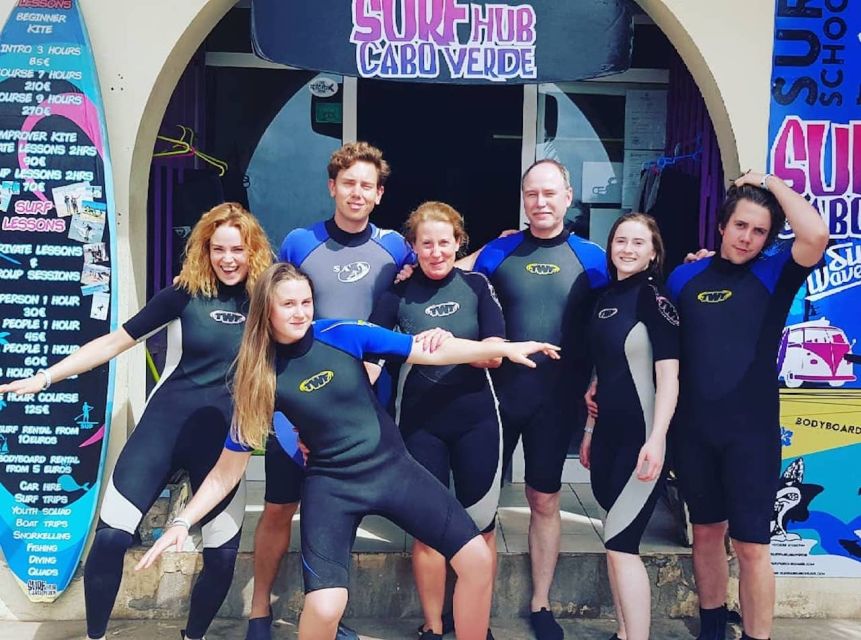
Your lesson begins at Surf Hub Cabo Verde on the ocean road in Santa Maria. Look across from Fabrica de Grelhados, beside the Main Square and Ocean Cafe. The location is central, but you still need to contact the provider on WhatsApp after booking because the start time changes from day to day.
That changing schedule is not a nuisance invented by poor planning. Surfing depends on the tide, wind, wave size, and the ability of the instructor to keep the session safe. You are asked to teach at high tide, so do not book this as an activity with a fixed morning or afternoon slot unless the provider has confirmed it.
At the surf school, you meet the instructor and collect a board, wetsuit, and surf shoes. Then you walk to Santa Maria Beach. The walk keeps the outing simple: no long vehicle transfer, no complicated beach logistics, and no need to carry your equipment across town on your own.
The provider offers instruction in English, Portuguese, Spanish, Italian, and French. That range is useful in a practical lesson, where a clear explanation of foot position or balance matters more than a long speech.
A few more things to do in Santa Maria Cape Verde worth a look
- Sal: Kizomba Group Class – Santa Maria, Cape Verde
★ 4.5 · 28 reviews - From Praia: Banana Plantation Tour and Cuscuz Workshop
★ 4.8 · 75 reviews - Sal Island: Catxupa Cooking Class with a local family
★ 4.7 · 72 reviews
Your first lesson on dry land
The session begins on the beach with an introduction for complete beginners or a quick recap for anyone who has surfed before. This is where you learn the basic movement that gets you from lying on the board to standing on it, often called the pop-up.
That early practice matters. Surfing looks simple when you watch someone glide across a wave, but the movement happens quickly. You need to place your hands correctly, bring your feet underneath you, keep your weight centered, and rise without throwing the board off balance.
The instructor also explains what to do once you are standing. You work on a stable stance and learn how to stay steady long enough to ride the wave instead of immediately falling off. For a first session, that is a better goal than chasing a long ride.
The instruction is adjusted to your skill level. A first-time surfer needs a calm explanation of the board and body position. Someone with experience may need help with timing, stance, or catching a wave more cleanly. The hour in the water is short enough to keep the lesson focused, but long enough to give you repeated attempts.
One hour in the water at Santa Maria Beach
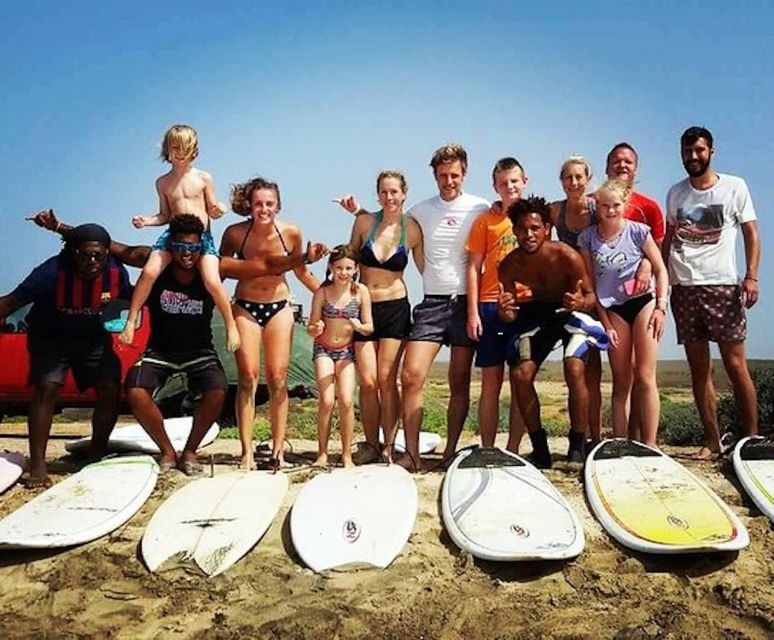
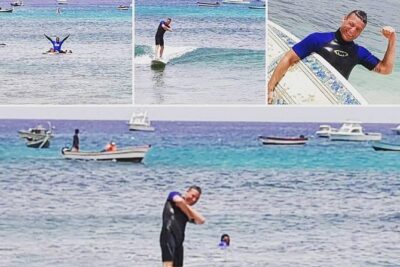
After the beach briefing, you head into the sea for the practical part of the lesson. The instructor takes you to the appropriate depth and stays involved as you try to catch waves.
A particularly useful part of the teaching is the immediate correction. If your technique is not right, the instructor can explain what went wrong and why, rather than simply telling you to try again. That small difference can help you understand the movement instead of repeating the same mistake.
For children or nervous beginners, close supervision is important. The instructor stays with the learner in the water and helps manage the first attempts. The lesson is not a free-for-all where everyone is handed a board and left to work it out alone.
The exact number of waves you catch will depend on your ability and the conditions. Surfing is not a guaranteed stand-up photo session. Some people may pop up quickly, while others spend much of the hour learning to position the board and rise at the right moment.
The school also makes clear that lessons take place only when the conditions are good for the customer’s level. That is a sensible policy. Small, manageable waves are useful for a beginner, while a more experienced surfer may need a different setup. If the sea is unsuitable, the lesson may need to be moved or adjusted.
Private or group instruction for different goals
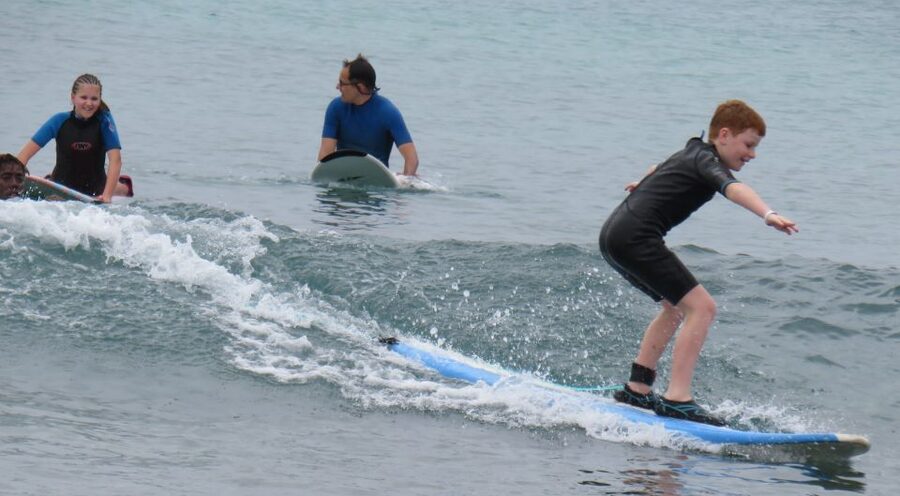
You can choose a private or group lesson. A private session is the stronger option if you want close feedback, feel unsure in the water, or are keen to progress quickly. It costs $40 per person, which is reasonable when the fee includes the instructor and all surf equipment for the lesson.
The value is not just the board rental. You also receive help with the parts that are difficult to teach yourself: where to position the board, when to start paddling, how to stand, and how to correct your balance. One-to-one time can make each attempt more useful.
A group lesson may suit friends or family members who want to try surfing together. It can also be a good choice if you are treating the activity as a light holiday adventure rather than a serious training session. The tradeoff is simple: the instructor’s attention is shared.
If your main aim is to get as many personal corrections as possible, book private instruction. If your priority is keeping the cost controlled while sharing the experience, a group option may make more sense. In either case, confirm the timing and format directly through WhatsApp.
Same island, a different sort of day:
- Santa Maria: Guided Snorkeling and Reef Tour
★ 4.2 · 809 reviews - Sal Island: Guided Full-Day Highlights Tour with Lunch
★ 4.7 · 414 reviews - 3-hour Catamaran Adventure on the waters of Sal Island
★ 4.7 · 349 reviews - Santa Maria: Sal Island Sea Turtle Watching Experience
★ 4.5 · 256 reviews
Equipment included, with one practical caveat
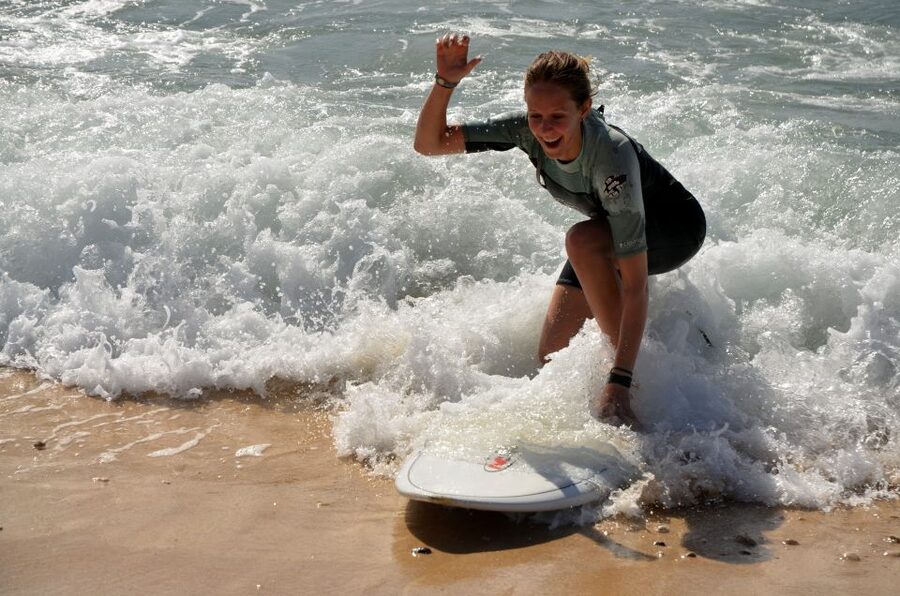
The price includes a surfboard and equipment for the duration of the lesson. That includes the wetsuit and surf shoes collected at the school. You do not need to arrange a separate board rental before reaching the beach.
The wetsuit can make the session more comfortable in the water, while surf shoes help protect your feet and improve grip. One pair of shoes may show more wear than ideal, so inspect the fit before leaving the school and speak up if they feel loose or uncomfortable. If you already own suitable reef or surf shoes, you may prefer to bring them.
Food and drinks are not included. Since the activity begins and ends at the meeting point near the Main Square, you can arrange refreshments separately before or after the lesson. Do not expect a meal break during the one-hour water session.
Who will get the most from this lesson
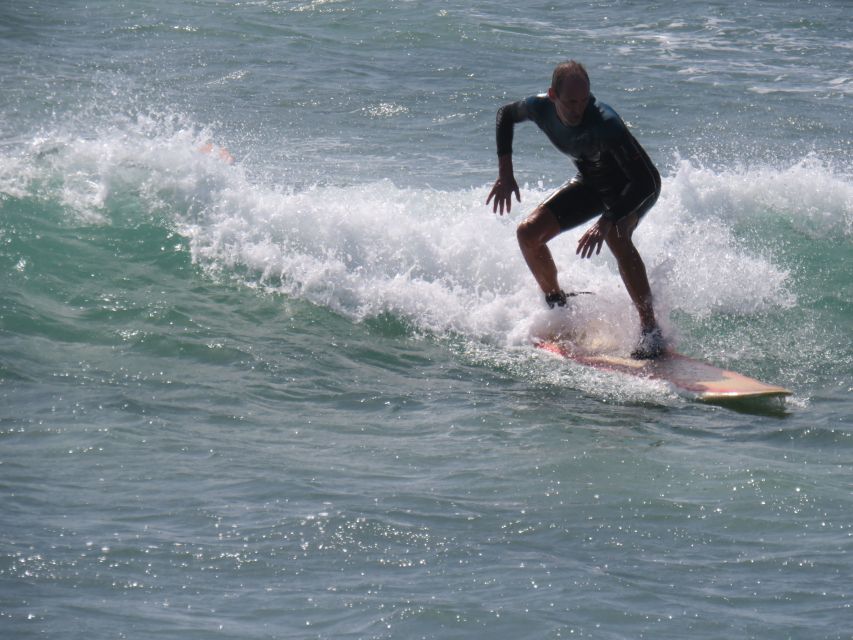
This is aimed at beginners and intermediate surfers. You do not need advanced skills, but you do need to swim and have enough fitness for an active hour in the sea.
The activity is not suitable for children under eight, people over 70, people with mobility impairments, non-swimmers, or anyone with a low level of fitness. There is also a stated maximum weight of 287 pounds, or 130 kilograms.
Those limits are worth taking seriously. Surfing involves getting on and off the board, moving through the water, and responding to changing waves. If you are unsure about your fitness or swimming ability, this is not the place to test the limits.
For families with older children, the lesson can be a good introduction. The instructor’s style is encouraging and patient, and careful correction helps a young learner understand the pop-up quickly. Still, the child must be comfortable in the water and able to follow instructions.
Intermediate surfers should set realistic expectations. This is a coached beach lesson, not a full-day technical clinic. It can help you improve your basics and receive useful tips, but the main structure remains an hour of guided practice.
Why the tide controls your day
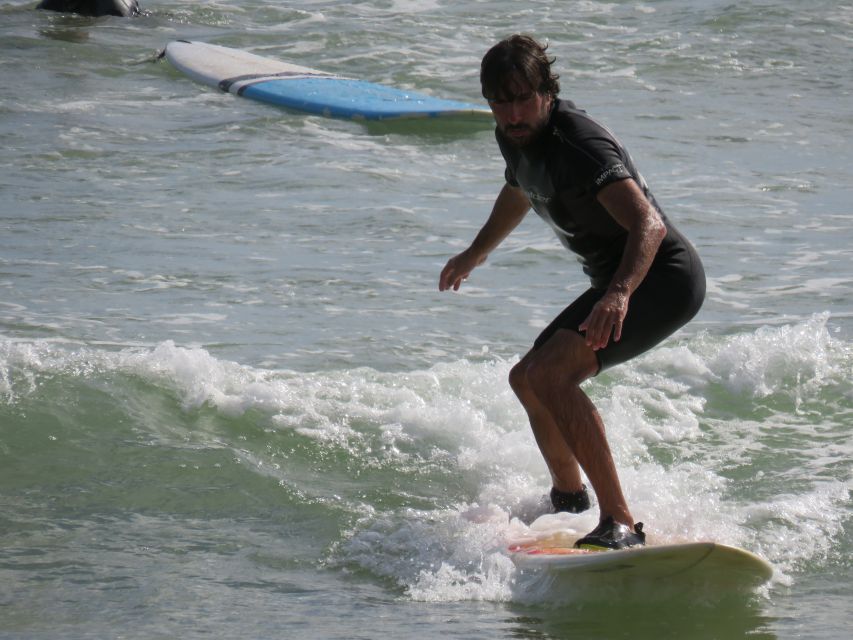
The school schedules lessons at high tide for safety and for suitable surf conditions. Since tide times change daily, you need to contact the provider after booking and agree on the start time.
This is the most important planning detail. Leave room in your itinerary rather than arranging a tight lunch booking, airport transfer, or another timed activity immediately afterward. The lesson ends back at the same meeting point, but the exact start can shift.
Weather also matters. The school runs the lesson when there are nice waves for your level. That means the activity may not happen exactly as first imagined if the sea is too rough, too flat, or otherwise unsuitable.
I see this as a strength rather than a weakness, provided you are flexible. A school that forces every session to run regardless of conditions would give you a less safe and less useful experience. The sensible approach is to monitor the sea and teach when the water matches your ability.
What the $40 price really covers
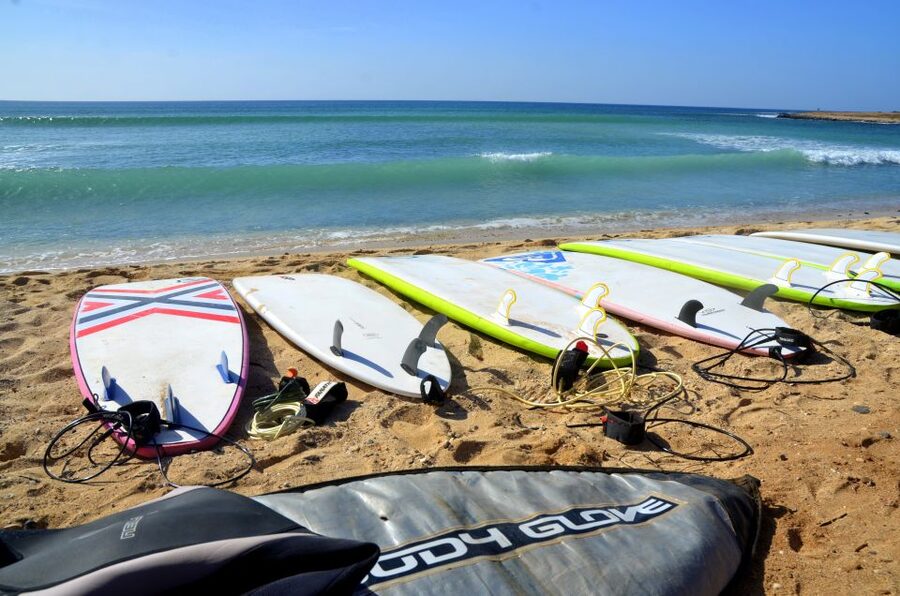
At $40 per person, the lesson sits in the affordable range for an activity that combines instruction, equipment, and beach time. You are paying for a qualified instructor as well as the board and clothing needed to take part.
The price makes the most sense if you are starting from zero. Renting a board alone would not show you how to stand, catch a wave, or correct a poor position. Here, the instruction is the main product, and the equipment removes another cost and another bit of planning.
Private tuition offers the best value for someone who wants concentrated help. A group session may be better value for friends who mainly want a shared outing. Check the exact arrangement when you contact the school, since the value of $40 depends partly on how much personal instruction you receive.
There are no food or drink costs built into the price, but the central meeting point makes it easy to handle those separately. The activity is compact enough to fit into a day in Santa Maria, as long as you allow for the tide.
What the strongest coaching looks like
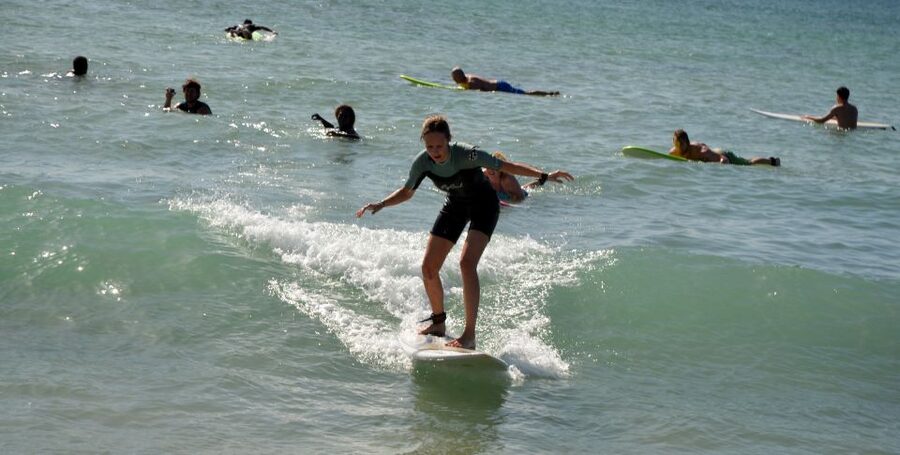
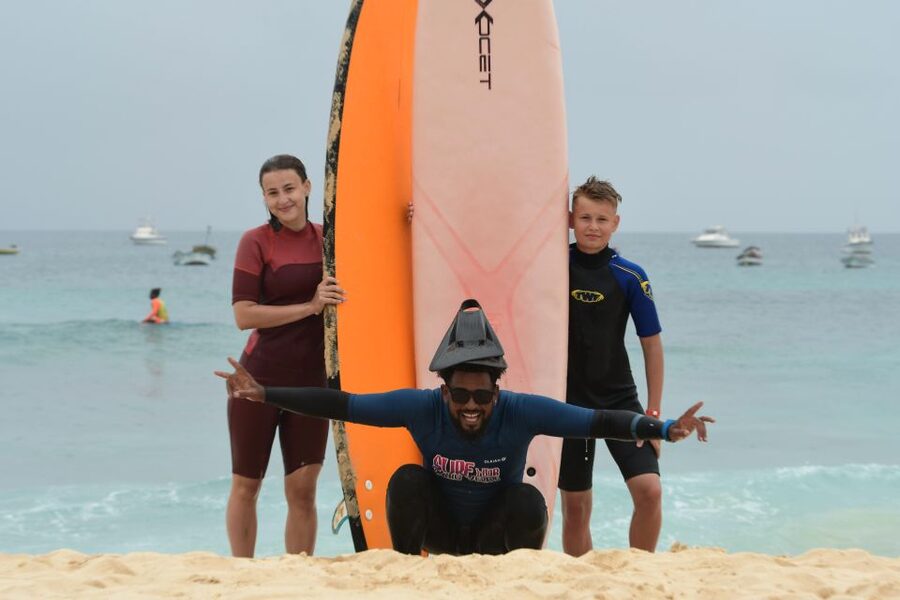
The most praised part of the experience is the instruction. Ruben is described as professional, friendly, patient, and encouraging. Those qualities are especially useful in surfing, where a beginner may need several attempts before the movement feels natural.
A good instructor does more than push your board into a wave. The useful work happens before and after each attempt: explaining the technique on land, watching your body position, and giving you a clear reason for a correction.
The lesson also seems well suited to solo participants. You do not need to bring a group to benefit from the activity. A private lesson can keep the focus on your own progress, and you can ask for help with the specific part of surfing that gives you trouble.
Communication with the provider is another practical positive. Contacting the school through WhatsApp lets you settle the start time around the tide and check any last details before you arrive.
A few things to plan around
The first limitation is the schedule. You cannot treat this like an attraction with a fixed departure every day. Keep your plans flexible and respond promptly when the provider contacts you.
The second is the physical demand. Even a beginner lesson requires swimming, balance, repeated effort, and comfort in the sea. You may spend more time falling, paddling, and resetting than standing on the board.
The third is equipment condition. Boards and wetsuits are supplied, but surf shoes may show wear. Check that everything fits properly before walking to the water.
Finally, do not confuse a beginner-friendly beach with guaranteed easy surfing. Conditions change, and the school will decide whether the waves are right for your level. The better attitude is to see the lesson as a chance to learn the foundations, not a promise that you will ride perfectly.
Should you book the Sal surf lesson?
Book it if you want a practical introduction to surfing in Sal, can swim, and are willing to organize your day around the tide. The central meeting point, included equipment, multilingual instruction, and one-hour water session make this a straightforward choice for beginners.
I would favor a private lesson if you are nervous, traveling alone, or want direct coaching from an instructor such as Ruben. A group lesson suits friends who want to share the cost and the fun.
Skip it if you need a fixed start time, have limited mobility, are not comfortable swimming, or want a guaranteed surf session regardless of weather. For everyone else, $40 is a fair price for a focused lesson that gives you a real chance to learn the pop-up, find your balance, and catch your first wave at Santa Maria Beach.
FAQ
Where does the surf lesson start?
It starts at Surf Hub Cabo Verde on the ocean road in Santa Maria, across from Fabrica de Grelhados, near the Main Square and Ocean Cafe.
How do I confirm the start time?
Contact the provider through WhatsApp after booking. The start time changes each day because lessons are scheduled around high tide and safe conditions.
How long is the lesson?
The water portion lasts one hour. Before that, you receive a beach introduction or recap and practice the technique on dry land.
Is equipment included?
Yes. A surfboard and the required equipment, including a wetsuit and surf shoes, are provided for the duration of the lesson.
Do I need to know how to surf already?
No. The lesson is suitable for complete beginners as well as intermediate surfers looking for additional tips.
Do I need to know how to swim?
Yes. Participants must be able to swim, and the activity is not suitable for non-swimmers.
Is the lesson available in languages other than English?
Yes. Instruction is available in English, Portuguese, Spanish, Italian, and French.
What happens if the weather or waves are poor?
The lesson takes place when conditions are good and the waves suit your level. The provider may adjust the timing or activity when conditions are not suitable.
Just added in Santa Maria Cape Verde
- Boa Vista Sunset Dinner with Live Music★ 4.4 · 8 reviews
- Boa Vista Full Day 4×4 Island Tour with Beachfront Lunch★ 3.5 · 4 reviews
- Ilha Do Sal: Snorkeling with Local Guide★ 4.1 · 34 reviews
- Espargos: Guided Sal Island City Tour★ 4.2 · 39 reviews
- Sal Island, Salinas, Buracona and Lemon Shark★ 4.8 · 33 reviews
- Sal island: Santa Maria city tour, street art and tapas★ 4.8 · 37 reviews
- Santa Maria: Guided Coastal Hike & Monte Leão Sunset★ 4.5 · 37 reviews
- Sal: All inclusive Salt Lake, Natural pools and Shark Bay★ 4.7 · 39 reviews