
Reviewed · WORKSHOPS
Sal: Kitesurfing Lessons
Sal’s trade winds make it a natural place to learn kitesurfing, and this two-hour lesson gets you right into the basics: handling the kite, using its safety systems, and working with the water. You need to swim, and you should expect a real lesson rather than an instant ride across the bay.
I like the private-group format, which lets the instructor match the pace to your nerves and experience. I also like that the equipment, hotel pickup, and drop-off are included, so you can focus on the kite rather than the practical fuss.
The main catch is simple: two hours may not be enough to stand on the board. One student was told that reaching that stage could take 9 to 10 hours of lessons, and rougher waves can make the first session harder for a complete beginner.
Key points at a glance
- Start on land, then move into the water: You first learn with a small training kite before handling the larger kite.
- Body dragging comes before board riding: You learn how to move safely through the water without the board.
- Swimming is essential: You must be comfortable in the water to take part.
- A four-lesson path is available: Later sessions build toward water starts and short rides in both directions.
- Equipment and transfers are included: Hotel pickup, drop-off, and kite gear are covered.
- Private instruction in five languages: You can request English, Portuguese, French, Italian, or Spanish.
Sal’s wind is the real classroom
Kitesurfing looks graceful from the beach. From the water, it is a busy little puzzle involving wind direction, kite control, body position, safety lines, and timing. This lesson gives you a sensible way into that puzzle, with an IKO-qualified instructor beside you.
Sal is well known for its strong wind, which is exactly what brings kitesurfers here. It is also the part that demands respect. The wind gives the kite power, but it can make a first attempt feel lively, especially when waves are running. You are not simply handed a board and sent off.
The two-hour format is best understood as an introduction or one step in a longer course. If your goal is to ride independently, plan for more than one booking. The supplied four-lesson progression ends with independent practice, but actual progress depends on your control, comfort in the water, and the day’s conditions.
A few more things to do in Santa Maria Cape Verde worth a look
- Sal: Surf Lesson
★ 4.7 · 48 reviews - Sal: Kizomba Group Class – Santa Maria, Cape Verde
★ 4.5 · 28 reviews - From Praia: Banana Plantation Tour and Cuscuz Workshop
★ 4.8 · 75 reviews
Meeting in Santa Maria by the ocean
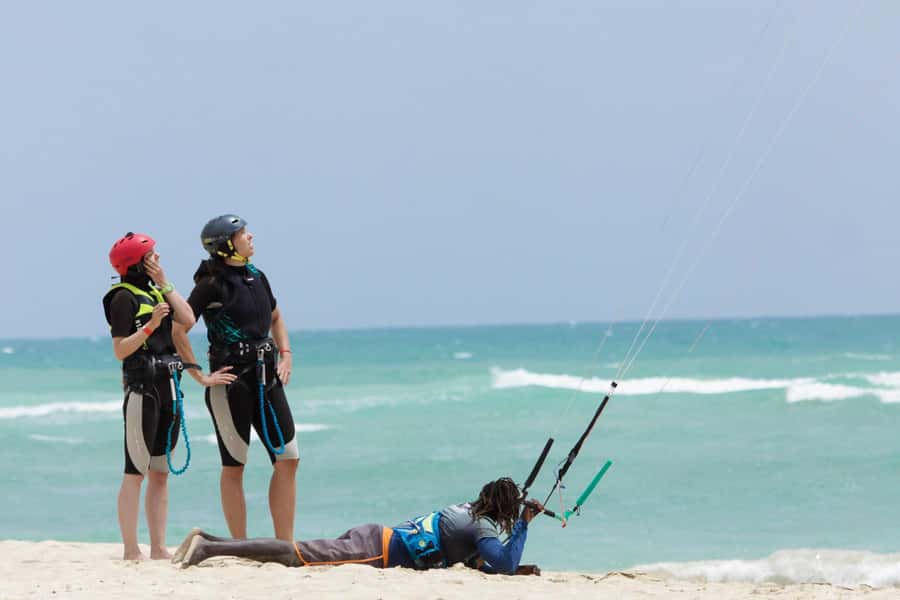
The meeting point is in Santa Maria, on the ocean road, across from Fabrica de Grelhados and close to the Main Square and Ocean Cafe. Hotel pickup and drop-off are included, which is helpful if you are staying outside the immediate center.
You need to contact the provider through WhatsApp after booking. The start time changes from day to day, so do not treat the time shown during booking as the final word. Confirm it directly using the number on your voucher.
That changing schedule is practical rather than inconvenient. Wind and water conditions matter for a lesson like this, and a flexible start can help the instructor choose a better window. Still, keep your phone available and allow some room in your day.
The activity is offered as a private group. That does not necessarily mean one instructor for one person, but it does mean you are not joining a large public class. This matters because beginners often need repeated explanations and extra time with the kite.
First lesson: controlling the training kite
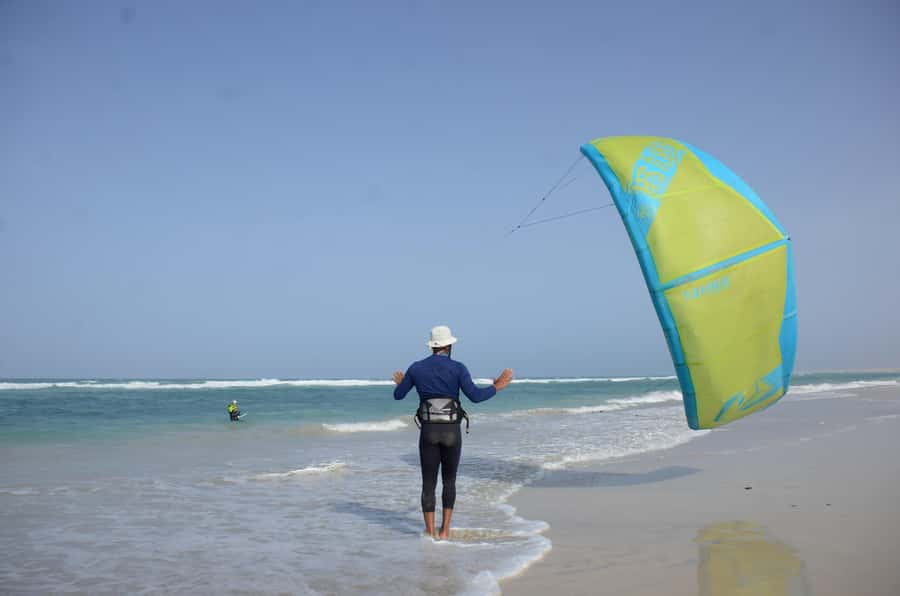
The Intro Kite session begins on land with a smaller training kite. This is where you learn how the kite responds when you move the control bar, how wind affects its position, and how to keep it from pulling you off balance.
This stage may look basic, but it is the part that makes the water session safer. You need to understand how to steer, when to reduce power, and how to bring the kite under control before you work with the larger setup.
The instructor then introduces the main kite and its safety systems. You practice on land before entering the water. Pay attention here, even if you have flown a kite before. A kitesurfing kite is powerful, and the safety release is not a minor technical detail.
The pace is meant to be adjusted to your level. Someone who has tried kitesurfing before may move through the land work more quickly, while a first-timer may need more repetition. The private format helps, but it does not remove the need for patience.
Body dragging teaches you to move without a board
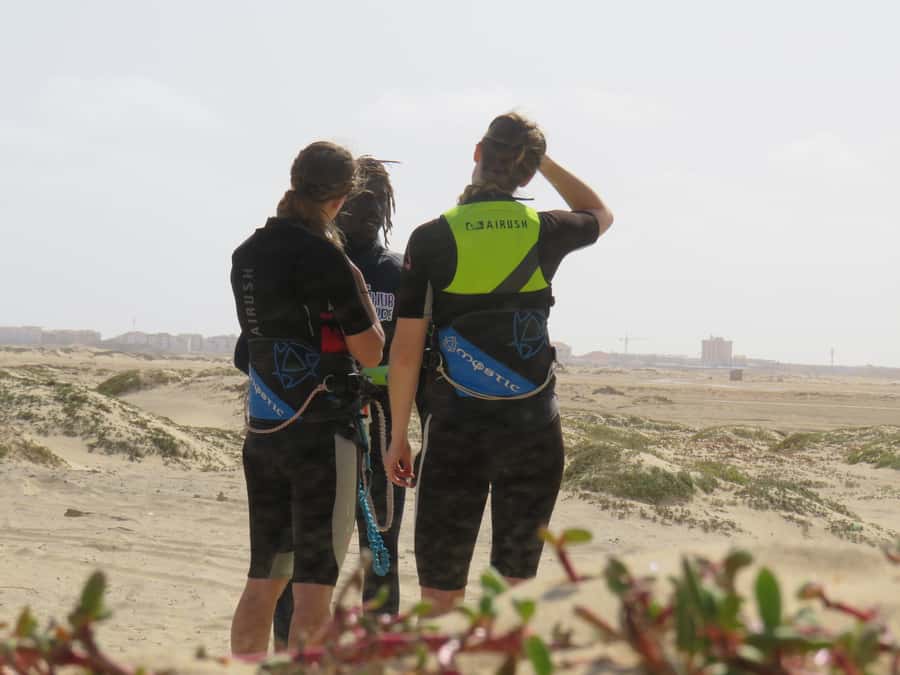
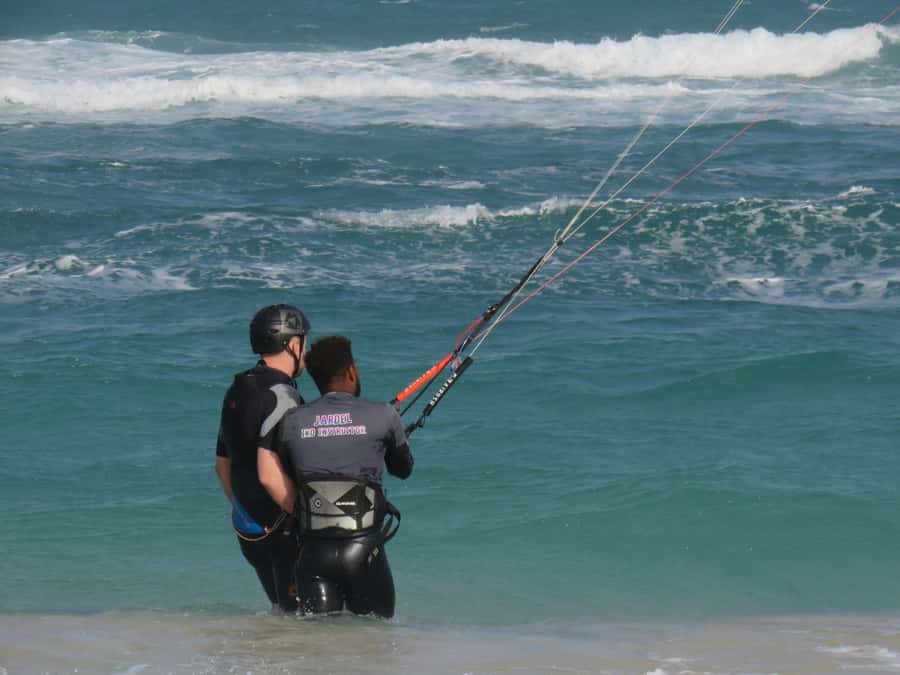
Once you enter the water, the first major skill is body dragging. You use the kite to pull your body through the water without standing on the board. This teaches you how to move away from shore, return toward shore, and relaunch the kite if it falls into the water.
Body dragging is not a consolation prize. It is a key safety skill. If you lose the board, you need to know how to control the kite and move yourself through the water. You also need to learn how to get back to the beach without panicking.
The instructor enters the water with you and demonstrates the techniques. You practice going upwind and downwind, changing direction, and launching the kite from the water. These are practical skills that make later board work possible.
For a complete beginner, this can be the most demanding part of the lesson. You are handling the kite while reading the wind and keeping your body in the right position. If waves are larger, you may spend much of the session working on control rather than progressing to the board.
Same island, a different sort of day:
- Santa Maria: Guided Snorkeling and Reef Tour
★ 4.2 · 809 reviews - Sal Island: Guided Full-Day Highlights Tour with Lunch
★ 4.7 · 414 reviews - 3-hour Catamaran Adventure on the waters of Sal Island
★ 4.7 · 349 reviews - Santa Maria: Sal Island Sea Turtle Watching Experience
★ 4.5 · 256 reviews
The second lesson builds direction and recovery skills
The second stage is water-based and continues the body-dragging work. You learn to travel toward the wind, known as going upwind, and away from it, known as going downwind.
You also practice water relaunches. A kite that falls onto the water needs to be brought back into the air in a controlled way. The exact technique depends on its position and the wind, so repetition matters more than a quick explanation.
Changing direction while body dragging is another useful step. It helps you understand how the kite moves through the wind window and how your body follows its pull.
If you book only a single two-hour session, you may reach part of this material rather than complete it all. The instructor has to judge your control and safety before moving on. That is the right approach, even if it feels slower than expected.
The third lesson adds the board
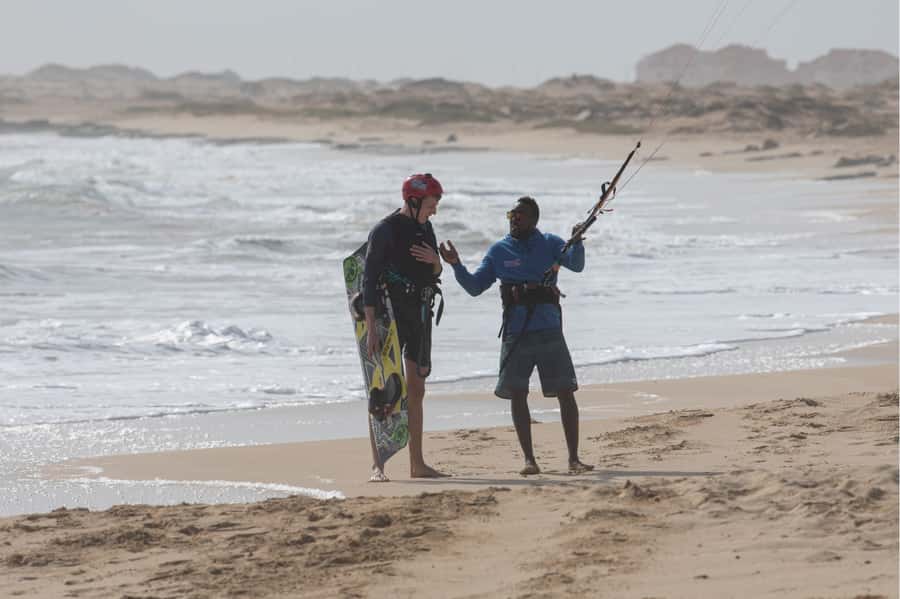
The board enters during the third stage. You first body drag while holding the board in one hand and controlling the kite with the other. This sounds awkward because it is awkward. You are managing two pieces of equipment while keeping track of the wind.
The aim is to make the board feel familiar before you try to stand on it. You learn how to position it, bring your feet into place, and prepare for a water start.
The water start is the moment many beginners are waiting for. You use the kite’s pull to rise onto the board and begin moving. It is not the same as simply standing up on a wakeboard or riding a small wave. The kite supplies the power, and the timing between kite, body, and board has to match.
Do not judge the lesson only by whether you stand. Getting the board on your feet, keeping the kite under control, and completing part of a water start are useful progress. The first attempt often ends with a splash, which is normal for this sport.
The fourth lesson aims at short independent rides
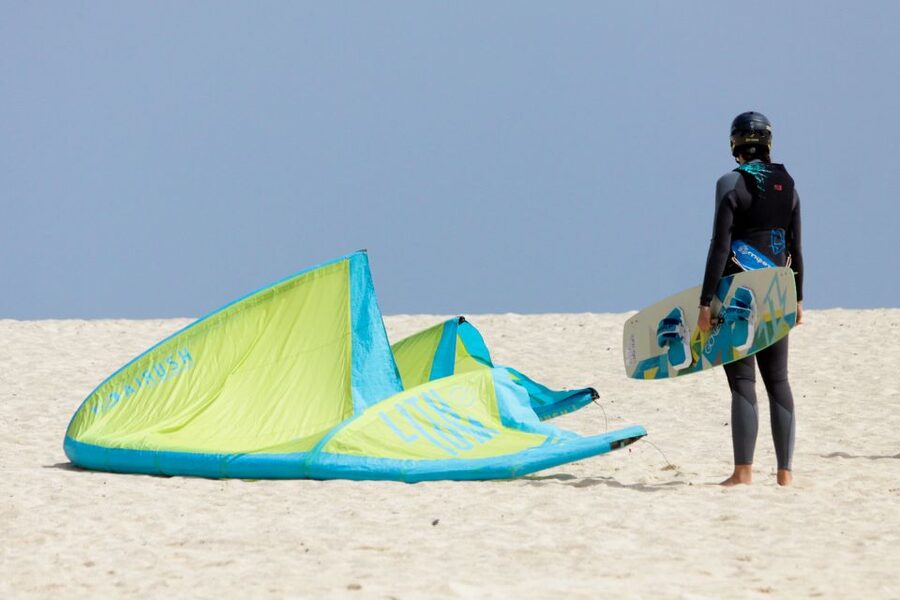
By the fourth stage, you practice repeated water starts and try to ride a little in each direction. The goal is to become independent enough to rent equipment and continue practicing.
That goal is possible for some students, but it should not be treated as a promise after four two-hour sessions. Fitness, previous board-sport experience, wind strength, waves, and the instructor’s assessment all affect the pace.
A note from one booking makes this point clearly: a student expected to ride properly by the end of the first lesson but was told that 9 to 10 hours could be needed. That is an important expectation to set before you pay. The lesson is a good first step, not a guaranteed shortcut to independent kitesurfing.
What the $141 price really covers
The listed price is $141 per person. That is not a cheap casual beach activity, but the value improves if you use the included parts: instructor time, kite equipment for the lesson, and hotel pickup and drop-off.
You are not paying only for a few minutes of standing on a board. Much of the useful teaching happens before that, including kite control, safety systems, water movement, relaunching, and returning to shore.
The private-group setup also affects the value. You are not lost in a large class, and the instructor can spend time on your technique. If you are booking as a couple or small group, confirm how the private arrangement is organized and how much individual instruction each person receives.
Food and drinks are not included. Since the activity lasts two hours, plan those separately, especially if you are being collected from your hotel and taken straight to the beach.
What can make the lesson harder
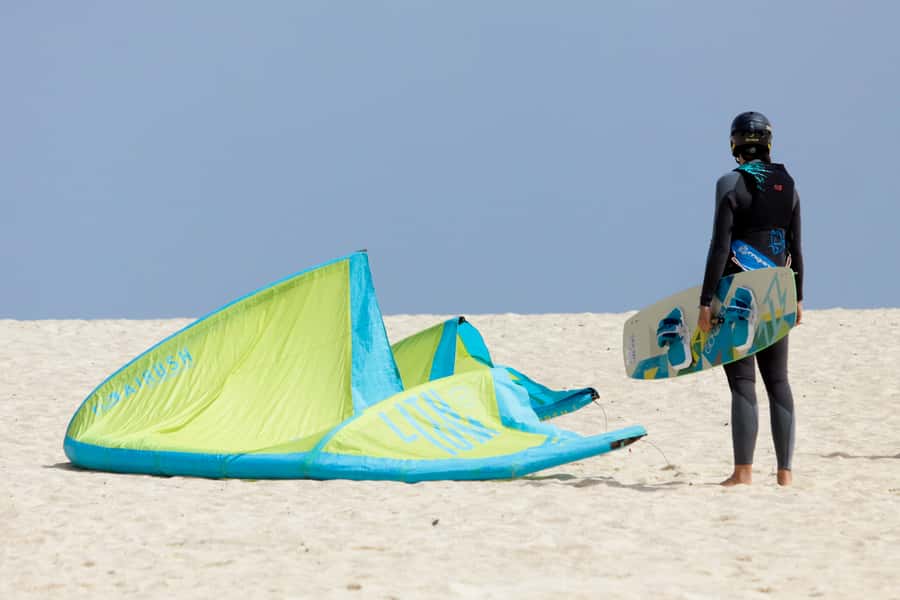
The biggest variable is the sea. One participant found the waves a little much for a total beginner. That does not mean the lesson is unsuitable, but it does mean you should arrive ready for a physical session.
You must be a swimmer. The activity is not suitable for non-swimmers or people with mobility impairments. You will be handling equipment in the water, moving with the kite, and practicing recovery skills, so basic water confidence is essential.
Kitesurfing also takes coordination. You may need to steer the kite while watching its position, listening to instructions, and keeping your body aligned. If you are expecting a relaxed beach pastime, this may feel more intense than planned.
On the positive side, the instructor can adjust the pace. A friendly and kind teaching style was specifically praised, along with a lesson described as fun and well explained. The right attitude helps. Listen closely, accept that early attempts may be messy, and treat every controlled movement as progress.
Languages, instructors, and teaching style
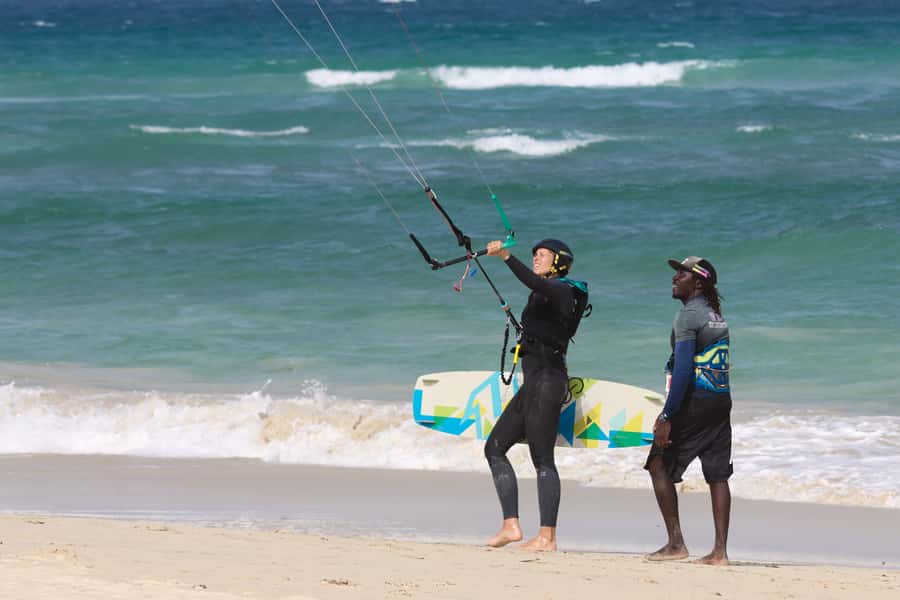
Instruction is available in English, Portuguese, French, Italian, and Spanish. That gives you a good chance of receiving safety instructions in a language you understand well.
The provider is Surf Hub Cabo Verde. Amy and the team have been singled out for being friendly and helpful, which is useful context for a sport where clear communication matters. No individual instructor is guaranteed, so confirm who will teach your session when you arrange the start time.
The instructor is IKO qualified. That is relevant because the lesson includes more than basic kite handling. It covers safety, water recovery, body dragging, and controlled progression toward the board.
Who should book this Sal lesson
I would recommend it most strongly to a confident swimmer who wants to try a demanding new sport and does not need instant results. It also suits someone who has already tried kitesurfing and wants structured help with water starts or kite control.
It is a good match if you value a private group, want equipment supplied, and appreciate hotel transfers. The multilingual instruction is another practical advantage.
I would be more cautious if your holiday schedule allows only one short activity and your main aim is to ride independently. You may learn a great deal in two hours, but you may still be at the kite-control or body-dragging stage when the session ends.
If you are a total beginner, ask about current wave conditions when confirming your time. A calmer session may make the first lesson more comfortable, while stronger conditions may suit someone with prior experience.
Booking details that matter
You can cancel up to 24 hours before the activity for a full refund. The reserve-now, pay-later option lets you hold a place without paying immediately, which is useful while you are arranging the rest of your Sal plans.
Confirm the final start time by WhatsApp after booking. The provider needs to coordinate it because conditions and daily timing vary.
Bring the right mindset rather than expecting a guaranteed ride. The most valuable part of the first session may be learning how to control the kite and get yourself safely back to shore.
Should you book it?
Book this lesson if you want a proper introduction to kitesurfing rather than a quick photo opportunity. The IKO-qualified instruction, private format, equipment, and transfers make the $141 price easier to justify, especially if you plan to continue with later sessions.
Book it with realistic expectations. Two hours can give you a strong start, but it may not get you riding independently. Confident swimmers who enjoy a challenge should find it rewarding, while anyone seeking an effortless beach activity should choose something gentler.
FAQ
How long does the kitesurfing lesson last?
The listed activity duration is two hours. A full progression toward independent kitesurfing may require several lessons.
What is included in the price?
Hotel pickup and drop-off are included, along with kitesurfing equipment for the duration of the lesson.
Is food or drink included?
No. Food and drinks are not included.
Do I need to know how to swim?
Yes. Participants must be able to swim, and the activity is not suitable for non-swimmers.
Can a complete beginner take part?
Yes. The Intro Kite option is designed for first-time participants and begins with basic kite control on land.
Will I ride the board during the first lesson?
Not necessarily. The first lesson focuses on kite control, safety, body dragging, and water recovery. Board work appears in the later stages of the course.
How many lessons may I need to kitesurf independently?
The course outline uses four stages, but the time needed varies. One participant was told that 9 to 10 hours of lessons could be needed to reach proper independent riding.
What languages are available?
Instruction is available in English, Portuguese, French, Italian, and Spanish.
Where do I meet the instructor?
The meeting point is in Santa Maria on the road by the ocean, across from Fabrica de Grelhados, near the Main Square and Ocean Cafe. You should contact the provider through WhatsApp after booking to confirm the start time.
Just added in Santa Maria Cape Verde
- Santa Maria: Sea Turtle Watching Experience on Sal Island★ 4.0 · 9 reviews
- Santa Maria: Half-Day Diving Trip in Sal with Pickup★ 4.7 · 6 reviews
- Santa Maria Half Day or Full Day Car Rental, Pedra de Lume★ 3.6 · 8 reviews
- Sal: Turtle Nesting with professional local guide★ 4.7 · 18 reviews
- Santa Maria: Scenic Segway Tour with Guide★ 4.7 · 11 reviews
- Sal: Romantic Sunset Escape with Wine and Roundtrip Transfer★ 4.3 · 3 reviews
- Sal: Small Group Island Tour & Lunch with a Local Family★ 4.4 · 3 reviews
- Sal Island: Two Hours Self-Drive Tour around Santa Maria★ 4.4 · 16 reviews
Workshops, compared.




Mindelo Cultural: city tour with live music and dance class
Read our review →Browse the lists this tour appears in