
Reviewed · SEA TURTLE WATCHING
Turtle watching in Boa Vista Island
On Boa Vista, the main event is wonderfully simple: you wait in the dark for a sea turtle to come ashore, dig a nest, lay roughly 65 to 100 eggs, cover them, and return to the sea. It is a slow, careful wildlife encounter, not a show arranged around a timetable.
I like the chance to see an ancient species carrying out its natural routine, and I like that the guide explains the process before anyone approaches the beach. The night setting, the quiet walk, and the sight of the turtle camouflaging her nest give this trip a real sense of purpose. The main drawback is that pickup can run late, and the ride to the beach follows a dark, bumpy track.
Key points to know before booking
- Turtle season runs from July through the end of September, when nesting turtles come onto Boa Vista’s beaches.
- Pickup is scheduled for 7 p.m., followed by a 4×4 ride to the beach.
- Waiting is part of the experience, since a turtle may stay away if she senses danger.
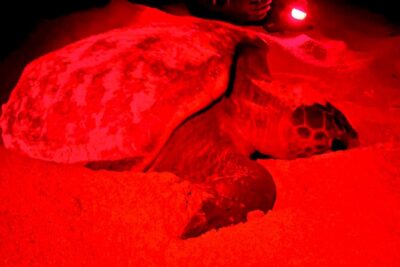
- You may watch the full nesting process, from digging the hole to covering the eggs and returning to the water.
- The price is $82 per person, including 4×4 transport and a baby seat.
- English, Italian, Portuguese, Spanish, and French are available for the tour.
Why Boa Vista’s turtle night matters
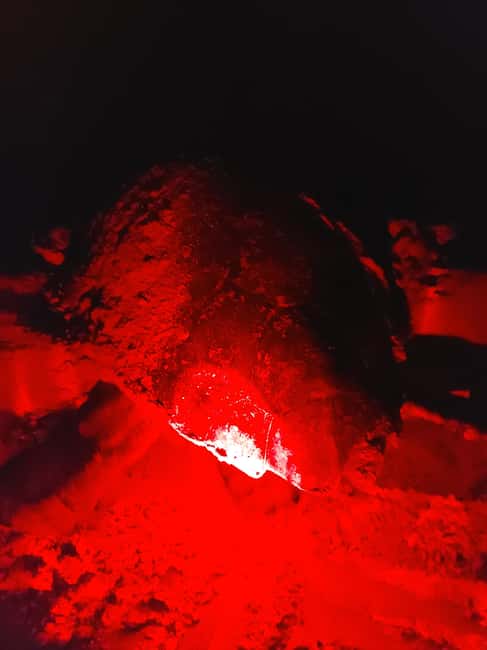
I like wildlife outings best when the animal sets the schedule. That is exactly the case here. You do not arrive to find a turtle placed in view at a fixed time. You reach the beach, settle into the darkness, and wait for a female turtle to decide that the shore feels safe.
Boa Vista is known for its nesting turtles during the main season from July through September. This trip gives you a close look at one of the oldest living species in the world while keeping the focus on its own behavior. The turtle is not performing for you. She is trying to find a safe place to reproduce.
That difference matters. You may spend time waiting with little to see, but the wait is part of the conservation lesson. Turtles are wary, and movement, noise, or a sense of danger can stop one from coming ashore. A patient group has a much better chance of seeing the full process.
The experience has a strong emotional pull without needing much decoration. A turtle moving slowly up a dark beach, testing the sand, and preparing a nest is a memorable sight on its own. I would choose this over a more polished wildlife show if your aim is to see an animal behaving naturally.
More Turtle Watching in Boa Vista
- Boa Vista: Shark, Turtles, Cave, Sandboarding & Tasting Tour
★ 4.8 · 328 reviews - Boavista: Turtle, Shark, Santa Monica, Sandboard & Tasting
★ 4.7 · 228 reviews - Boa Vista: Beautiful Beaches, Turtles & Djeu Island Snorkel
★ 4.6 · 100 reviews
What happens after the 7 p.m. hotel pickup
The evening begins with pickup at your hotel at about 7 p.m. You then travel by 4×4 toward the beach. The vehicle matters here because the route includes a dark and bumpy track, so this is not a smooth coach excursion.
You should expect the pace to feel relaxed rather than tightly timed. One experience included a wait of around 45 minutes because the vehicle arrived late, and the booking details initially caused confusion at pickup. That delay did not prevent the trip from going ahead, but it shows why you should keep your phone, confirmation, and booking details close at hand.
The relaxed pace can be part of island life, but it is still fair to treat timing as a possible weak spot. If your pickup is late, ask the hotel staff or the tour contact for an update rather than assuming the outing has been canceled. The 7 p.m. time is the planned pickup, not a guarantee that the vehicle will arrive to the minute.
Once you are in the 4×4, the journey heads toward the beach. The ride is part of the practical cost of the outing, since reaching a remote nesting area after dark would not be simple without a suitable vehicle. A baby seat is included if you need one, though children under two are not accepted.
The beach briefing keeps the turtle safe
After reaching the beach, the guide gives an introduction to the turtles, explains what you are about to see, and sets out the correct procedure. This is an important part of the evening, not filler before the main event.
Your behavior affects the animal. The turtle may turn back if she feels threatened, so the group needs to stay quiet and follow the guide’s directions. The guide’s job is to help you see enough without turning the nesting beach into a noisy viewing area.
The guide may also explain local conservation work and the role of monitoring nests. One guide described how conservation teams watch the eggs and check them around the time young turtles are due to return to the sea. You may also hear local context about the island and the threats that have affected its turtle population.
The experience is offered in English, Italian, Portuguese, Spanish, and French. That language range is useful during a wildlife outing, where clear instructions matter. Ask questions during the briefing, since the beach itself should remain quiet once a turtle arrives.
Waiting in the dark is part of the itinerary
The waiting period is the part you need to understand before booking. There is no fixed arrival time for the turtle, and there may be a stretch when nothing appears to happen. That is not a flaw in the animal or the trip. It is the price of watching wildlife on its own terms.
You might find the waiting peaceful, especially after the drive and the guide’s explanation. You might also find it hard if you expect a quick, guaranteed sighting. Bring a jacket, as the evening can feel cool, and use biodegradable insect repellent. Insects are specifically noted as a concern, so anyone with insect allergies should consider another activity.
Wear comfortable shoes. You may walk quietly from the vehicle to the place where the turtle is found, and the route may be uneven. Avoid footwear that makes you unstable or encourages you to hurry.
A little patience pays off. Once a turtle has come ashore and feels secure, the whole scene becomes easier to follow. Your group may first see her moving along the beach and searching for a suitable spot. The guide will help you understand each stage without disturbing her.
More wildlife trips in Boa Vista:
- Guided turtle tour in a group in Boa Vista
★ 5.0 · 67 reviews - From Boa Vista: Turtle Watching and Nesting Evening Tour
★ 4.8 · 49 reviews - 4×4 Tour – Sandboard, Shark & Green Turtle’s Bay, Snacks & Drinks
★ 5.0 · 44 reviews - Boa Vista: 3h Turtle Watching Expedition
★ 4.7 · 39 reviews
Watching the nest take shape
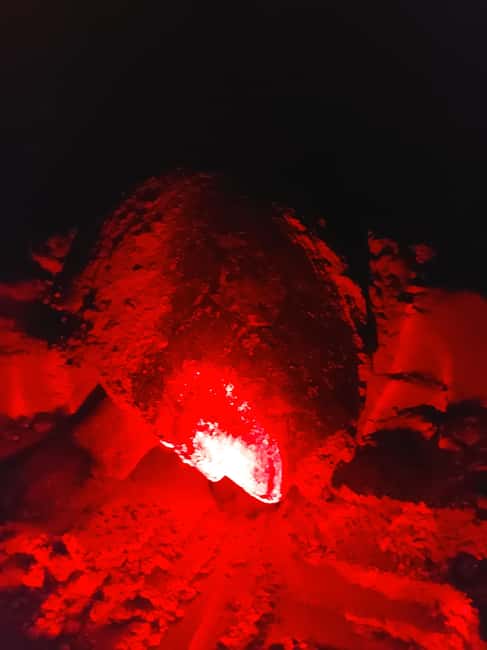
The turtle does not simply arrive and start laying eggs. She first looks for a good place to make the nest. If the ground does not feel right, she may move on and try another spot.
When she chooses a location, she prepares the sand and begins to dig. This is a slow process, and you will see why silence matters. She needs time to make the hole deep and secure enough for the eggs.
The act of digging is one of the most interesting parts of the evening because it shows how much work goes into a nest before the eggs appear. It also gives you a better sense of the turtle as an animal making decisions, not just a large shape moving across the sand.
The guide’s briefing helps you read these actions. Without that context, it would be easy to assume that the turtle was ready to lay eggs as soon as she reached the beach. Instead, you get to watch her search, prepare, and adjust her plan.
The egg-laying moment and return to the sea
When the nest is ready, the turtle begins laying her eggs. The stated number is usually between 65 and 100. This is the quiet center of the experience, and your group should remain still and let the guide manage the viewing.
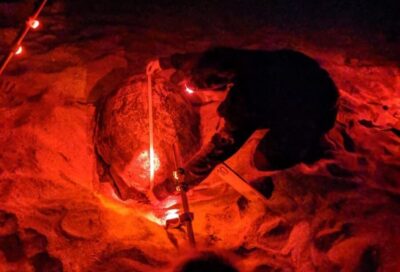
After laying the eggs, she covers the hole with sand. She then works to camouflage the site before heading back toward the sea. That final part is easy to miss if you are focused only on the eggs, but it is vital to the turtle’s natural routine.
Watching her cover the nest gives the evening a strong ending. She is not simply leaving a visible pile of eggs behind. She is trying to conceal the nest before returning to the water. Once she starts back down the beach, the group eventually returns to the vehicle and then to the hotel.
The timing of the return depends on when the turtle arrives and how long the process takes. No exact tour length is provided, so do not schedule an important late-night plan immediately afterward. Keep the rest of the evening open.
Is $82 a fair price?
At $82 per person, this is not a cheap evening outing, but the price includes the 4×4 vehicle and the wildlife guiding that make the experience possible. You are paying for transport to a beach after dark, a guide who explains the nesting process, and the chance to watch a protected natural event.
The value depends on what you want from Boa Vista. If you want a fast activity with a guaranteed start and finish, the price may feel high, especially if pickup is delayed or the turtle takes time to appear. If you value rare wildlife encounters and are happy to wait, the cost is easier to justify.
The strongest value comes from the full sequence. You are not just driven to a beach and shown a turtle. You may see the animal arrive, choose a nest site, dig, lay dozens of eggs, fill the nest, hide its location, and return to the sea.
The experience also includes information about conservation. That adds meaning without changing the simple nature of the outing. I would see the $82 as reasonable for someone who has marked turtle nesting as a main Boa Vista goal, but less appealing to someone who is only looking for a general evening tour.
What to bring and who should skip it
Keep your packing simple:
- Comfortable shoes for the beach and uneven ground
- A jacket for the evening
- Biodegradable insect repellent
- Your booking confirmation and phone
- A baby seat request if needed
This is a good fit for adults, older children, and anyone with patience for wildlife watching. It suits you best if you can remain quiet, accept uncertain timing, and handle a bumpy 4×4 ride.
It is not suitable for children under two, wheelchair users, or people with back problems. The rough track and beach access make the physical demands clear. People with insect allergies should also avoid it.
The activity is not built around comfort or speed. There is no promise of a smooth road, quick turtle sighting, or fixed finish time. The reward is a natural event that cannot be staged without losing the very quality that makes it special.
Handling the practical details
The tour offers reserve and pay later booking, which is useful if your plans are still moving around. You can also cancel up to 24 hours in advance for a full refund, according to the stated policy.
Pickup communication deserves extra care. One evening included confusion when the vehicle was late and the names were not initially on the list, even though the booking confirmation was available on a phone. Carry that confirmation and make sure you know who to contact if the 7 p.m. pickup does not arrive promptly.
The tour is operated by Spot Travel Tours. No guide name is provided, though the guide on one outing was described as friendly and worked hard to help the group. The operator supports several languages, so choose the language you need when booking.
Should you book the Boa Vista turtle watch?
Book it if you want a once-in-a-lifetime wildlife moment and understand that nature controls the timetable. The most rewarding part is not just seeing a turtle. It is watching the whole nesting routine, from the first cautious movement up the beach to the final return to the sea.
Think twice if you dislike waiting, struggle with bumpy roads, or need exact timing. Also skip it if you have an insect allergy, back problems, or mobility needs that make a sandy beach and 4×4 track impractical.
For the right person, this is one of Boa Vista’s most meaningful night activities. Bring warm clothing, quiet patience, and realistic expectations. If the turtle arrives, you may see an ancient animal complete a task it has performed for generations, with no stage, script, or shortcut.
FAQ
When is turtle watching available in Boa Vista?
The turtle season runs from July through the end of September.
What time is hotel pickup?
Pickup is scheduled for 7 p.m.
How does the group reach the beach?
The group travels by 4×4 vehicle, which is included in the price.
What will I see on the beach?
You may see a turtle come ashore, search for a suitable nesting site, dig a hole, lay between 65 and 100 eggs, cover the nest, camouflage it, and return to the sea.
Why might I have to wait?
Turtles are easily frightened. If the turtle does not feel safe, she may not come onto the beach, so the group must wait quietly.
What should I bring?
Bring comfortable shoes, a jacket, and biodegradable insect repellent.
Is the activity suitable for everyone?
No. It is not suitable for children under two, people with back problems, wheelchair users, or people with insect allergies.
Just added in Boa Vista
- Island tour & cattle & Taste local flavors★ 5.0 · 3 reviews
- Whale watching tour SEASONAL★ 4.1 · 3 reviews
- Boa Vista Sunset Dinner with Live Music★ 4.0 · 7 reviews
- Exciting Buggy Adventure under the Stars in Boa Vista★ 5.0 · 4 reviews
- Boa Vista Island: Half-day Northern Tour + Viana Desert Adventure★ 5.0 · 10 reviews
- ALL-INCLUSSIVE Cabrer Journey-Live a day like a Cabrer-BoaVista★ 5.0 · 24 reviews
- Boa Vista Island: Full-Day Wild Beaches & Viana Desert Experience★ 5.0 · 6 reviews
- Boa Vista Island: Half-day Tour + Santa Monica Beach by 4×4★ 4.5 · 6 reviews
Sea Turtle Watching, compared.
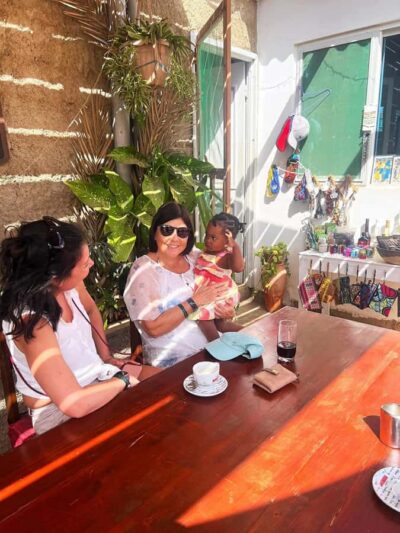
Shark, Turtles, Cave, Sandboarding & Tasting Tour
Read our review →
Turtle, Shark, Santa Monica, Sandboard & Tasting
Read our review →
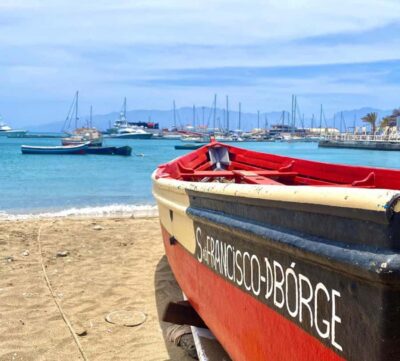
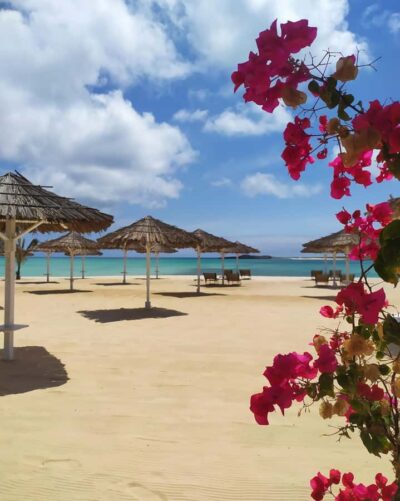
Beautiful Beaches, Turtles & Djeu Island Snorkel
Read our review →
Browse the lists this tour appears in