
Reviewed · SEA TURTLE WATCHING
Santa Maria: Sea Turtle Watching Experience on Sal Island
A female sea turtle hauling herself from the Atlantic, digging a nest, laying her eggs, and returning to the water is the main event here. You watch from the sand in near silence, guided by trained local experts such as Nany, Chan, or Dani. It is a rare chance to see wildlife behaving naturally, not performing for a crowd.
I like two things especially. The guides take turtle welfare seriously, using infrared lighting and quiet viewing rules rather than bright phones and noisy commentary. I also like the full story of the nesting process, from the slow crawl up the beach to covering the eggs and heading back to sea. The one catch is patience: you may wait two hours or more, and no sighting can be promised.
Key points to know before you book
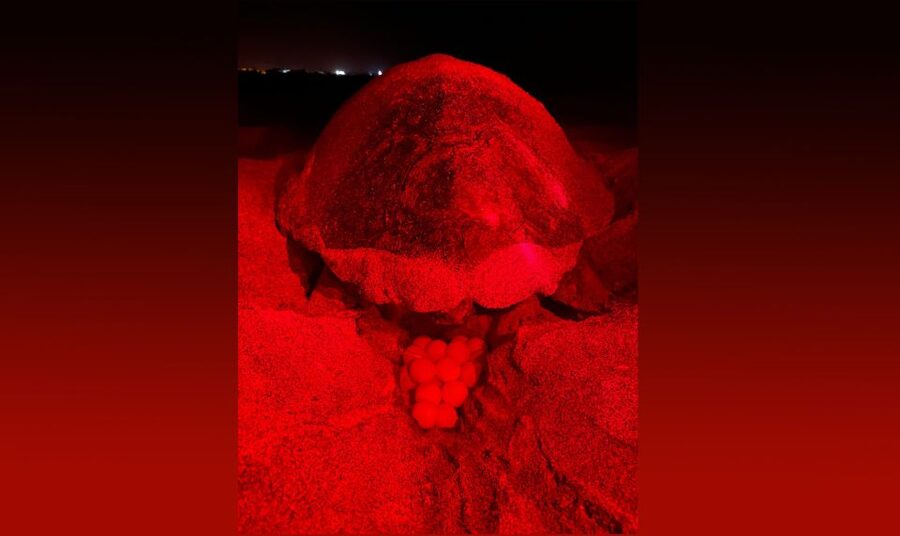
- Watch the whole nesting routine: With luck, you may see a turtle arrive, dig, lay eggs, cover the nest, and return to the sea.
- Expect a dark, quiet beach: You will walk on sand at night and sit quietly while guides search for turtles.
- Guides are the strongest part: Nany, Chan, Dani, and other local specialists explain turtle biology, conservation, and island life in several languages.
- Dress for the animals: Wear black, dark brown, dark blue, or dark grey clothing, plus comfortable shoes.
- Sightings are likely but not certain: The reported success rate is 99 percent over the past five years, but nature still sets the schedule.
- The $41 price covers the essentials: Hotel pickup, return transport, guiding, the tour itself, and infrared lighting are included.
Why this night on Sal feels different
Sal is famous for sun, sand, and water sports. This outing asks you to slow down and sit in the dark. That change of pace matters. You are not being taken to a staged animal encounter or a fenced viewing area. You are going to a beach where female turtles return to nest, following instincts that have carried them through the ocean.
The common turtle, also called the yellow turtle, is the species you are most likely to see. Cape Verde is one of the important nesting areas for this turtle, and Sal’s sandy beaches provide the setting. The tour also introduces you to the island’s conservation work, including the reasons guides keep people back, limit light, and control movement around the animals.
The mood is simple: stars overhead, waves in the distance, sand under your shoes, and long stretches of waiting. Then the guide spots a turtle and the whole group becomes still. That contrast is part of the appeal.
More Turtle Watching in Sal
- Santa Maria: Sal Island Sea Turtle Watching Experience
★ 4.5 · 256 reviews - Turtle Watching Adventure
★ 5.0 · 98 reviews - 4h Turtle Watching with SSV Buggy Night 4WD
★ 5.0 · 20 reviews
Pickup from Santa Maria and the drive to the beach
Pickup is arranged at your accommodation, with the advertised departure around 8 PM. New environmental rules mean the schedule can shift, so the actual collection time may fall anywhere from about 7:30 PM to 10:30 PM. You receive the precise transport time on the morning of the activity.
The ride takes place in a comfortable air-conditioned vehicle. Depending on the beach and traffic, the drive is generally under an hour, with some reported journeys taking about 30 minutes. During the ride, the guide explains how the night will work, what to expect from the turtles, and how to avoid disturbing them.
This early briefing is useful. It prevents the beach visit from becoming a noisy group outing and gives you a clear idea of why you cannot use a flashlight or take ordinary flash photographs. Put your phone away before you reach the sand. The turtles need darkness more than you need a perfect picture.
The walk across the sand
From the vehicle, you walk a short distance, or possibly farther along the beach, depending on where turtles are arriving. Sand at night is not easy for everyone. Wear proper walking shoes rather than loose sandals, and be ready for uneven footing and a slow pace.
Your guide gives an introduction to the turtles before beginning the search. You learn about their evolution, physical features, nesting habits, and the stages of egg-laying. The talks are designed for different ages, so the experience can be educational for older children, teenagers, and adults, provided they can stay quiet and manage the dark walk.
Groups are divided into smaller viewing units when a turtle is found. That is important. A group of around 20 people may travel together, but you are not necessarily crowded around one animal at once. Smaller clusters allow better views and make it easier for the guide to control noise and movement.
Waiting is part of the experience
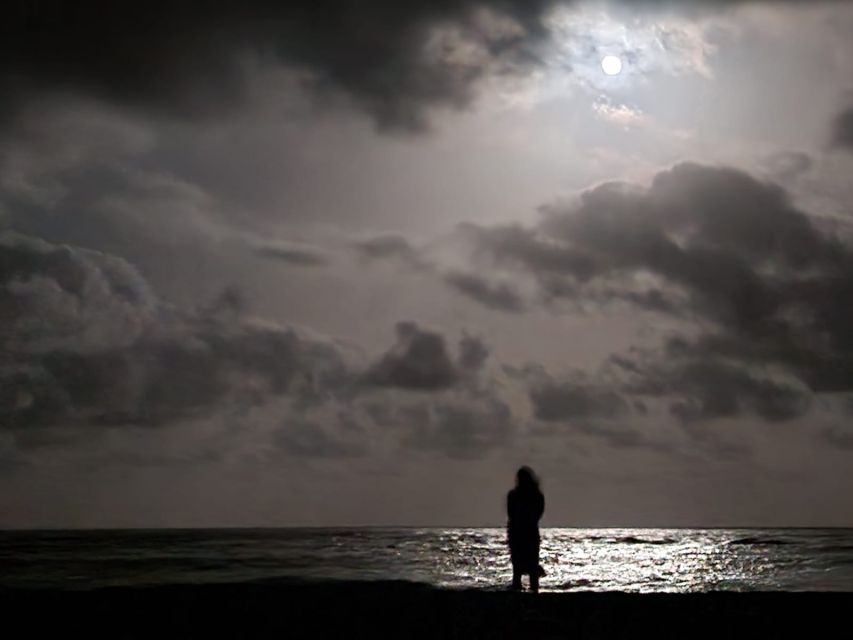
Do not book this if you need a tightly timed evening. The guide may locate a turtle quickly, or you may sit and wait while the search continues. One account describes waiting less than 30 minutes, while another points out that the wait can reach two hours or more. Both possibilities fit the nature of the activity.
The waiting is not entirely empty time. You can look at the stars, listen to the surf, and absorb the unusual quiet. The guide may continue explaining turtle behavior and conservation, but the best approach is to settle in and accept that the beach, not the clock, controls the evening.
Bring a light jacket if you feel cold easily. The activity takes place at night, and you may spend a long period sitting or standing on the sand. Mosquito repellent is also a sensible addition, based on the practical advice from people who have taken part.
More wildlife trips in Sal:
- Boa Vista: Shark, Turtles, Cave, Sandboarding & Tasting Tour
★ 4.8 · 328 reviews - Boavista: Turtle, Shark, Santa Monica, Sandboard & Tasting
★ 4.7 · 228 reviews - From Mindelo: São Vicente’s Enchanting Sea Turtle Snorkeling
★ 4.4 · 153 reviews - São Vicente: Snorkel with Sea Turtles Adventure
★ 4.5 · 111 reviews
Seeing a turtle come ashore
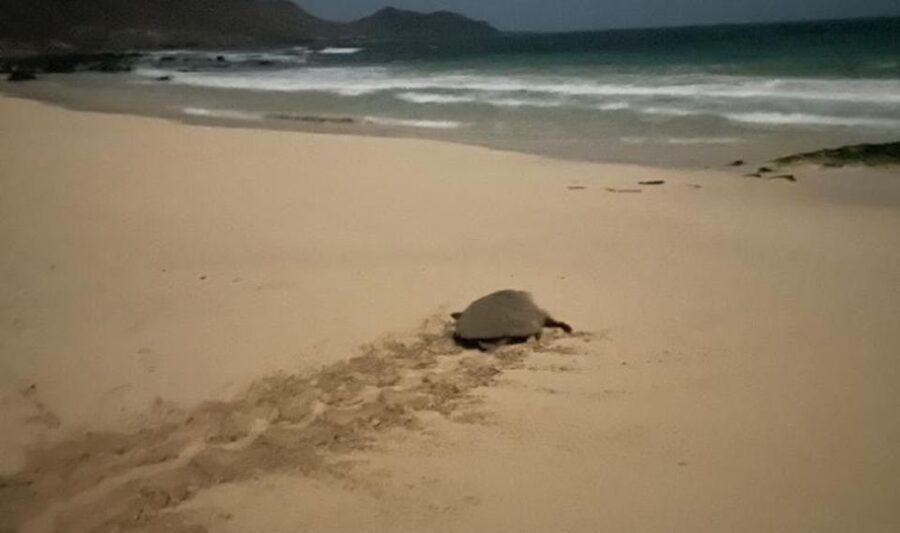
The first sight of a turtle can be surprisingly subtle. You may see a dark shape near the waterline, then notice the slow, deliberate movement toward the dunes. The animal does not hurry. It pauses, changes direction, and searches for a suitable place to nest.
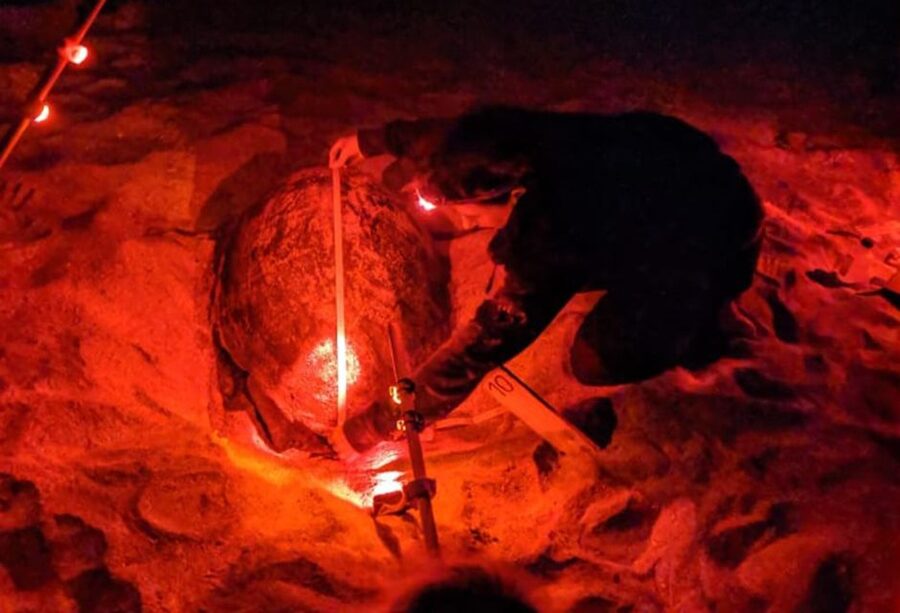
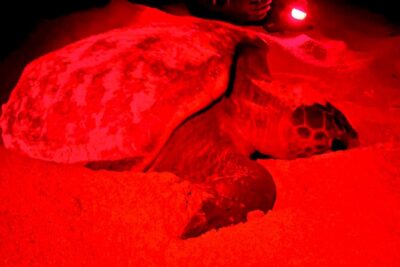
This is where the guide’s skill matters. You are not simply pointed toward a turtle and left to work things out. The guide positions the group, explains when to move, and tells you when to sit still. Infrared lighting helps the guides work without exposing the turtles to harsh white beams.
Do not expect the turtle to react like a zoo animal. It may abandon the attempt if it senses too much activity. One account describes several turtles coming ashore but leaving after being disturbed by people nearby. That is a useful reminder that even a well-run outing shares the beach with other groups, and not every approach becomes a successful viewing.
Watching the egg-laying process
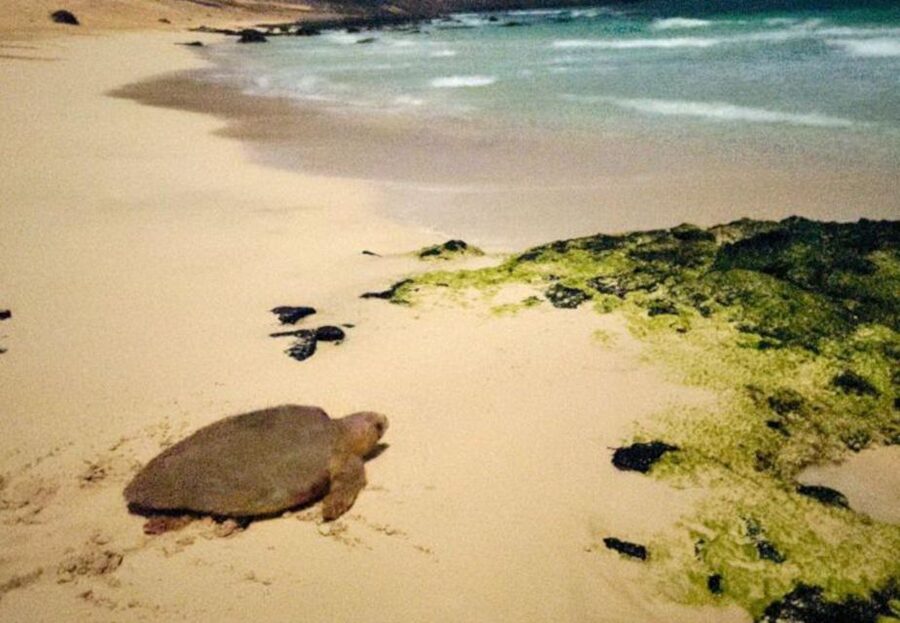
If the turtle settles, you may watch the full sequence. She digs with her rear flippers, creates a nest chamber, and begins laying eggs. Once the eggs are in place, she covers the nest carefully with sand, disguises the spot, and makes her way back toward the sea.
The egg-laying itself can take time. You may watch for 30 to 45 minutes, and one of the most memorable parts is often the final return to the water. The turtle that seemed slow and vulnerable on the beach becomes a dark shape moving toward the surf, leaving only tracks behind.
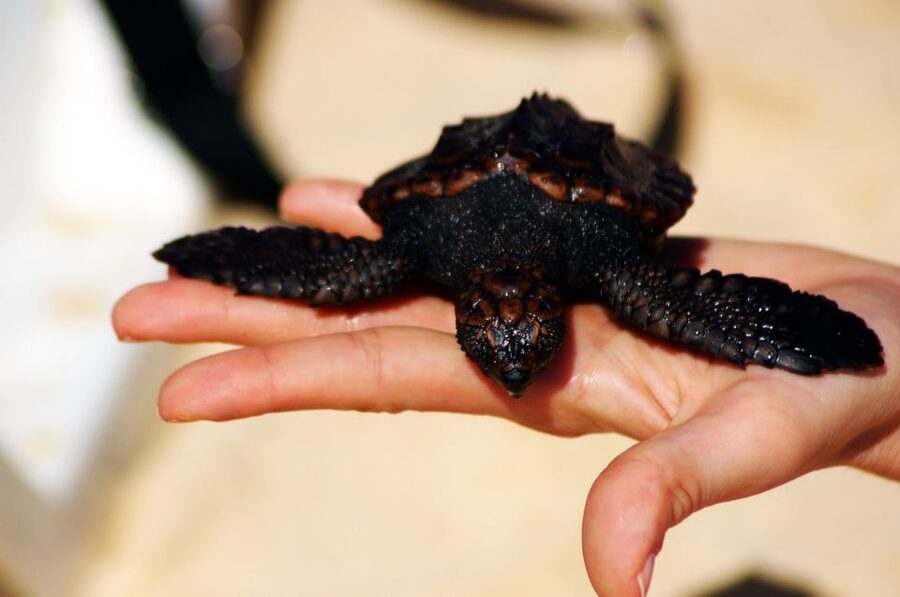
Some outings see one turtle. Others see two, three, or even four. You might also see hatchlings, though this is less certain than watching an adult nest. The timing of hatching depends on natural conditions, so nobody should book expecting baby turtles specifically.
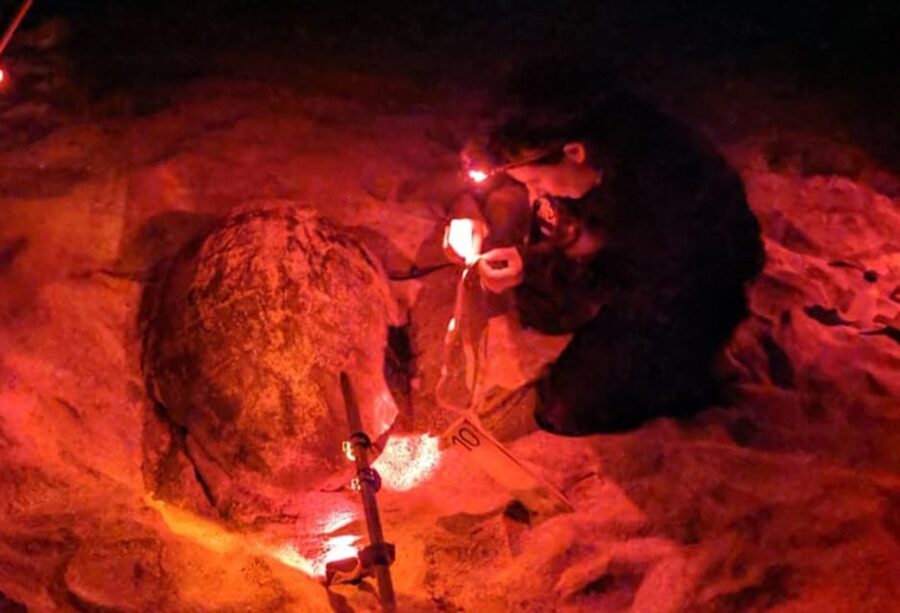
A guide may work with local conservation staff to record measurements. You could see experts checking the turtle’s size or other details before she returns to sea. This gives the evening a useful conservation angle, showing that the animals are being studied as well as protected.
The guides make or break the night
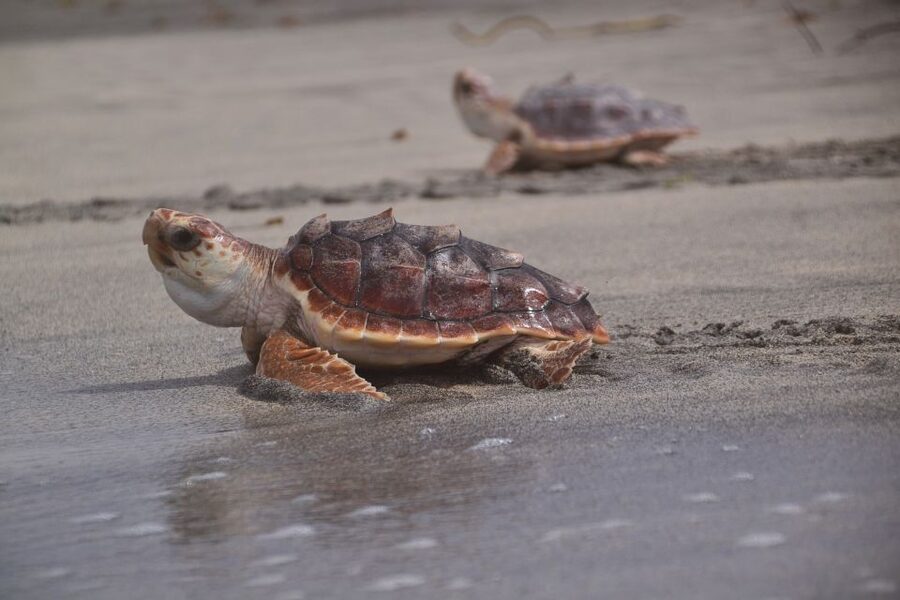
The strongest praise goes to the guides. Nany is often singled out for clear explanations, good humor, and careful handling of the group. Chan is also noted for explaining both turtle behavior and the wider story of Cape Verde. Dani has been part of the guiding team as well.
The exact guide depends on the evening, so do not book on the assumption that one particular person will lead your group. Still, the consistent pattern is clear: expect a guide who can explain the nesting process, answer questions, and translate scientific information into plain language.
Languages offered include English, Portuguese, French, and Spanish. Some guides speak several languages, which is helpful in a mixed group. The best guides also know when to stop talking. Once a turtle begins nesting, silence becomes more valuable than another fact.
Conservation rules are not a nuisance
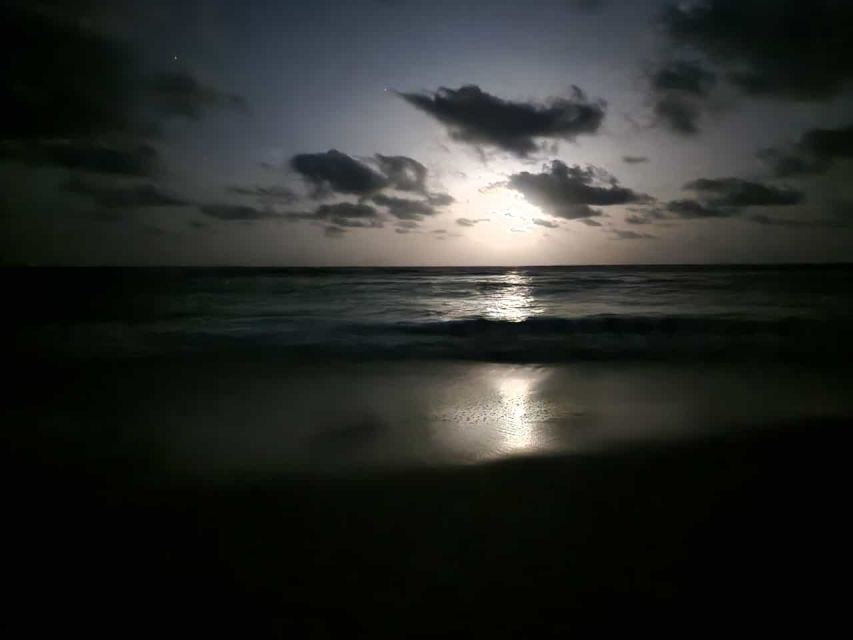
The restrictions are central to the experience, not minor fine print. Flash photography, video recording, and flashlights are not allowed. Dark clothing is required because bright or pale colors can startle or disorient the turtles.
You are also asked to remain as quiet and still as possible. This may feel strict if you are used to taking photos at every stop, but it protects the reason for coming. A blurry memory made without a flash is better than a sharp image that disrupts a nesting animal.
The guides’ care also gives you a clearer view of the ethical side of wildlife tourism. You are not guaranteed a close approach, and you may be moved back if the animal’s behavior changes. Some people have been close enough to see the shell in detail, but distance should be determined by the turtle and the guide, not by your camera.
What $41 gets you
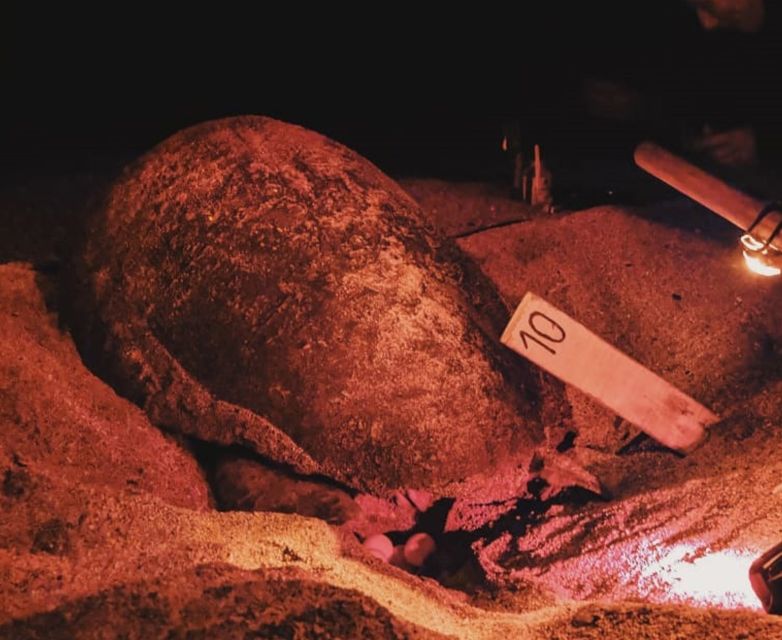
At $41 per person, the price is reasonable if you value both the transport and the specialist guidance. The fee includes hotel pickup and drop-off, an air-conditioned vehicle, the guide, the beach activity, and infrared lighting. You do not need to arrange a taxi to a remote beach or find your own way back late at night.
The value is strongest when you see the full nesting process. Watching a turtle lay eggs, cover the nest, and return to the sea is an unusual natural experience, and the guides add context that you would not get by walking onto a beach alone.
The price feels less certain if you measure value only by guaranteed viewing time. Nature may not cooperate, and you could spend much of the evening waiting. The high reported success rate is reassuring, but it is not a promise for your particular night.
You can reserve now and pay later, which helps if your schedule is still shifting. Cancellation is free up to 24 hours before the activity. The exact pickup time is confirmed on the morning of the event, so keep that evening flexible.
Who will enjoy this most
This is a strong choice for anyone interested in wildlife, conservation, photography without flash, or unusual evening activities. It suits adults and older children who can walk on sand, sit quietly, and wait without constant entertainment.
It is not suitable for children under three, wheelchair users, or people with mobility impairments. A fear of the dark is also a real concern, since the beach is intentionally kept dark and you may walk away from the vehicle before the viewing begins.
Alcohol is not compatible with the activity. Anyone under the influence cannot take part. That rule is sensible, since the outing requires quiet behavior, careful movement, and respect for protected wildlife.
Practical tips for a better evening
- Wear dark clothing from head to toe. Black, dark brown, dark blue, and dark grey are suitable.
- Choose shoes that can handle soft sand and a walk of uncertain length.
- Bring a light jacket for the night air.
- Use mosquito repellent.
- Leave flashlights, flash photography, and video equipment behind.
- Charge your phone, but treat it as an emergency or note-taking tool rather than a camera.
- Keep the next morning easy if possible. The return is usually around 10 or 11 PM, but waiting can make the night longer.
- Prepare children in advance for silence and patience. The turtle decides when the action begins.
Should you book the Sal turtle watch?
I would book this if you want a genuine wildlife encounter and can accept uncertainty. The best nights offer the complete nesting cycle, strong guiding, and a quiet connection with Sal’s coast that you will not get from a daytime beach visit.
I would skip it if you dislike darkness, walking on sand, or waiting without a guaranteed start time. For everyone else, $41 is fair for the transport, expert help, and chance to witness one of nature’s most private routines without turning it into a show.
FAQ
Where does the sea turtle tour depart from?
The tour includes pickup and drop-off at your accommodation in the Santa Maria area on Sal Island.
What time does the activity take place?
Pickup is often around 8 PM, but current environmental guidelines allow the activity to run between approximately 7:30 PM and 10:30 PM. Your exact transport time is confirmed on the morning of the activity.
Is seeing a turtle guaranteed?
No. Nesting depends on environmental conditions and natural behavior. The stated success rate has been 99 percent over the past five years, but a sighting cannot be guaranteed for every outing.
What should I wear?
Wear dark-colored clothing, such as black, dark brown, dark blue, or dark grey. Comfortable shoes are important because you will walk on sand at night.
Can I take photos or use a flashlight?
Flash photography, video recording, and flashlights are not allowed. Infrared lighting is provided to support observation while reducing disturbance to the turtles.
Is the tour suitable for everyone?
The activity is not suitable for children under three, wheelchair users, or people with mobility impairments. It is also not recommended for people with a fear of the dark. Anyone under the influence of alcohol cannot participate.
Just added in Sal
- Boa Vista Sunset Dinner with Live Music★ 4.4 · 8 reviews
- Boa Vista Full Day 4×4 Island Tour with Beachfront Lunch★ 3.5 · 4 reviews
- Adults Only Tour of Sal with Lobster Lunch and Salt Lake★ 4.8 · 4 reviews
- 4h Turtle Watching with SSV Buggy Night 4WD★ 5.0 · 20 reviews
- Sal: Lemon Shark Bay and Pedra de Lume Salt Lakes Tour★ 4.2 · 30 reviews
- Snorkeling Tour★ 3.5 · 43 reviews
- Ilha Do Sal: Snorkeling with Local Guide★ 4.1 · 34 reviews
- Snorkeling Experience in Santa Maria Bay by boat★ 4.5 · 34 reviews
Sea Turtle Watching, compared.
Shark, Turtles, Cave, Sandboarding & Tasting Tour
Read our review →

Turtle, Shark, Santa Monica, Sandboard & Tasting
Read our review →
Beautiful Beaches, Turtles & Djeu Island Snorkel
Read our review →
Browse the lists this tour appears in