
Reviewed · TOURS IN SANTIAGO
Santiago Island: Highlights of Cidade Velha with Local Guide
Cidade Velha is where Cape Verde’s story becomes wonderfully concrete. In one compact walk, you see a fortress built against pirate attacks, the ruins of the first cathedral in sub-Saharan Africa, the former slave market at Pelourinho, and old houses that still give the town its shape. A local guide helps connect these places instead of leaving you to guess what a wall or weathered stone once meant.
I like the hotel pickup from Praia, which removes the need to arrange transport to this historic town. I also like the mix of major sights and ordinary local life: after the monuments, you walk along Banana Street, see traditional thatched houses, visit the São Francisco Convent, and meet fishermen. The main consideration is that the three-hour schedule is fairly tight, and the fortress costs an extra 5 euros per person.
Key points to know before you book

- Cape Verde’s first European-built city: Cidade Velha gives you a direct look at the beginnings of Cape Verdean culture and colonial rule.
- A guide matters here: The ruins and monuments make far more sense when someone explains their role in colonization, slavery, defense, and daily life.
- The São Filipe Fortress brings the best views: You can look over colonial buildings and the coast from this old defensive site.
- The tour faces difficult history honestly: Pelourinho and the cathedral ruins help explain Cape Verde’s connection to the Atlantic slave trade.
- Praia pickup keeps the morning simple: Transport, guide service, and drop-off are included, but lunch is not.
- Shared or private options are available: Shared departures need at least two participants, so a private upgrade or cancellation is possible if that minimum is not met.
Why Cidade Velha deserves a half-day
Cidade Velha is not simply an old town with a few attractive ruins. It is presented as the birthplace of the Cape Verdean nation and culture, and the walking route shows why. The town brings together European colonization, African life, Atlantic trade, religious power, military defense, fishing, and the painful history of slavery.
That range is what makes a guided visit worthwhile. On your own, you can see stone walls, a square, a church ruin, and traditional houses. With a guide, you get the story behind each place and a clearer sense of how the town developed.
The excursion begins with pickup at your accommodation in Praia, or from Cidade Velha if you are already staying there. Transportation is included, so you do not have to organize the trip across Santiago Island yourself. After the walking tour, you are returned to Praia or Cidade Velha.
At $57 per person, the price is reasonable for a three-hour private or small-group experience with transport, a guide, and liability insurance. It is not an all-day island tour, and lunch is not included. You should also add the 5 euro entrance fee for the fortress. The value comes from focused sightseeing and interpretation rather than from a long list of stops.
A few more things to do in Santiago worth a look
- Praia & Cidade Velha: Guided City Tour
★ 4.8 · 80 reviews - Santiago: Calabaceira Valley Trek & Visit to Cidade Velha
★ 4.8 · 49 reviews - From Praia: Cidade Velha, Tarrafal & East Side Island Tour
★ 4.8 · 23 reviews
Walking through the first European-built city in sub-Saharan Africa
The tour starts in Cidade Velha with a guided walk through its main historic area. This is a good format for the town because the attractions are close enough to link on foot, yet the history is layered enough to become confusing without help.
Your guide speaks English, French, Portuguese, or Spanish. Named guides who have led this experience include Yvonne, Ricardo, Andrew, Jose, and Ailton. You cannot assume which guide you will receive, but the consistently strong comments about clear explanations, patience, friendliness, and care suggest that the guide is the central part of the experience.
Ailton, in particular, has been praised for taking time with explanations and keeping the pace comfortable. Ricardo has been described as friendly and well informed, while Yvonne has been singled out for patience and clear guidance. One useful caution is that pronunciation may occasionally be difficult to follow, depending on the guide, though the overall impression remains professional and well prepared.
The walk covers historic sights as well as parts of present-day Cidade Velha. That balance matters. You are not being shown a town frozen in the past. You see how the historic center connects with local fishing and everyday life.
São Filipe Fortress and the view over the coast

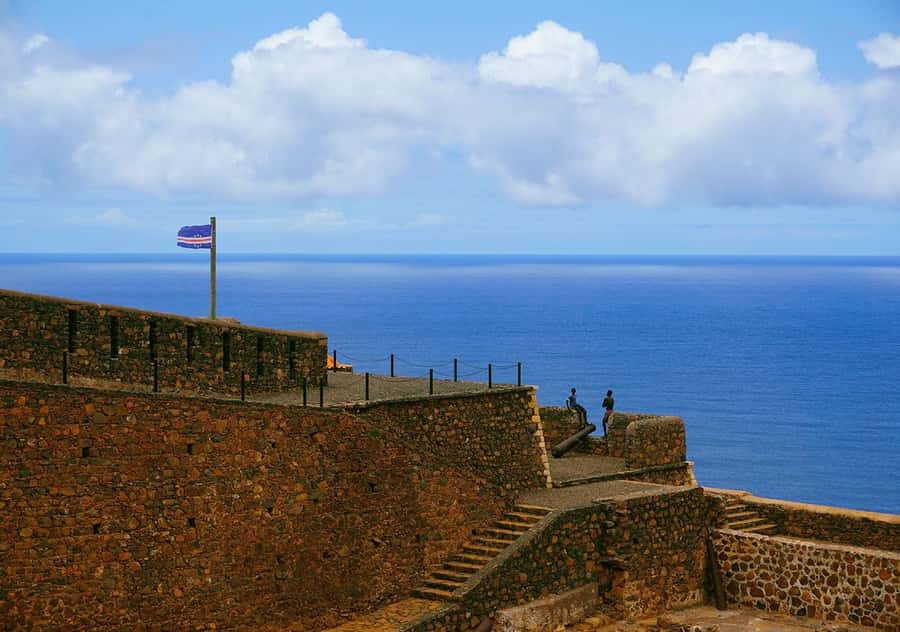
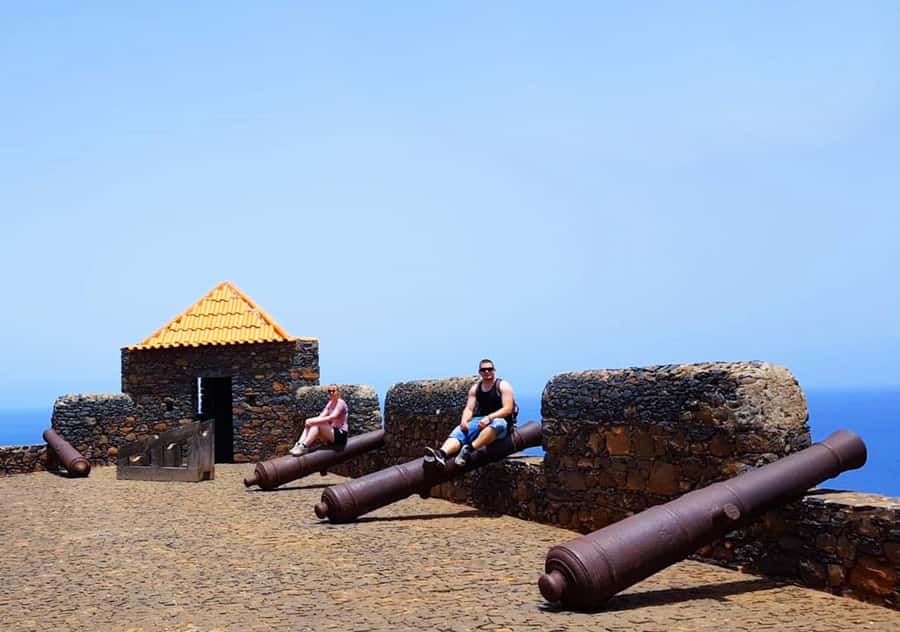
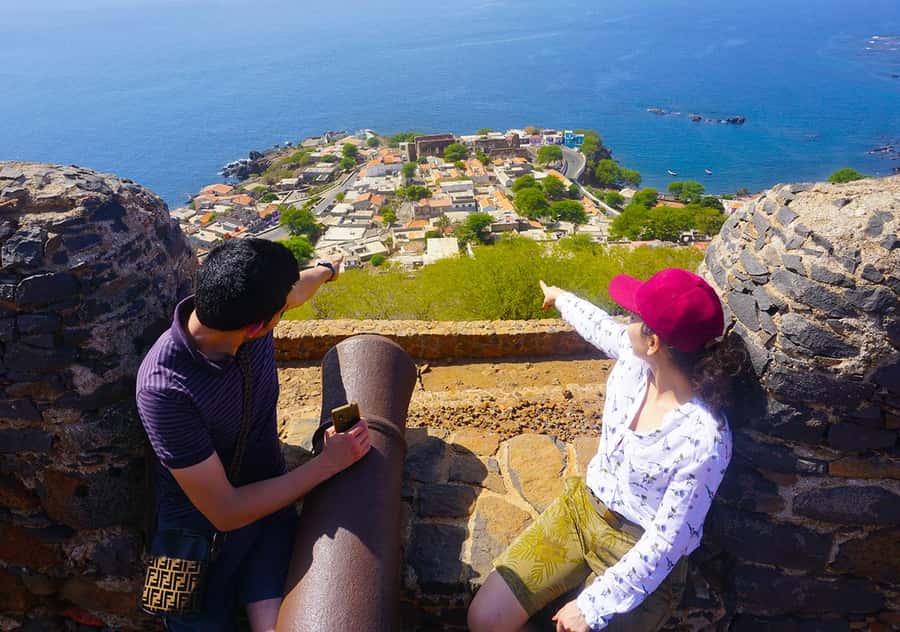
The São Filipe Royal Fortification was built to defend the island from pirate attacks. Its position gives the stop a practical purpose beyond photographs: from above, you can understand why a strong defensive point was needed and how the town, coast, and bay fit together.
The views from the top are one of the clear rewards of the tour. You can look over colonial buildings and toward Calhau fishing bay, where the setting shifts from military history to working coastal life.
The fortress requires a separate entrance payment of 5 euros per person. It is also closed on holidays, so check the date before booking if this site is a priority. The tour can still include other parts of Cidade Velha, but missing the fort would remove one of the most important stops and the main high viewpoint.
The walk involves outdoor sightseeing, so bring water. The supplied information does not give a detailed accessibility description, but the itinerary includes several walks between historic sites. If you need a specific level of mobility support, ask the provider before reserving.
Cathedral ruins and the weight of the past
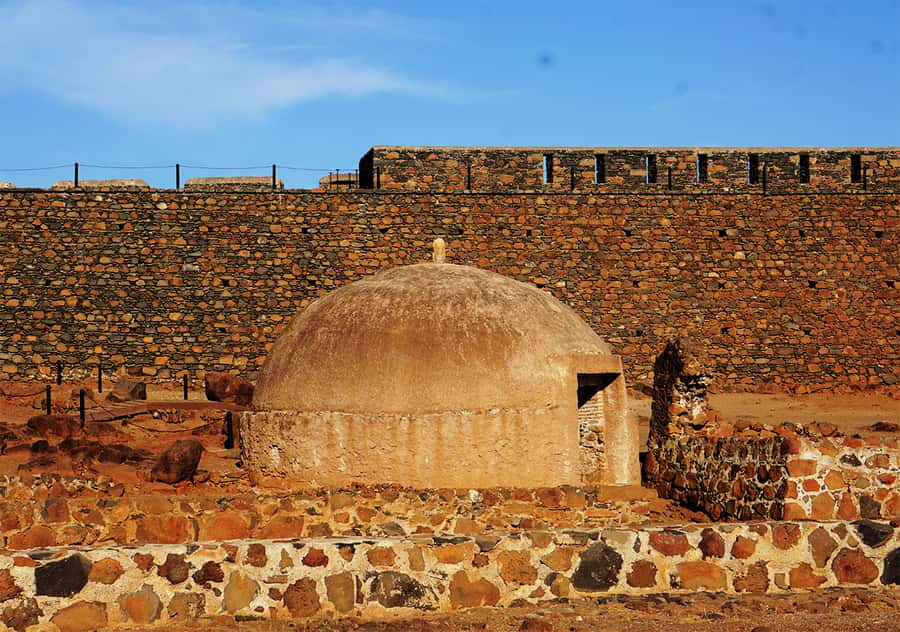
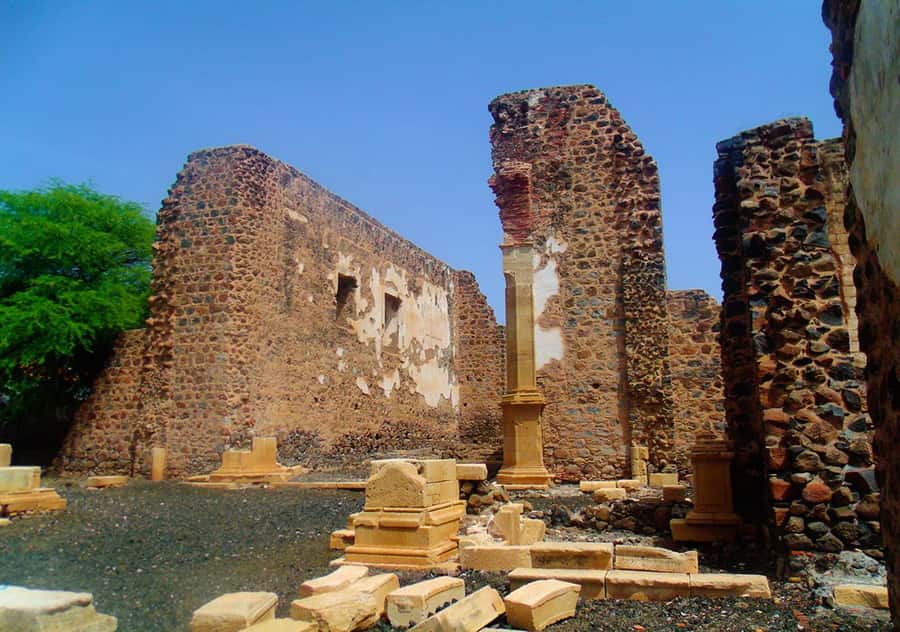
The ruins of the Sé Cathedral are a major stop because they represent the first cathedral in sub-Saharan Africa. Today, you see remnants rather than a complete church, but that partial state is part of the experience. The broken structure makes the passage of time visible and gives your guide room to explain the role of religion and colonial power in the town.
This is also where a guide can add useful scale. A ruin can look modest until you understand what it represented in its period. The stop is not only about architecture. It helps place Cidade Velha within the wider story of European expansion and the formation of Cape Verdean society.
You should expect interpretation rather than a long indoor museum visit. The tour is built around walking, looking, and listening. If you want a detailed archaeological study, three hours will feel short. If you want a clear introduction to the town’s main themes, the cathedral stop fits well.
Same island, a different sort of day:
- Praia: Santiago Island Tour with Tastings and Tarrafal Beach
★ 4.8 · 416 reviews - Santiago: Landscapes, Street Art, and Markets Day Trip
★ 4.8 · 316 reviews - From Port of Praia: Island Tour for Cruise Ship passengers
★ 4.5 · 190 reviews - Santiago Island Tour: Meet with a Local Family & Tarrafal Beach
★ 5.0 · 127 reviews
Pelourinho and the history of slavery
Pelourinho, the former slave market, is the most sobering part of the route. It is important to approach this stop with attention. The tour does not present Cidade Velha only as a picturesque colonial town. It addresses the role of slavery and the way the settlement developed through Atlantic trade.
The value here lies in having the history explained in its local setting. You are standing in the place connected with the buying and selling of enslaved people, not reading about the subject as a distant event. That makes this a serious part of the visit, and one that should not be rushed.
The subject can be difficult, but avoiding it would give you a distorted picture of Cape Verde. The guides are expected to cover colonization, slavery, and the development of the village. If those subjects matter to you, this tour offers a stronger foundation than a quick unaccompanied walk through the ruins.
Banana Street and the surviving town
Banana Street brings the tour back to the physical character of Cidade Velha. Traditional thatched houses line the route, offering a look at local building styles and the texture of the town beyond its largest monuments.
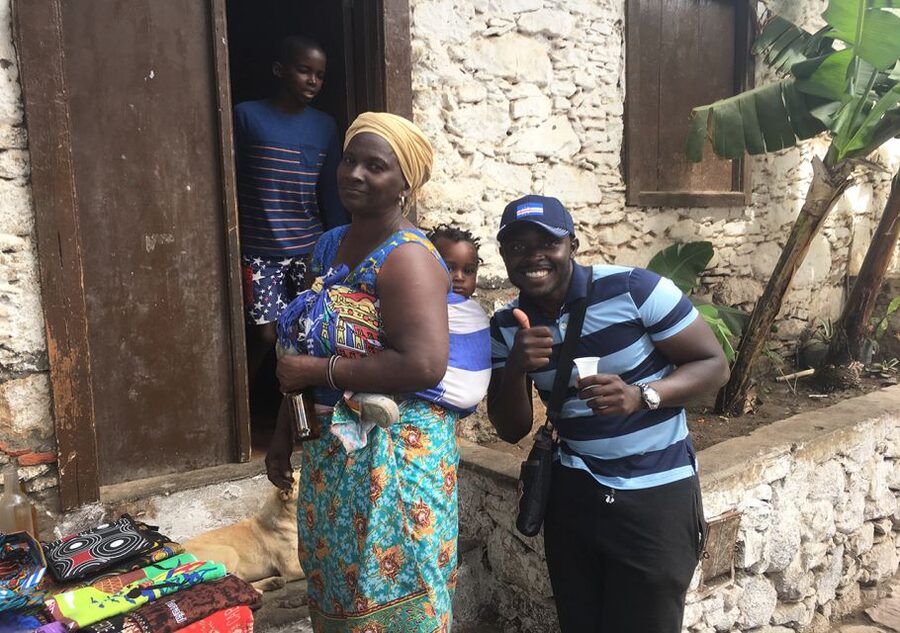
This is one of the places where the route feels less like a list of official sights. You are walking through a lived-in community, seeing how historic buildings and present-day homes share the same small town. The guide helps point out what you might otherwise pass without noticing.
The street is also a useful change of pace after the fortress, cathedral, and Pelourinho. The tour moves from military and religious power to domestic architecture and ordinary life. That variety helps the three-hour schedule feel full without requiring a long drive between each stop.
São Francisco Convent and the final walk
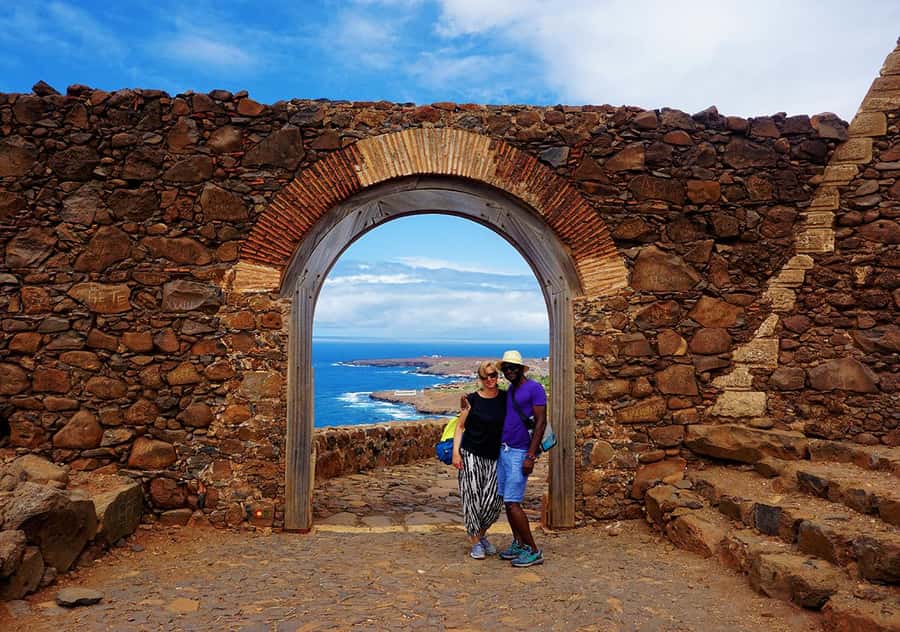
The São Francisco Convent is another historic stop on foot. Its inclusion adds a further religious site to the cathedral ruins, but the two places serve different purposes within the route. The cathedral introduces the scale of Cidade Velha’s early religious importance, while the convent adds another layer to the town’s religious and architectural past.
After the main monuments, the experience includes a black-sand beach and time near local fishermen. These details are easy to undervalue when planning a history tour, but they help you see the town as a coastal community rather than only an archaeological site.
Meeting fishermen gives the route a present-day connection. You are not just looking backward at colonial buildings. You see an active relationship with the sea, which has shaped life on Santiago for centuries.
The beach stop is brief within a three-hour itinerary. You should not expect a full beach day, swimming program, or lunch beside the water. Think of it as a short outdoor pause and a way to round out the town’s setting before the return drive.
What the three-hour pace feels like
Three hours is enough to cover the listed highlights, especially because the route is concentrated in Cidade Velha. It is also short enough to fit neatly into a morning or afternoon around time in Praia.
The advantage is focus. You spend your time on the town’s most important historic places rather than adding long transfers or unrelated stops. The tradeoff is that you may not linger at every site, particularly if your group asks many questions or takes frequent photographs.
Private tours give you the best chance to shape the pace. Small groups can also work well, especially if the guide is able to keep the walk moving while allowing questions. A shared group departure requires at least two participants. If that minimum is not reached, the provider may offer another date, charge an additional fee to operate privately, or cancel with a full refund.
The pickup and drop-off arrangement adds practical value. You do not need to find a taxi for the trip from Praia, and the return is included. Since lunch is not part of the tour, plan food separately around the start or finish time.
Which guide and group option should you choose?
You do not select a specific guide in the information provided, but several names have been associated with this experience. Yvonne has been described as patient and friendly. Ricardo has drawn praise for his explanations and commitment to the work. Andrew has been appreciated for making the culture and history understandable. Jose has been valued for giving people time to explore. Ailton has been praised for strong English, careful pacing, and attention to the group.
Those details point to the role of the guide more clearly than any list of attractions. Cidade Velha is compact, but its story is not simple. Pick the private option if you want to ask many questions, set your own pace, or make the tour a central part of your day.
A shared group is a better value if you mainly want a structured introduction and do not mind following the scheduled pace. The minimum-participant rule is worth remembering when making plans close to your travel date.
Who will get the most from this tour?
I would recommend this experience to you if you are staying in Praia and want a focused introduction to Santiago Island’s history without committing to a full-day excursion. It suits people who value explanation, cultural context, and a practical route through several important sites.
It is especially useful for first-time visitors to Cape Verde. The combination of colonial buildings, slavery history, religious ruins, traditional houses, fishermen, and the coast gives you a broad starting point for understanding the island.
You may want something else if your priority is a long beach outing, a food-focused experience, or extensive free time at each monument. The tour covers a lot in three hours, and the fortress entrance fee is extra. Still, the walking route, included transport, multilingual guide service, and access to places that are difficult to interpret alone make the cost fair.
The strongest reason to book is simple: Cidade Velha rewards context. A local guide turns separate ruins and streets into a connected story, while the pickup from Praia keeps the half-day easy.
Should you book the Cidade Velha tour?
Book it if you want Cape Verdean history explained in the places where it happened. The fortress, cathedral ruins, Pelourinho, Banana Street, São Francisco Convent, black-sand beach, and fishing area give you a varied look at Cidade Velha in a short amount of time.
Choose a private or small-group format if personal questions and a relaxed pace matter to you. Choose the shared option for the lower-cost, structured approach, but remember that at least two participants are required.
At $57, this is good value for a tightly organized three-hour visit from Praia. Add 5 euros for the fortress and bring water. Check holiday closures before booking, since the São Filipe Fortress is closed on those dates.
FAQ
How long does the Cidade Velha tour last?
The tour lasts three hours, including the guided visit and transportation from the pickup location.
Where does pickup take place?
Pickup is available from your accommodation in Praia. Cidade Velha is also listed as a pickup location.
Is transportation included?
Yes. Transportation, hotel pickup and drop-off from Praia, a tour guide, and liability insurance are included.
Which languages are available?
The live guide service is available in English, French, Portuguese, and Spanish.
Is the São Filipe Fortress entrance included?
No. Entrance to the fortress costs 5 euros per person and is paid separately.
Is lunch included?
No. Lunch is not included in the tour price.
Can I book a private tour?
Yes. Private and small-group options are available.
What happens if a shared group does not reach the minimum size?
The shared group option requires at least two participants. If that minimum is not reached, the provider may offer another date, charge an additional fee to operate the tour privately, or cancel the booking with a full refund.
Just added in Santiago
- Boat Trip to Aguas Belas Cave+Barbecue★ 5.0 · 6 reviews
- From Praia: Cidade Velha, Tarrafal & East Side Island Tour★ 4.8 · 23 reviews
- Serra Malagueta Natural Park Hike & Relaxing Swim at Tarrafal Beach★ 5.0 · 30 reviews
- Discover Santiago island in 1 day★ 5.0 · 39 reviews
- From Praia: Santiago Island Highlights Tour★ 4.6 · 40 reviews
- From Tarrafal: Serra to Principal Hike & Lunch with locals★ 4.7 · 41 reviews
- Praia & Cidade Velha: Guided City Tour★ 4.8 · 80 reviews
- Santiago: Calabaceira Valley Trek & Visit to Cidade Velha★ 4.8 · 49 reviews
Tours in Santiago, compared.
Santiago Island Tour with Tastings and Tarrafal Beach
Read our review →


Santiago Island Tour: Meet with a Local Family & Tarrafal Beach
Read our review →
Island tour with German-speaking guide for cruise guests
Read our review →


Serra Malagueta: Principal Valley Hike & Lunch with Locals
Read our review →Browse the lists this tour appears in