
Reviewed · CIDADE VELHA HERITAGE TOURS
Santiago Island: 4-Hour Calabaceira Valley Hike & Guided Tour to Cidade Velha
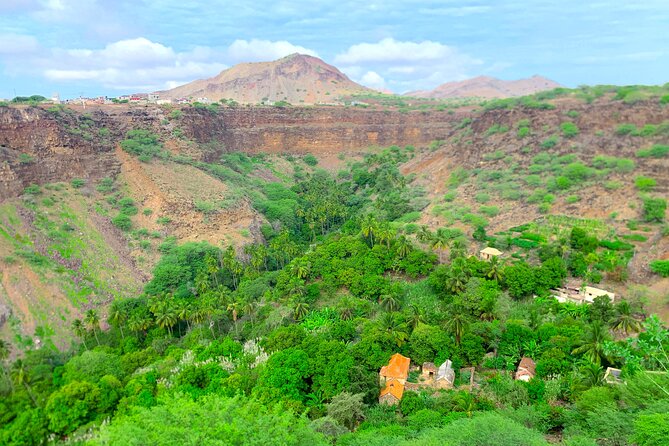
The best part of this half-day outing is the change of scene: you leave Praia, walk through Calabaceira Valley, and finish among the old stone buildings of Cidade Velha. Along the way, you see a giant baobab linked with Charles Darwin, meet local farmers, and learn how sugar cane, mangoes, cassava, and bananas are grown.
I like the smart combination of nature and history, and I like the small group size, capped at eight people. The main thing to consider is the route: although it is rated easy, the path is narrow at the beginning and includes a substantial downhill section, so decent shoes matter.
What makes this tour especially appealing is the human element. Guides including Ailton and Maria have been praised for explaining plants, birds, farming, and local history clearly. The drawback is that the €5 entrance fee for São Filipe Fortress is extra, and lunch is not included.
Key points to know before booking

- A 5-kilometer one-way walk: The route takes about two hours and loses roughly 186 meters in elevation, making it more downhill than strenuous.
- A giant baobab with a Darwin connection: The tree is one of Calabaceira’s memorable natural sights and adds a distinctive touch to the walk.
- Real farming along the trail: You pass fields of sugar cane, mango, cassava, bananas, and other crops while learning from local farmers.
- Cidade Velha’s major sights in one compact visit: The walk includes Rua Banana, old churches, the Pelourinho, cathedral ruins, and São Filipe Fortress.
- A small group or private format: Shared tours and private options are offered, with a maximum of eight people on the activity.
- Good value for a half-day: At $81.30 per person, transport, guiding, insurance, and hotel pickup and return are included, but lunch and the fortress ticket are not.
From Praia to Calabaceira Valley

The morning begins with pickup at your accommodation in Praia or Cidade Velha, with a listed start time of 8:30 a.m. The drive to Calabaceira takes about 30 minutes, so you quickly trade the capital’s urban setting for the greener interior of Santiago.
This short transfer is useful because the tour does not waste the morning on complicated transport arrangements. You can leave the driving to the provider and focus on the walk. The vehicle also returns you to your accommodation in Praia at the end, which makes the experience easy to fit into a short stay.
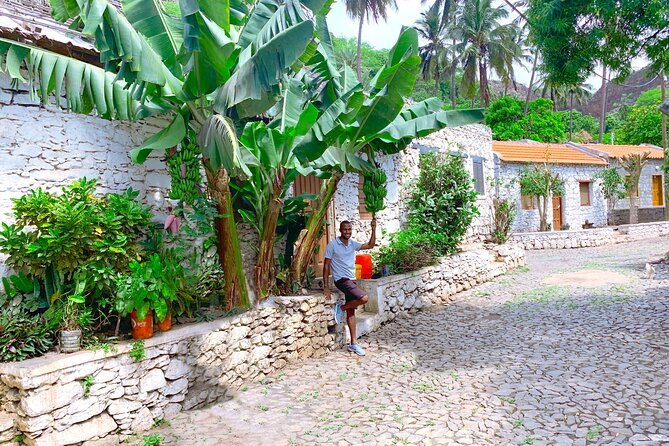
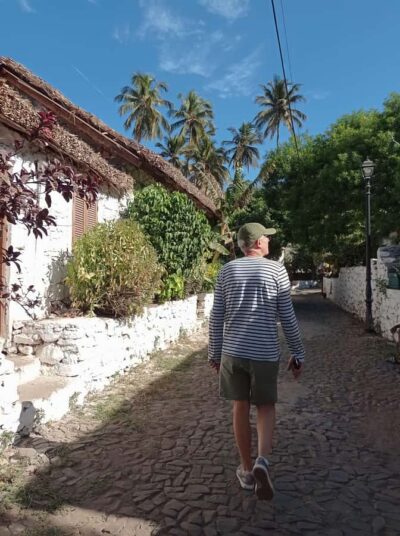
Calabaceira is in the southern part of Santiago. The valley is known for its plant life and farming, and the walk gives you a closer look at how people use the land. This is not simply a scenic stroll. Your guide can point out crops and explain local agriculture as you pass working fields.
Guides Ailton and Maria are specifically associated with strong explanations of nature, plants, birds, and local history. The exact guide for your departure may vary, but the experience is designed around local interpretation rather than a simple ride from one monument to another.
More Hiking in Santiago
- Serra Malagueta: Principal Valley Hike & Lunch with Locals
★ 4.7 · 64 reviews - Praia: Baobab Mysterious Tree, Green Valley & Old City Hike
★ 4.8 · 53 reviews - Santiago: Calabaceira Valley Trek & Visit to Cidade Velha
★ 4.8 · 49 reviews
The easy downhill walk through Calabaceira
The hike begins near Igreja Calabaceira and lasts about two hours. The full walking distance is approximately 5 kilometers, with a maximum elevation of about 200 meters and a minimum of around 14 meters. The route loses approximately 186 meters, so the overall direction is downhill.
That elevation profile is good news if you do not want a demanding mountain hike. The trail is rated easy and suitable for most people over age six. Still, easy does not mean polished or fully smooth. The path is described as medium quality, narrow at the start, and safe when taken with care.
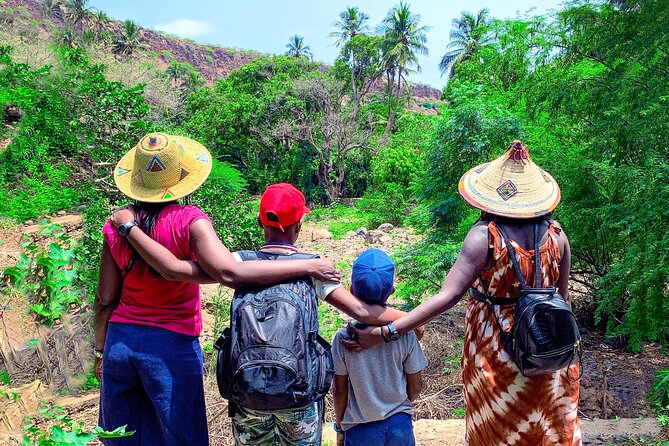
Wear shoes with a firm sole. Hiking pants are strongly advised from August through November, when vegetation can make the trail less forgiving. A hat, sunscreen, and plenty of water are also sensible choices. The provider asks you to bring decent footwear, and that advice is worth following.
The route is one way rather than a loop. That means you keep moving through the valley instead of retracing your steps, but it also means you cannot simply turn back to the starting point without changing the plan. Your transport and guide handle the wider logistics.
The walk’s appeal comes from its variety. You see greenery, cultivated plots, and the shape of the valley while hearing about the work behind the crops. Sugar cane, mango, cassava, bananas, and other plants are part of the agricultural picture. If you enjoy seeing how a place feeds itself, this section may be more rewarding than a viewpoint-only hike.
The baobab and Calabaceira’s farming life
The giant baobab is one of the walk’s signature sights. It is linked with Charles Darwin’s passage through Santiago, giving the tree a connection to the island’s place in travel and natural history.
The tree alone would be worth a pause, but the surrounding farming makes the stop more useful. You get a sense of how the valley supports crops in a dry island setting. A guide can help you understand what you are seeing instead of leaving you to identify plants on your own.
This is also where the tour feels most local. The schedule allows contact with farmers working their fields, and that gives the walk a grounded quality. You are not only looking at a pretty valley. You are seeing land in use and hearing about cultivation from people connected to it.
Keep your expectations practical. This is a guided cultural hike, not a long wilderness expedition. The trail takes about two hours, and the walking difficulty is easy. Its value lies in the combination of agriculture, plants, local explanation, and the transition into Cidade Velha.
Entering Cidade Velha through the Convent of São Francisco
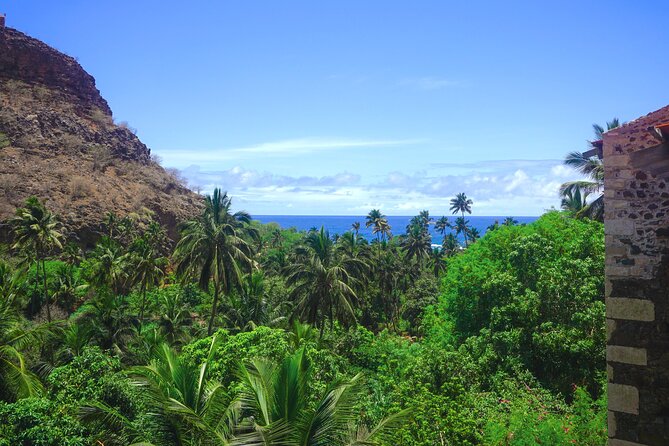
After the valley walk, the tour turns to Cidade Velha, the former Portuguese settlement and UNESCO World Heritage Site. The first listed stop is the Convent of São Francisco, built in the middle of the 17th century as a place of worship and formation.
The visit is brief, about 10 minutes. That is enough for an introduction and a quick look, but not a long architectural study. The stop works best as part of the larger sequence, as the tour moves from the island’s natural setting into the built history of Cape Verde.
Cidade Velha is compact enough for several major sights to be covered in a short period. The advantage is efficiency: you see a great deal in four hours. The trade-off is that most monument visits are short, usually around 10 minutes, so you should not expect extended independent exploration at every building.
A few more things to do in Praia worth a look
- Praia & Cidade Velha: Guided City Tour
★ 4.8 · 80 reviews - From Praia: Cidade Velha, Tarrafal & East Side Island Tour
★ 4.8 · 23 reviews - Like Locals: Praia and Cidade Velha Tour + Local Pontxi Tasting
★ 5.0 · 19 reviews - Santiago Island: Best of Praia & Cidade Velha Tour, a World Heritage Site
★ 5.0 · 15 reviews
Rua Banana and the oldest colonial church
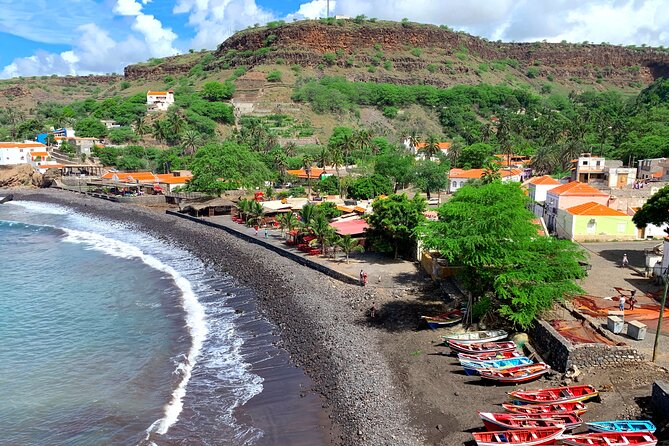
Rua Banana is described as the first urbanized street built by the Portuguese in sub-Saharan Africa. Its importance is easy to miss if you simply walk through it, so this is one place where a guide adds real value.
The street is followed by Igreja Nossa Senhora do Rosário, built in 1495. The church is presented as the oldest colonial church in the world and is noted for its Manueline, or Portuguese Gothic, style.
The stop lasts about 10 minutes. That may be enough to see the main structure and hear the key points, but you should not plan on lingering for a full church tour. The strength of this section is the historical sequence: Rua Banana shows early urban planning, then the church gives you a surviving religious monument from the same broad period.
If you are especially interested in architecture or colonial history, you may want to use the guide’s explanation to get your bearings quickly and then ask a focused question. The tour moves at a set pace, so the guide’s commentary helps you make the most of the short visit.
The Pelourinho and the difficult history of Cidade Velha
The Pelourinho was built in 1512 from white marble and was used as a slave market. This is one of the most important stops because it connects Cidade Velha’s attractive historic center with the violence and exploitation that shaped the Atlantic world.
The monument can be visited in about 10 minutes, but its meaning deserves more than a quick photograph. Ask your guide to explain how the site fits into Cidade Velha’s role in Portuguese expansion and the slave trade. The tour’s focus on local history makes this a useful moment to slow down mentally, even if the group schedule keeps the physical stop short.
This is also a reminder that Cidade Velha is not just an old town with pleasant streets and church ruins. Its heritage includes painful chapters. A good guide helps you see both the beauty of the surviving buildings and the human cost behind the town’s importance.
Sé Catedral ruins and the city’s former importance
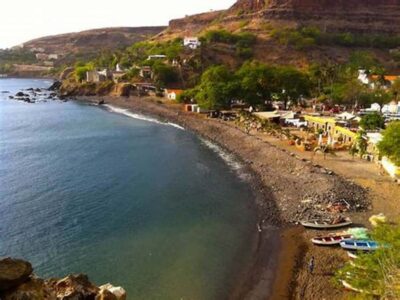
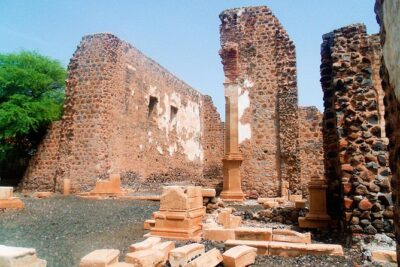
The ruins of Sé Catedral follow the Pelourinho. The cathedral is described as the first built by the Portuguese in Africa, and its remains give you a sense of the scale and ambition of the former settlement.
Again, the scheduled visit is about 10 minutes. You will get an overview rather than a long archaeological visit. The ruins are most useful when viewed as part of the town’s wider story: religious buildings, civic spaces, defensive works, and trading routes all gathered in one small historic center.
The sequence also keeps the tour varied. You are not spending four hours inside churches. You alternate between streets, monuments, ruins, and the final fortress viewpoint.
São Filipe Fortress and the view over the old town
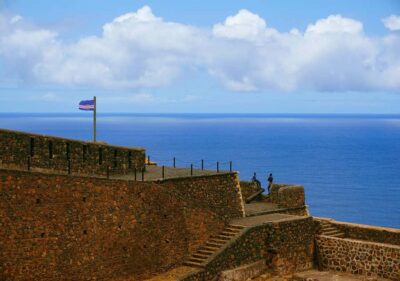
The final major stop is Fortaleza Real de São Filipe, built in 1587 to defend Cidade Velha against pirate attacks. From the top, you get a view over the old town and can learn how the defensive system worked.
This is the longest Cidade Velha stop, at about 20 minutes. It is also the only listed sight with a separate charge. The €5 entrance fee per person is not included, so keep a little extra money ready.
The fortress is an important finish because it brings together the town’s geography and military purpose. From above, the earlier stops make more sense as parts of one settlement. You can see why the location mattered and how the fort was meant to protect it.
Twenty minutes is enough for the main view and an explanation, but anyone wanting a slow, detailed fortress visit may find the schedule brisk. The tour is built for a broad overview, not for spending an entire morning at São Filipe.
What the $81.30 price includes
At $81.30 per person, this is not the cheapest way to see Cidade Velha, but the price covers more than admission to a few monuments. You get hotel pickup and return, transport from Praia, a guide, the Calabaceira walk, and liability insurance.
I see the value most clearly if you are staying in Praia and want both Santiago’s rural side and its major historic town without arranging separate transport. The tour also removes the need to work out how to connect the valley walk with Cidade Velha.
The price is less compelling if you only want to see the old town and do not care about hiking or farming. In that case, a shorter Cidade Velha visit may suit you better. You also need to budget separately for lunch and the €5 fortress entrance.
Shared and private formats are available. The maximum group size is eight, which is small enough for questions and easier movement along the narrow section of trail. A private departure may be worth considering if you want more control over the pace, but the supplied price is listed per person and does not specify a private supplement.
Who should book this Santiago tour?
I would choose this experience if you want an introduction to Santiago that combines nature, agriculture, and history in one morning. It is especially suitable for first-time visitors who have limited time and want more than a city drive.
It fits people who can walk about 5 kilometers and manage a downhill trail with a narrow beginning. The activity is intended for people over six, and most participants can take part, but bring water, sun protection, and proper shoes.
It is also a good match for anyone who values explanation. Ailton and Maria are praised for their coverage of plants, birds, farming, and history, and the tour’s design gives the guide plenty to interpret. You are not simply dropped at monuments and left to guess why they matter.
You may want to skip it if you dislike walking on medium-quality paths, need a completely flat route, or prefer to spend a long time at each historic site. The schedule is efficient, and several Cidade Velha stops last only 10 minutes.
Free cancellation is available if you cancel at least 24 hours before the start time. Changes made inside that window are not accepted, and the activity requires a minimum number of people to operate.
Should you book the Calabaceira and Cidade Velha tour?
Book it if you want the best mix of Santiago’s rural interior and its most important historic town in a single half-day. The baobab, farm fields, old churches, Pelourinho, cathedral ruins, and fortress viewpoint create a well-balanced route.
The strongest reason to choose it is the guide-led connection between the sights. With a local guide such as Ailton or Maria, the valley becomes more than greenery and the ruins become more than old stone. Just bring suitable clothing, water, and €5 for the fortress, and accept that the schedule favors a broad introduction over long stops.
FAQ
How long does the Calabaceira and Cidade Velha tour last?
The experience lasts approximately four hours, including pickup, the walk, visits in Cidade Velha, and return to Praia.
Where does the tour start?
Pickup begins at 8:30 a.m. at your accommodation in Praia or Cidade Velha.
How far is the hike and how difficult is it?
The walk is about 5 kilometers and takes roughly two hours. It is rated easy, follows a one-way trail, and loses approximately 186 meters in elevation. The beginning is narrow, so decent footwear is advised.
Is São Filipe Fortress included in the price?
The fortress visit is part of the route, but the €5 per person entrance fee is not included.
Is lunch included?
No. Lunch is not included in the tour price.
What should I bring for the walk?
Bring decent footwear, hiking pants, a hat, sunscreen, and water. Hiking pants are especially advised from August through November.
More hiking in Praia
- Santiago: Monte Tchota Natural Park to Pico d’Antónia Hike
★ 4.8 · 43 reviews - Serra Malagueta Natural Park Hike & Relaxing Swim at Tarrafal Beach
★ 5.0 · 30 reviews - Serra Malagueta Natural Park: Hike to Gongon Valley & Lunch
★ 4.8 · 22 reviews - Santiago: Trek from Serra Malagueta to Rabelados Community
★ 5.0 · 16 reviews
Just added in Praia
- Hiking Águas Belas Cave★ 4.5 · 3 reviews
- Tour Old City/Discover Old Town★ 4.0 · 8 reviews
- Santiago Island: Private Airport Transfer to Praia or Vice Versa★ 5.0 · 3 reviews
- Ribeira da Barca: Boat Trip to the Cave, Snorkeling and BBQ on the beach★ 5.0 · 10 reviews
- Private Tour of Santiago – Discover the Island★ 4.5 · 18 reviews
- Tarrafal Beach Tour: Boat Trip to the Lighthouse, Snorkel & BBQ Lunch★ 5.0 · 5 reviews
- Best of Santiago Island: Cidade Velha, Workshop & Tarrafal Beach Tour★ 4.5 · 3 reviews
- Private Tour in Praia, Cape Verde★ 4.5 · 7 reviews
Cidade Velha Heritage Tours, compared.

Like Locals: Praia and Cidade Velha Tour + Local Pontxi Tasting
Read our review →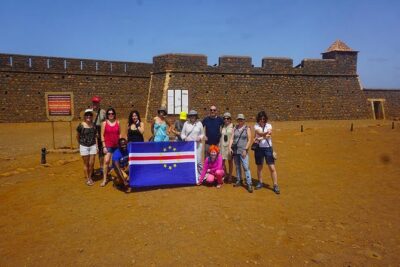
Best of Praia & Cidade Velha Tour, a World Heritage Site
Read our review →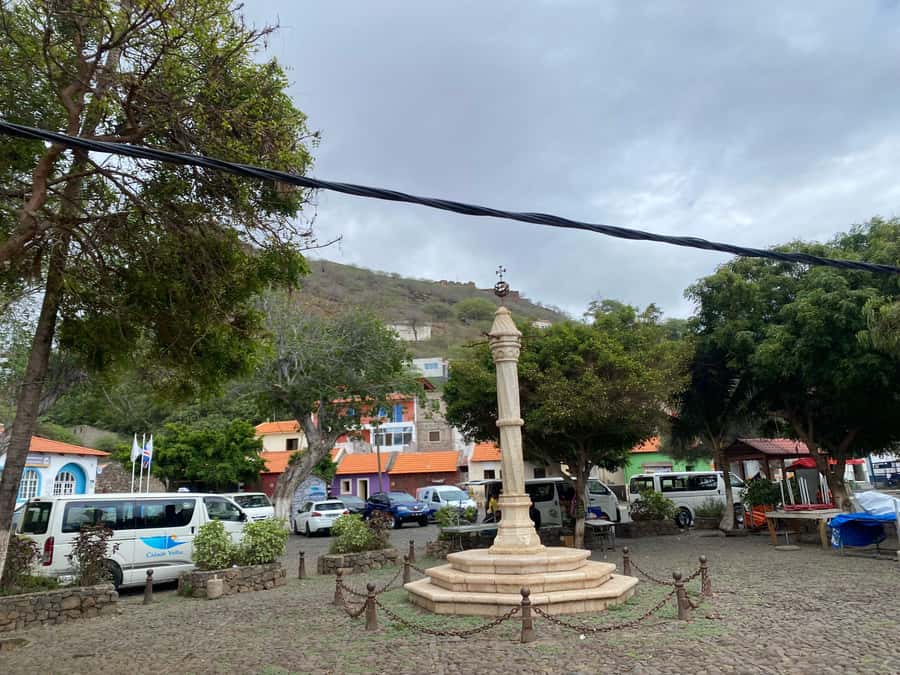
Browse the lists this tour appears in