
Reviewed · CITY TOURS
Tour Old City/Discover Old Town
Cidade Velha is where Cape Verde’s story becomes tangible. Once called Ribeira Grande, it was the Portuguese capital in the islands and the first Portuguese city in Africa. Today, weathered ruins, a hilltop fortress, and a white marble pillory tell a far more complicated story than a simple sightseeing stop. The town is a UNESCO World Heritage site, but its real force comes from the traces of trade, faith, conquest, and slavery packed into a small area.
I like the private format because you are not tied to a large bus or a fixed group. I also like the clear historical route: Fortaleza Real de San Felipe, the cathedral ruins, Nossa Senhora do Rosário, the Pelourinho, and São Francisco Convent. Nelson is specifically named as a warm, humorous guide, and he has also recommended a lunch spot at the end of the visit.
The main caution is timing and transport. The experience is described as lasting about 2 to 3 hours, yet one booking account expected five hours and finished in roughly 2.5. Another account described four people squeezed into a small sedan and a pickup without the promised welcome sign. Confirm the vehicle, meeting point, and length before you set out.
Key points to know before visiting Cidade Velha
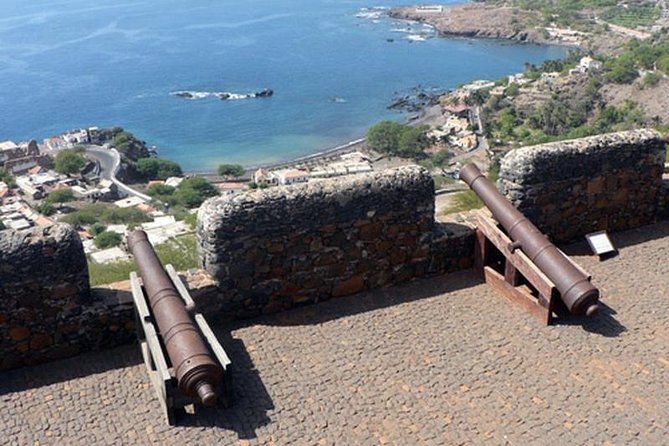
- Fortaleza Real de San Felipe: See the fortress built after Sir Francis Drake attacked in 1585, with broad views over the old settlement and sea.
- A town shaped by slavery: The Pelourinho is not just a pretty column. It marks the public punishment of enslaved people and the power of the old municipality.
- The first Portuguese city in Africa: Ribeira Grande became an important stopping and trading point between Africa, Europe, the Americas, and the East.
- Private transportation: Only your group participates, which gives you more freedom to ask questions and keep the pace comfortable.
- A short, focused visit: Plan for about 2 to 3 hours, and clarify whether admission charges or extra stops are part of your booking.
- A guide named Nelson: He is praised for warmth, humor, pacing, and practical help, including a lunch recommendation.
Why Cidade Velha matters to Cape Verde
If you want to understand Santiago, start here. Cidade Velha, once Ribeira Grande, was the first major Portuguese settlement in Cape Verde and the first city the Portuguese established in Africa. Its position between the African coast, Europe, the Americas, and the East made it useful to ships and merchants.
That location also tied the town to the slave trade. People were brought through the settlement, ships stopped for supplies, and the town grew into a commercial center. The same streets that carried religion and trade also carried coercion and human misery. You should expect the tour to deal with both sides.
The settlement later lost its importance, and much of it fell into ruin. That decay is part of the visual character today. Walls lean toward the sea, old religious buildings survive in fragments, and the remaining monuments feel exposed to sun, wind, and time.
A private visit helps because you can pause at difficult subjects rather than simply photograph them and move on. Ask your guide to explain how the town’s role changed and how the surviving buildings fit together. The supplied description promises a driver with years of experience, but it does not provide a full biography or formal guiding credentials, so set your expectations accordingly.
A few more things to do in Praia worth a look
- Praia & Cidade Velha: Guided City Tour
★ 4.8 · 80 reviews - Praia: Baobab Mysterious Tree, Green Valley & Old City Hike
★ 4.8 · 53 reviews - Private Tour Cidade Velha/Discover OLD CITY
★ 5.0 · 4 reviews
Fortaleza Real de San Felipe and the view from above
The fortress is usually the strongest opening stop. Fortaleza Real de San Felipe was built after Drake’s attack in 1585, with construction beginning around 1593. Its purpose was direct: defend Ribeira Grande and garrison the city.
The site gives you a useful introduction to the town’s geography. From above, you can look toward the old settlement and the sea that brought ships, commerce, soldiers, missionaries, and captives. The setting helps explain why the Portuguese chose this place and why control of it mattered.
Allow about an hour here. That is enough time to walk through the fort area, take in the views, and hear the basic story without rushing. The description says admission is not included, so you should ask about the current entrance cost before booking or beginning the outing. The tour price covers private transportation, but it does not cover all fees and taxes.
The fortress can also expose the limits of a short tour. If you want a detailed military history, architectural study, or long time for photographs, 60 minutes may feel tight. For a first visit, though, it is a sensible starting point because it places the rest of Cidade Velha below you.
Sé Cathedral, a ruin with an important role
The Sé Cathedral is one of the most evocative stops because so little remains. It was the first cathedral the Portuguese built on the African continent, and its ruins are being preserved so that the town’s religious and political past does not disappear.
You will not find a complete church interior here. Instead, expect fragments and a sense of scale. The absence of a roof and much of the original structure makes the site feel open to the elements. It is a good place to think about how quickly a city can lose its position when trade routes, political priorities, and security change.
The planned visit lasts about 30 minutes. That is enough for an explanation and a careful look, but not for a lengthy architectural tour. Admission is listed as free.
The cathedral also connects the town to Cape Verde’s wider identity. Santiago became the mother island of early Cape Verdean culture, in part because of its location and early importance. The town’s role was never only local. It was part of a wider Atlantic system, and the cathedral was built to serve that system.
Nossa Senhora do Rosário and the oldest surviving church
The Church of Our Lady of the Rosary dates from around 1495 and is described as one of the oldest churches on Santiago and in Cape Verde. It is still a place of worship and a historical heritage site, making it different from the cathedral ruins.
The church is linked to Father António Vieira, who preached here in 1652 while traveling from Portugal toward Brazil. He was surprised to find local clergy and canons with a level of learning he considered worthy of the best in Portugal. That detail gives the building a human connection beyond dates and construction materials.
You have about 30 minutes at this stop. That should be enough to look at the church, hear its story, and ask questions. If you have an interest in religious architecture, colonial history, or the movement of people across the Portuguese world, this may be one of the more rewarding stops.
Keep in mind that the description does not promise a formal interior tour or guaranteed access to every part of the church. Your experience may depend on opening conditions and the guide’s arrangement on the day.
Same island, a different sort of day:
- Santiago: Landscapes, Street Art, and Markets Day Trip
★ 4.8 · 316 reviews - From Port of Praia: Island Tour for Cruise Ship passengers
★ 4.5 · 190 reviews - Serra Malagueta: Principal Valley Hike & Lunch with Locals
★ 4.7 · 64 reviews - Santiago: Calabaceira Valley Trek & Visit to Cidade Velha
★ 4.8 · 49 reviews
The Pelourinho and the uncomfortable center of town
The Pelourinho is a white marble Manueline-style column in the main square. It dates from around 1512 or 1520 and was restored in the late 1960s. At first glance, it may look like a decorative civic monument. Its meaning is much harsher.
This was a symbol of municipal power and a place where enslaved people were publicly punished. That makes it one of the most important stops for understanding what Cidade Velha represented. The column is not simply old stonework. It is a reminder that law, commerce, religion, and slavery operated together in the town.
The visit is planned for about 30 minutes, and admission is free. Use the time to ask direct questions. How did the square function? Who held power? How did the town’s commercial role affect ordinary people? Those questions will give the monument more meaning than a quick photograph.
The Pelourinho may be difficult for some people, especially if the subject is handled too briefly. A good guide should explain the site plainly, without softening its purpose or turning it into a dramatic performance. The available information does not promise a specific depth of interpretation, so your experience will depend partly on the person leading the visit.
São Francisco Convent and the town’s religious network
The Convent of São Francisco was built around 1640 on land donated by Joana Coelho, a wealthy landowner and widow of Captain Fabião de Andrade. It welcomed Franciscan religious figures who replaced the Jesuits in the Cape Verde mission.
The convent also served as a training center, where priests taught various crafts to the local community. That detail makes the ruins more than a religious stop. It points to the practical role religious institutions played in education, work, and community life.
The building was badly damaged after the privateer Jacques Cassard attacked in 1712. A storm in 1754 caused further destruction. The site therefore reflects several layers of change: construction, religious use, attack, weather, and abandonment.
Plan for around 30 minutes, with no admission charge listed. As with the cathedral, you should expect remains rather than a complete convent complex. The interest is in connecting the fragments to the town’s wider story.
What the private format means in practice
Private transportation is included, and only your group participates. That is useful if you want to ask questions, adjust the pace, or avoid being tied to strangers. It can also make the ride more comfortable than joining a large coach, but comfort depends on the actual vehicle.
One account described four people sharing a small sedan. That is a serious point to settle before booking if you have luggage, mobility concerns, or simply prefer more room. Ask how many passengers the vehicle can carry and whether a larger vehicle is available for your group.
Pickup is offered, and the experience is near public transportation. The description does not give a fixed pickup location, so confirm the exact meeting details. One past booking account also described difficulty finding the driver because there was no welcome sign. A phone number and clear meeting instructions are worth having before the day begins.
The driver is described as experienced in providing comfort and safety. Nelson is the only named guide, and the strongest account attached to his service describes a warm manner, good humor, a well-paced visit, and a useful lunch recommendation. Those are practical strengths, especially after a history-heavy morning.
Is the $29.60 price good value?
At $29.60 per person, this is reasonably priced for a private outing if your group is small and the transportation works as promised. You are paying for a focused trip from Praia to the historic center, private transport, and several major sites in one route.
The value drops if you expect a five-hour tour, extensive commentary, or many extra stops. The stated duration is about 2 to 3 hours, and one booking account described finishing after approximately 2.5 hours despite expecting longer. You should treat this as a compact historical visit, not a full-day exploration of Santiago.
Admission fees and taxes are not included. Most listed stops are free, but the fortress specifically shows admission as not included. Ask for the total expected cost, including the fortress entrance and any other charges, before you go.
Group discounts may make the price more attractive for a larger party, though the vehicle size becomes more important as the group grows. A private tour for two people costs more per person than joining a shared excursion, but it buys control over the pace and questions.
Who should book this short history tour?
I would recommend it to you if you have a limited amount of time in Praia, want to see the main monuments of Cidade Velha, and prefer a private vehicle. It suits history-minded visitors who want the setting explained rather than simply photographed.
It is also a good match if you appreciate a balanced account of Cape Verde’s past. The route includes forts and churches, but it also brings you to the Pelourinho and the legacy of slavery. That mix matters.
Families and small groups may like the private setup, provided the vehicle is suitable. Most people can participate, and service animals are allowed. The experience is near public transportation, though pickup is also offered.
I would be cautious if you need a large vehicle, a guaranteed five-hour schedule, or highly specialized historical guiding. The tour information does not promise those things. Confirm the details in advance rather than assuming the day will include extra sightseeing.
Should you book Tour Old City?
Book it if you want an affordable, compact introduction to Cidade Velha with private transportation and the major historic stops in one outing. The fortress, cathedral ruins, church, pillory, and convent create a clear route through Cape Verde’s colonial, religious, military, and commercial past.
Before paying, confirm three points: the exact duration, the size of the vehicle, and the meeting arrangement. If Nelson is available, his reported warmth, humor, pacing, and lunch advice are useful advantages. If you need more time, ask whether a longer private option is available and what extra cost applies.
With those expectations in place, this is a sensible way to reach Santiago’s most important historic town without arranging transport yourself.
FAQ
Where does the tour take place?
The experience takes place in Praia, Cape Verde, with visits to Cidade Velha, also known historically as Ribeira Grande, on Santiago Island.
How long does the tour last?
The stated duration is approximately 2 to 3 hours. One booking account described finishing in about 2.5 hours, so confirm the expected schedule before booking.
What sites are included?
The route includes Fortaleza Real de San Felipe, Sé Cathedral, Igreja Nossa Senhora do Rosário, the Pelourinho, and Convento de São Francisco.
Is transportation included?
Yes. Private transportation is included, and only your group participates. Pickup is offered.
Are entrance fees included?
No. All fees and taxes are excluded. Most of the listed stops show free admission, while admission to Fortaleza Real de San Felipe is not included.
Is the tour suitable for most people?
Yes. Most people can participate, and service animals are allowed. The experience is also near public transportation.
What is the cancellation policy?
You can cancel at least 24 hours before the local start time for a full refund. Cancellations or changes made within 24 hours are not refunded or accepted. If poor weather causes the tour to be canceled, you will be offered another date or a full refund.
Just added in Praia
- Hiking Águas Belas Cave★ 4.5 · 3 reviews
- Santiago Island: Private Airport Transfer to Praia or Vice Versa★ 5.0 · 3 reviews
- Santiago Island: 4-Hour Calabaceira Valley Hike & Guided Tour to Cidade Velha★ 5.0 · 18 reviews
- Ribeira da Barca: Boat Trip to the Cave, Snorkeling and BBQ on the beach★ 5.0 · 10 reviews
- Private Tour of Santiago – Discover the Island★ 4.5 · 18 reviews
- Best of Santiago Island: Cidade Velha, Workshop & Tarrafal Beach Tour★ 4.5 · 3 reviews
- Tarrafal Beach Tour: Boat Trip to the Lighthouse, Snorkel & BBQ Lunch★ 5.0 · 5 reviews
- Private Tour in Praia, Cape Verde★ 4.5 · 7 reviews
City Tours, compared.
Espargos City Tour, Local Life, and Cape Verde Tapas
Read our review →
Baobab Mysterious Tree, Green Valley & Old City Hike
Read our review →
Santa Maria City Tour & Cuscuz Tasting with a Local Family
Read our review →

Rabil, Shipwreck, City, Snacks & Drinks – 4×4 Tour
Read our review →Browse the lists this tour appears in