
Reviewed · SEA TURTLE WATCHING
Santa Maria: Sal Island Sea Turtle Watching Experience
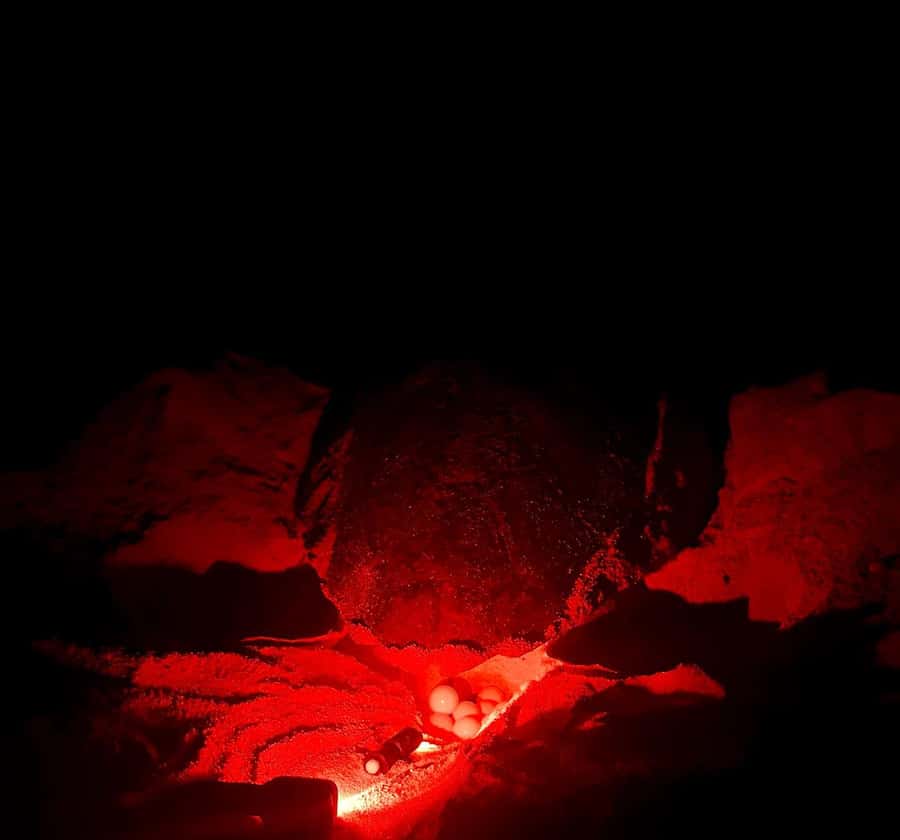
A mother sea turtle hauling herself onto a dark beach, laying eggs, covering the nest, and returning to the ocean is the heart of this Sal experience. If timing is kind, you may also see baby turtles break from the sand and scramble toward the water. The waiting is part of the show, so come ready for a quiet night rather than a tightly scripted attraction.
I like two things here: the small group limit of 10 and the clear care taken to protect the turtles. Guides use red lights, ask you to stay silent, and forbid flash photography and touching. The possible drawback is simple: nature keeps its own clock. Some groups wait more than an hour before seeing anything, and there is no guarantee of a nesting turtle.
Key points to know before booking
- Turtle sightings depend on nature: You may see egg laying, hatchlings, or both, but sightings are not promised.
- The beach visit is mostly quiet observation: Once a turtle appears, you sit still and give it space.
- Guides focus on conservation: They explain the turtle’s life cycle, nesting process, and why welfare comes first.
- Transport is easy: Hotel pickup and return are included in an air-conditioned vehicle.
- The tour is multilingual: Guiding is offered in Portuguese, English, French, and Italian.
- Bring patience, not just a camera: Comfortable shoes, suitable clothing, biodegradable sunscreen, insect repellent, and a garbage bag are recommended.
What the $37 price really covers
At $37 per person, this is a reasonably priced wildlife outing, especially because hotel transfers, local guides, fuel, taxes, and service charges are included. You are not paying only for a ride to the beach. The fee covers access to a guided conservation experience in a place where independent visitors would have little chance of knowing where to look or how to behave around nesting turtles.
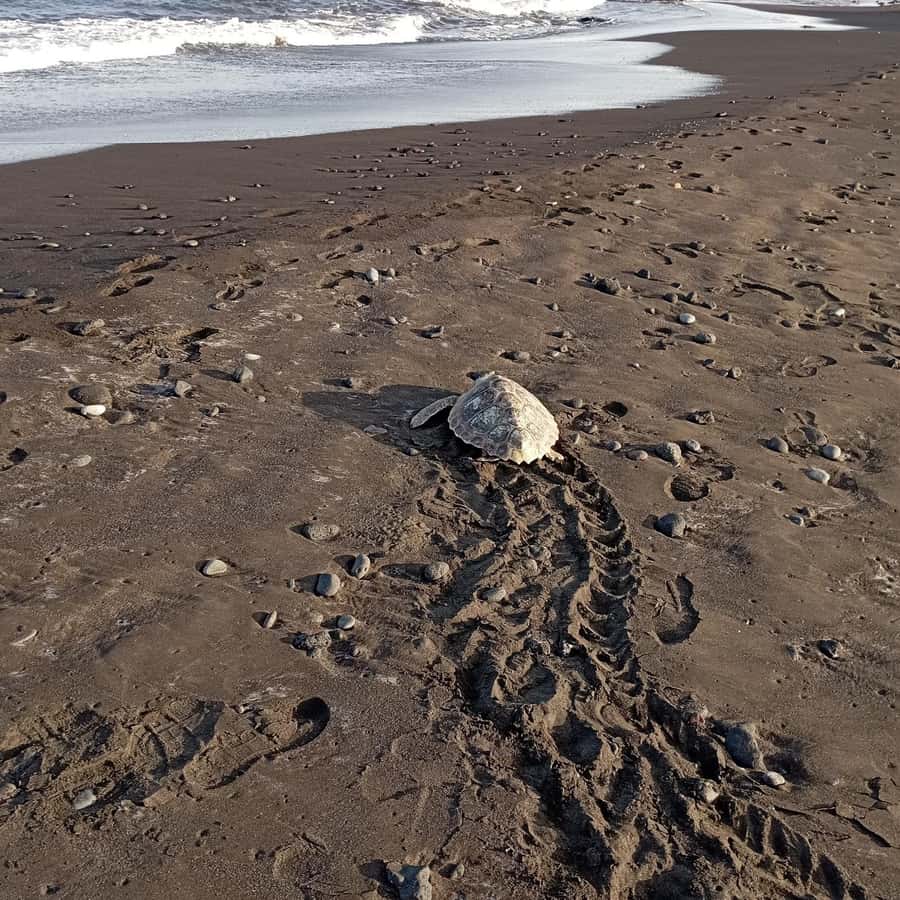
The value is strongest if you see a mother turtle complete the full process. That can include reaching the sand, preparing a nest, laying eggs, covering the nest, and returning to the sea. Some departures also see hatchlings leaving the sand. You might see only one part of this sequence, however, and that matters when setting expectations.
Food and drinks are not included. Since the activity takes place at night and lasts about three hours, eat before pickup and bring anything allowed by the operator if you need it. Alcohol is not permitted in the vehicle, and littering is strictly forbidden.
The flexible booking terms help if your holiday plans are still shifting. You can cancel up to 24 hours before departure for a full refund, and the reserve-now, pay-later option lets you hold a place without paying immediately.
More Turtle Watching in Sal
- Santa Maria: Sea Turtle Watching Experience on Sal Island
★ 4.6 · 446 reviews - Turtle Watching Adventure
★ 5.0 · 98 reviews - 4h Turtle Watching with SSV Buggy Night 4WD
★ 5.0 · 20 reviews
Leaving Santa Maria after dark
Pickup is arranged at your accommodation reception, with many hotels and central locations in Santa Maria covered. The list includes Hotel Morabeza, Hotel MiraBela, the Riu properties, Meliá resorts, Hilton Cabo Verde Sal Resort, Oasis Salinas Sea, Robinson Cabo Verde, Hotel Da Luz, Hotel Sobrado, and several other hotels and residences.
The exact schedule needs a little attention. The activity information says it starts at 7 PM and normally ends around 11 PM, while the pickup details specify an 8 PM collection. Treat the pickup time shown at booking as the important one, and confirm it with the operator if the times do not match.
The transfer is by comfortable, air-conditioned vehicle. That is welcome after a warm day on Sal, though the drive is not the main attraction. You reach a remote or deserted beach in less than an hour, then leave the comfort of the vehicle for a night walk and beach wait.
You should wear shoes you can walk in on sand and uneven ground. Comfortable clothes are more useful than anything formal, and biodegradable insect repellent is a sensible addition. A camera is fine, but your best photograph may be no photograph at all if using it would require flash or movement near a turtle.
The 45-minute introduction in Santa Maria
The first guided portion is listed as about 45 minutes in Santa Maria. This is where the evening gets its context. Your guide explains the turtles’ evolution, characteristics, curiosities, and nesting behavior before or around the time you reach the beach.
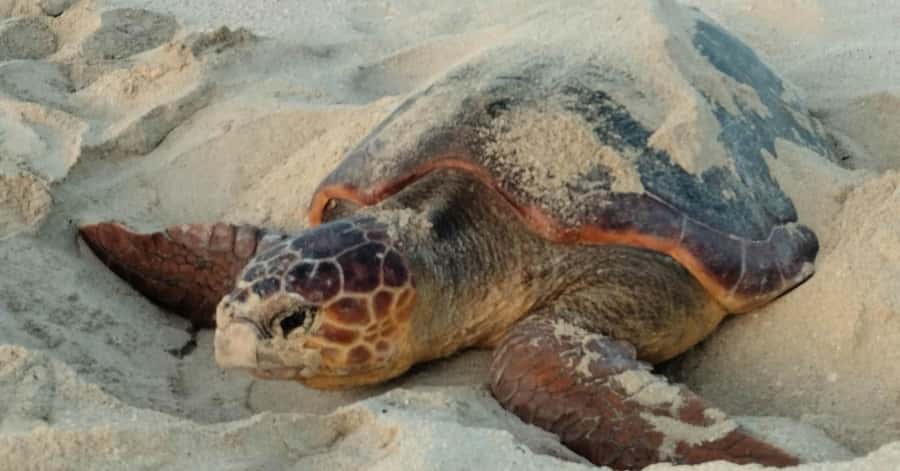
Cape Verde is home to three turtle species. The yellow turtle, also called the common turtle, is the species most often associated with nesting on the island’s sandy beaches. Those beaches are important nesting areas, so the rules are not decoration. They help reduce the chance that people interrupt the animal at a sensitive point in its life cycle.
Guides have been praised for their care and personal approach. Names associated with departures include Sousa, Johnny Cash, and Anastassi Salsa. The guide team may split explanations by language when several nationalities are present. That is useful in a group of up to 10, especially when Portuguese, English, French, and Italian are all in use.
One practical point: the order of information can vary. You may receive the full explanation before seeing a turtle, or some facts may come afterward when the beach is quiet again. If you are eager to understand what you are watching, ask your guide about each stage as the night develops.
Two hours at Kite Beach and nearby nesting sites
The main beach portion is listed as about two hours at Kite Beach. In practice, the vehicle may stop at more than one site. Guides may first check a section of beach, then move the group if activity is stronger elsewhere.
This can feel less polished than a fixed attraction. You may get out, wait, return to the vehicle, and continue to another site. One account described a wait of more than an hour while guides walked the beach looking for signs of activity. That is not a flaw in the wildlife itself, but it is useful to know before you book.
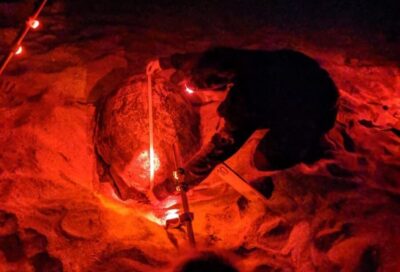
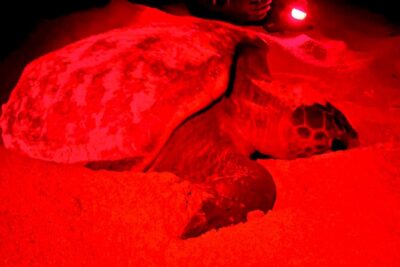
Once the guides find activity, the experience becomes focused and quiet. You walk in a small group, watch for a turtle coming up from the sea, and sit at a careful distance if one begins nesting. The guide uses red light rather than bright white light, helping you see without startling the animal.
The best behavior is also the easiest: stay still, keep your voice low, follow the guide, and do not reach toward the turtle. Flash photography is forbidden. Touching animals is forbidden. The turtle is not performing for the group, and the guide’s job is to make sure the group does not turn a rare event into a stressful one.
You might see a turtle only after a long wait. You might see hatchlings emerge from a nest and move toward the water. You might see an adult mother return to the ocean after covering her eggs. On a fortunate night, you can witness both hatching and egg laying, which gives you a fuller picture of the species’ cycle.
More wildlife trips in Santa Maria Cape Verde:
- Boa Vista: Shark, Turtles, Cave, Sandboarding & Tasting Tour
★ 4.8 · 328 reviews - Boavista: Turtle, Shark, Santa Monica, Sandboard & Tasting
★ 4.7 · 228 reviews - From Mindelo: São Vicente’s Enchanting Sea Turtle Snorkeling
★ 4.4 · 153 reviews - São Vicente: Snorkel with Sea Turtles Adventure
★ 4.5 · 111 reviews
The remarkable process, from nest to ocean
Watching the nesting process helps explain why patience matters. A turtle does not simply arrive, lay eggs, and leave within a few minutes. The group may watch the animal come up from the water, find a suitable place, prepare the nest, lay the eggs, cover them, and make its way back to the sea.
The covering stage is especially interesting. The turtle carefully hides the nest before leaving, which helps protect the eggs from exposure. Your guide explains what is happening and why the island’s conservation rules are strict.
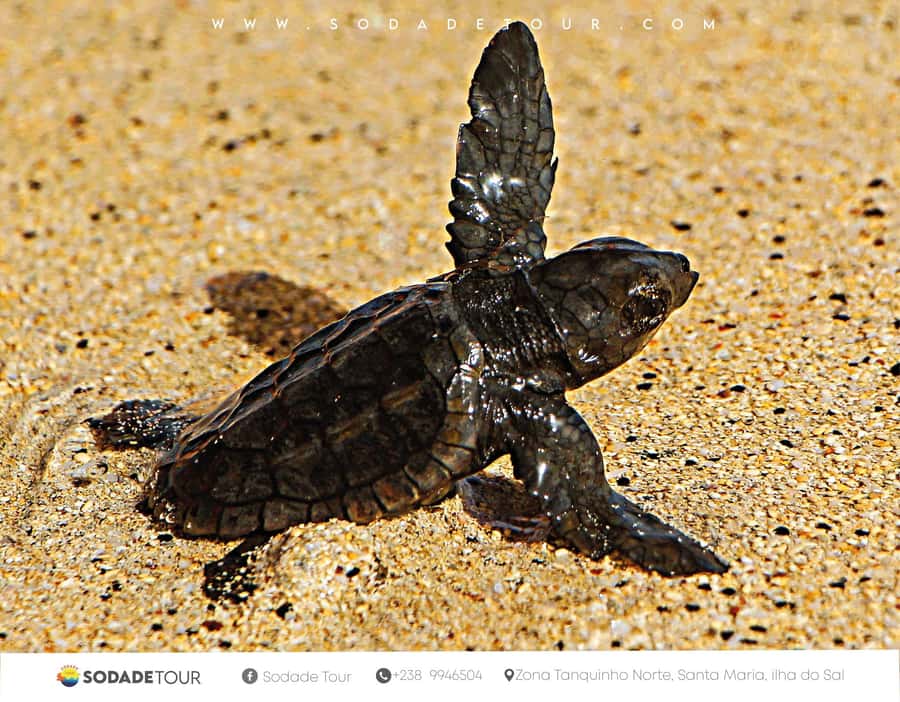
Hatchlings create a different kind of excitement. They may appear from the sand and make their way toward the ocean in a small, determined rush. You must still keep your distance and avoid blocking their route. The scene is short, and the dark beach makes it feel more like a quiet natural event than a show.
Do not book this expecting guaranteed close-up views. The guides work to give the animals space, and the group may see only what the conditions allow. That restraint is a strength. A wildlife tour should not promise control over wild animals.
Why the conservation rules matter
This experience is valuable because it connects the sighting with the wider protection effort. You learn why turtle welfare is treated as the priority on Sal and why behavior on the beach matters.
The rules are firm. No flash, no touching, no smoking, no alcohol, no drugs, and no littering. Smoking is also not allowed in the vehicle or indoors. Baby strollers and electric wheelchairs are not permitted, and the activity is not suitable for wheelchair users or visually impaired people.
The request to bring a garbage bag is practical. A clean beach gives nesting turtles a better chance and prevents rubbish from becoming part of the night’s natural setting. Biodegradable sunscreen and insect repellent are also recommended, which shows attention to the beach environment rather than just personal comfort.
I would treat the red-light rule as a sign of a well-run outing, not an inconvenience. Bright white light and flash photography would make it harder to observe without interference. Your night vision may take a few minutes to adjust, but that is a small price for a more responsible encounter.
What the waiting feels like
The waiting is the part most likely to test you. There may be long stretches with no visible activity while guides search the shoreline or watch for movement. You could spend more than an hour simply standing or sitting near the beach before the main event begins.
This is easier if you think of the outing as wildlife watching rather than entertainment on a timetable. The dark sky and quiet beach become part of the experience, and the pause gives you time to listen, look toward the water, and stay alert for the guide’s signal.
It is still fair to want better communication. If the group is left waiting without an explanation, the time can feel uncertain. The guides may be busy searching, but a short update about what they are looking for would make the wait more comfortable.
Bring realistic expectations and you are less likely to be disappointed. The most successful night may involve one turtle and a long wait. The most fortunate may include a nesting mother and hatchlings. Both are possible within the same three-hour format.
Who will enjoy this Sal excursion
I would choose this tour if you care more about seeing an authentic wildlife event than ticking off a fast attraction. It suits couples, families with older children, nature-minded visitors, and anyone curious about Cape Verde’s marine life.
It is also a good pick if you want a guided experience without paying for a high-end private outing. The group is limited to 10, and the multilingual format makes it workable for international visitors. English, Portuguese, French, and Italian are available.
You should think twice if you dislike sitting quietly, walking on sand at night, or waiting without a guaranteed result. This is not a good fit for wheelchair users or visually impaired people, and baby strollers are not allowed.
The activity also depends on the nesting season. One departure noted that Cape Verde authorities were stopping turtle watching after September 30 to give the animals undisturbed time. That makes the date of your visit important. Confirm that tours are operating during your stay rather than assuming they run year-round.
What to bring and what to leave behind
Pack light, but pack sensibly:
- Comfortable shoes for sand
- Comfortable clothes
- A camera without flash use
- Biodegradable sunscreen
- Biodegradable insect repellent
- A garbage bag
Leave alcohol and drugs behind, and do not bring alcoholic drinks into the vehicle. You also need to leave behind any plan to touch, feed, chase, or approach a turtle.
A quiet attitude is the most important item. The guide may ask you to sit, remain silent, or move only when instructed. Your cooperation protects the animal and helps everyone else see what is happening.
Should you book the turtle watching experience?
Book it if you want a reasonably priced, conservation-minded night out and can accept uncertainty. The strongest reason to go is the chance to watch a complete natural process, from egg laying to a mother’s return to the ocean, with a guide explaining what you see.
Skip it if you need guaranteed sightings, constant activity, or easy accessibility. The waiting can be long, the schedule may shift between beach sites, and the experience depends entirely on turtle behavior.
For most nature lovers staying in Santa Maria during the nesting season, I think the $37 cost is fair. The guides’ care, hotel transport, small group size, and multilingual support add real value. Just arrive with patience, respect the rules, and remember that the turtle gets the final say.
FAQ
How long does the sea turtle tour last?
The activity is listed as three hours. The timing information also says it may begin around 7 PM and usually finish by 11 PM, while pickup details list an 8 PM collection, so confirm your exact pickup time when booking.
Where does the tour take place?
The tour begins with pickup in Santa Maria and continues to Sal’s beaches, including Kite Beach. The vehicle may visit more than one beach site during the evening.
Is hotel pickup included?
Yes. Pickup and drop-off are included from many hotels and accommodation points in Santa Maria. The guide or driver collects you at the accommodation reception.
What languages are available?
Live guiding is available in Portuguese, English, French, and Italian.
How large is the group?
The activity is limited to 10 participants, making it a small-group experience.
Will I definitely see a sea turtle?
No. Turtle sightings depend on natural activity and timing. You might see an adult laying eggs, hatchlings reaching the ocean, both, or no turtles during the visit.
Can I use flash photography?
No. Flash photography is not allowed. Guides use red lights to reduce disturbance to the turtles.
Can I touch the turtles?
No. Touching animals is not allowed. You must remain as quiet and still as possible when a turtle is nesting or hatchlings are moving toward the sea.
Is food or drink included?
No. Food and drinks are not included. Alcoholic drinks are also not allowed in the vehicle.
Is the tour suitable for wheelchair users?
No. The activity is not suitable for wheelchair users or visually impaired people. Baby strollers and electric wheelchairs are also not allowed.
Just added in Santa Maria Cape Verde
- Boa Vista Sunset Dinner with Live Music★ 4.4 · 8 reviews
- Boa Vista Full Day 4×4 Island Tour with Beachfront Lunch★ 3.5 · 4 reviews
- Ilha Do Sal: Snorkeling with Local Guide★ 4.1 · 34 reviews
- Espargos: Guided Sal Island City Tour★ 4.2 · 39 reviews
- Sal Island, Salinas, Buracona and Lemon Shark★ 4.8 · 33 reviews
- Sal island: Santa Maria city tour, street art and tapas★ 4.8 · 37 reviews
- Santa Maria: Guided Coastal Hike & Monte Leão Sunset★ 4.5 · 37 reviews
- Sal: All inclusive Salt Lake, Natural pools and Shark Bay★ 4.7 · 39 reviews
Sea Turtle Watching, compared.
Shark, Turtles, Cave, Sandboarding & Tasting Tour
Read our review →
Turtle, Shark, Santa Monica, Sandboard & Tasting
Read our review →
Beautiful Beaches, Turtles & Djeu Island Snorkel
Read our review →
Browse the lists this tour appears in