
Reviewed · SANTO ANTãO VALLEY HIKES
Ribeira Grande: Hiking Day Trip to Ribeira de Torre
The best part of this Ribeira de Torre hike is the way it links everyday island life with big mountain views. You walk past small houses, farm terraces, sugar cane, coffee, bananas, and fruit trees, then finish near a waterfall and natural pool where local people gather. It feels like a walk through a living valley, not a quick photo stop.
I like the small-group or private format, since it gives you room to ask about crops, villages, and Cape Verdean life. I also like that the route ends at a local grogue distillery, giving the six-hour outing a useful cultural finish. The main caution is the terrain: steep slopes, heights, and uneven paths make this a poor choice for anyone with limited mobility or a strong fear of heights.
- Starts high at Faja da Cima: Begin near 1,480 meters, then walk through mountain villages and cultivated terraces.
- Chu Chu brings the wide views: Look across the Ribeira Grande valley from a rural village setting.
- Waterfall and natural pool: You can stop near a waterfall and swim if conditions suit you.
- Grogue adds local flavor: Learn how Cape Verde’s sugar cane spirit connects to farming on Santo Antão.
- Four guide languages: Tours are offered in English, French, Spanish, or Portuguese.
- A proper half-day walk: The hike itself lasts about four hours within a six-hour outing.
A High Start Above Ribeira Grande
Your day begins with pickup at your accommodation in Ribeira Grande. Be ready in the lobby 10 minutes before the scheduled time. The drive takes you to Faja da Cima, where the trail begins at about 1,480 meters.
That high starting point matters. You are not spending the first part of the day slogging up from town. Instead, you begin among mountain slopes and then follow a route through rural Santo Antão. The outing still includes uphill and downhill sections, but the scenery arrives quickly.
The drive is included in the $100 price, along with return transport. That is useful on Santo Antão, where arranging a vehicle to a remote trailhead can be a hassle. You also have a guide from the start, which matters on a route that crosses hills, villages, and agricultural areas rather than following one simple urban path.
The tour lasts six hours, with roughly four hours devoted to hiking. That leaves time for transport, stops, conversation, the natural pool, and the grogue visit. You should treat this as a real walking day, not a sightseeing drive with a short stroll.
From Rabo Curto to Lombo de Pedra
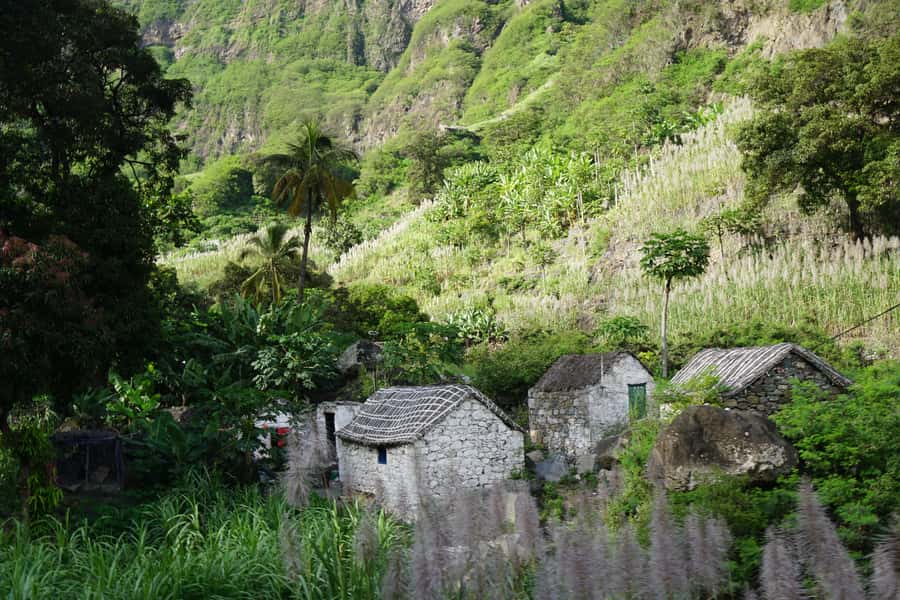
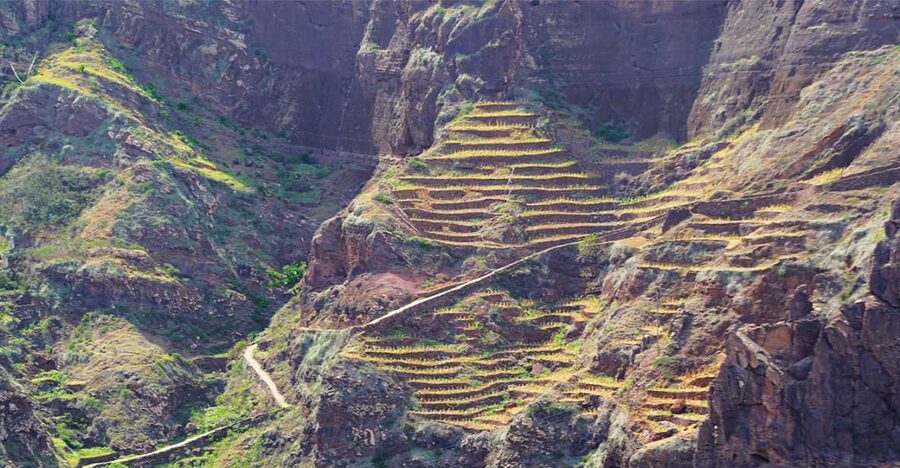
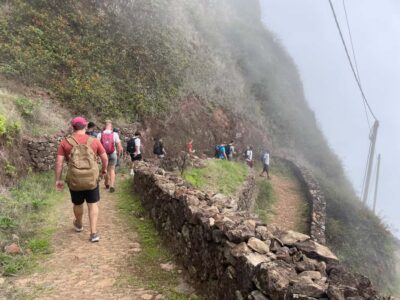
From Faja da Cima, the route heads along the slopes toward Rabo Curto. The setting changes as you walk. Instead of a polished attraction, you see cultivated terraces, small homes, and natural plant life shaped by the mountain climate.
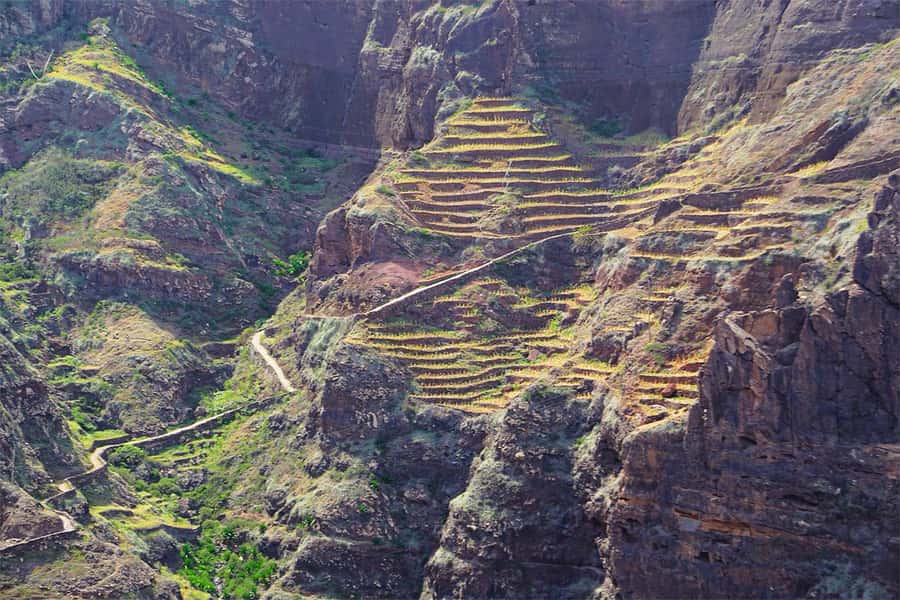
The agricultural terraces are one of the strongest visual features of the trip. They show how people use narrow sections of steep land for farming. Bring a camera, but do not let the picture-taking distract you from the path. The route includes hills and exposed sections, and you will want both hands free at times.
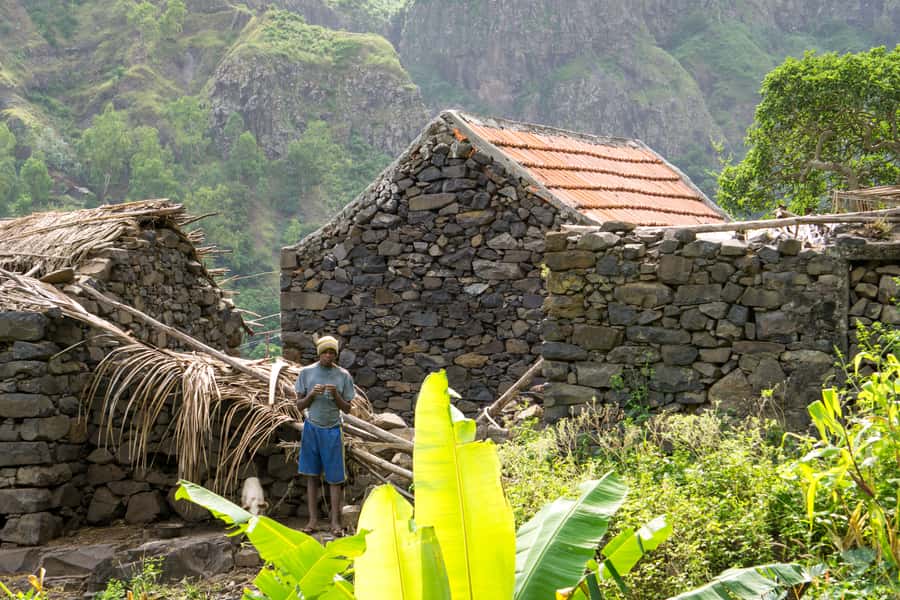
The walk continues toward Lombo de Pedra. Small villages are not treated as staged cultural displays. You pass through working countryside, where crops and homes sit close together. That gives the experience a more useful sense of Santo Antão than a simple viewpoint stop.
Your guide can help connect what you see with local life. One especially helpful tip is to ask questions as you go. A French-speaking participant praised the amount of information about the country, local plants, and wildlife, and noted that the guide was happy to answer questions. That is the kind of detail that can turn a scenic walk into a clearer picture of how the valley works.
If João is your guide, expect a sociable walk with time for conversation with local people. His name appears in particularly positive feedback, along with praise for the scenery and informal chats in the villages. Guide assignments can change, so book this for the route and format rather than for a guaranteed individual guide.
A few more things to do in Cape Verde worth a look
- From São Vicente: Santo Antão Day Trip with Local Guide
★ 4.7 · 101 reviews - Santo Antão Highlights: Day Trip by Car with Ferry from SV
★ 4.8 · 84 reviews - Santo Antão: Day Trip by Car or Trek
★ 5.0 · 72 reviews
Crossing the Hills into Ribeira de Torre
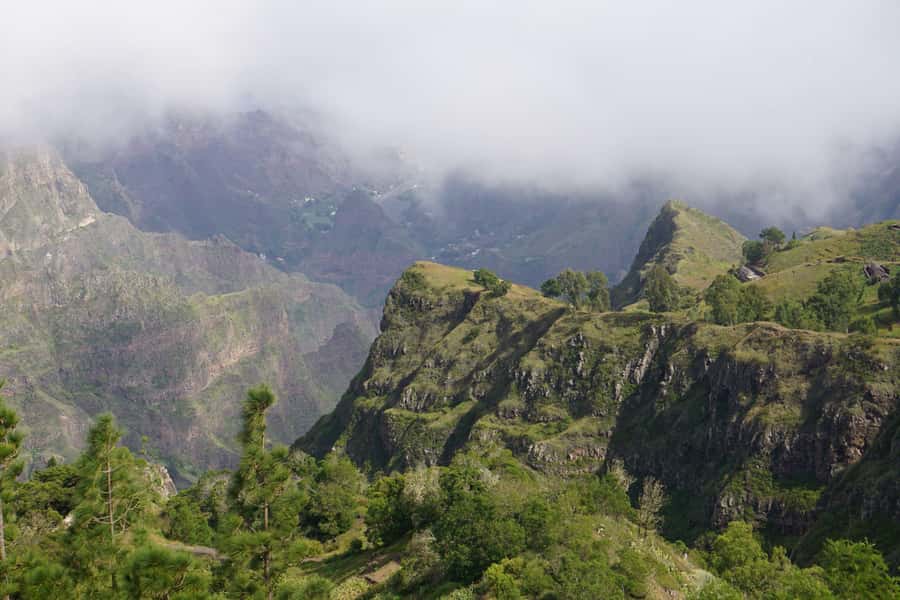
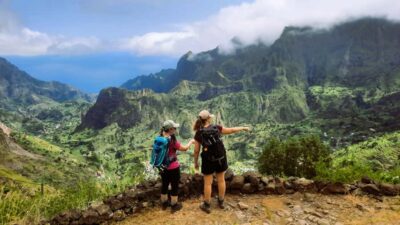
The route then crosses hills toward the Ribeira de Torre valley. This is where the scenery opens up. You see layers of cultivated land, mountain walls, unusual rock formations, and scattered houses set into the slopes.
The views are impressive, but the walking conditions deserve equal attention. You are on a mountain route, not a paved promenade. Wear hiking shoes with a firm sole, and expect uneven ground. Comfortable clothes, a hat, sunscreen, and plenty of water are sensible choices. The supplied information specifically warns people who are afraid of heights, so take that seriously.
The height issue is not just a minor note for nervous walkers. Sections of the route may feel exposed, and the slopes are part of the appeal. If you become uneasy around drop-offs, the wide views may not compensate for the discomfort. People with mobility impairments and wheelchair users should choose another activity, and children under 12 are not accepted.
For fit walkers who are comfortable on hills, the changing views are a major reason to choose this outing. You get more than one famous scene. The route keeps shifting between terraces, mountain folds, village paths, rock formations, and valley views.
Chu Chu and the Ribeira Grande View
Chu Chu, also called Xoxo, is a key point on the route. From the village, you get broad views across the Ribeira Grande valley. This is a good place to pause, catch your breath, and understand the route you have just covered.
The village setting also gives the walk a human scale. The valley is not just a wall of mountains. It contains homes, crops, paths, and local movement. That combination is what makes this excursion more rewarding than a single lookout reached by vehicle.
I would not rush this part. Ask your guide about the crops and homes you see, and take time to frame the terraces with the small houses in the foreground. The scenery is especially suited to photographs because the view includes several layers: nearby fields, distant slopes, and rock formations rising beyond them.
The route is not presented as a technical trek, but it is still a demanding outing for anyone unused to mountain walking. The four-hour hike may feel longer in heat or on steep sections. Your guide can explain the route and set the pace, but you should arrive ready to walk rather than expecting a gentle village tour.
Waterfall, Shade, and a Natural Pool
Near Chu Chu, the route passes close to a mountain waterfall. The waterfall is a welcome change from the open slopes, and it gives the outing one of its most memorable pauses.
You may also swim in a natural pool with local people. This is optional, so you can enjoy the stop without getting into the water. If you do swim, bring what you need for a comfortable change afterward, although food and drinks are not included and the tour information does not promise changing facilities.
The pool is best understood as part of the local setting, not a managed water park. Conditions can vary, and you should follow your guide’s advice. The attraction here is the simple contrast: a walk through dry mountain terrain followed by a refreshing pool beneath a waterfall.
Water is important throughout the day. Bring your own supply because drinks are not included. Sunscreen and a hat are also wise, even though some parts of the route may offer shade. A swimsuit is not listed among the required items, but it is useful if you want the option of swimming.
More walking routes in Cape Verde:
- Fogo Island: Pico do Fogo Volcano Summit Hike
★ 4.6 · 92 reviews - Beaches, Villages and Monte Verde (excludes city)
★ 4.9 · 87 reviews - Serra Malagueta: Principal Valley Hike & Lunch with Locals
★ 4.7 · 64 reviews - Santiago Island: Serra Malagueta & Tarrafal Beach Trek Tour
★ 4.8 · 61 reviews
The Descent Through Crops and Villages
After the waterfall and pool, the route heads down. The return section gives you a different view of the valley and brings you closer to banana and coffee plantations.
That change is worth noticing. You are not simply retracing the same route. The descent shows how crops occupy different parts of the valley, and your guide can explain what you are seeing as the vegetation changes.
Bananas, coffee, sugar cane, and fruit trees are not just decorative details. They help explain why the valley supports small farms despite its steep terrain. The agricultural terraces make more sense when you see the crops growing within them.
Downhill walking can be easier on your lungs but harder on knees and balance. Good footwear helps, especially if the surface is uneven. Poles are not listed as provided, so bring your own only if you normally use them and can manage them during the tour.
Grogue at the End of the Route
The final cultural stop is a local rum distillery producing grogue. Grogue is made from sugar cane, so the visit ties together several things you have seen during the walk: cane fields, small-scale farming, and local production.
This is a smart ending because it gives context to the crops rather than leaving them as scenery. You get to learn about a product associated with Cape Verde and see how farming connects with a local drink.
There is one important timing note. Rum production season runs from January 1 through May 31. If seeing active production is important to you, schedule the outing during those months. Outside that period, the distillery visit may still provide an introduction to grogue, but you should not assume that the production process will be running.
Food and drinks are not included in the $100 price. The grogue stop is a visit and learning opportunity, not a promise of a meal. Plan to eat beforehand or arrange food separately.
What the $100 Price Really Covers
At $100 per person, this is not the cheapest way to see a valley. It is also more than a basic transport service. The cost includes hotel pickup and drop-off in Ribeira Grande, the ride to a trailhead high above town, a four-hour guided nature hike, liability insurance, and a guide who speaks English, French, Portuguese, or Spanish.
The value improves if you are traveling without your own transport or if you want help understanding the farming and village life along the route. Private and small-group options are available, which can make the price easier to justify if you value a more personal pace.
The cost is less attractive if you only want a short walk, a viewpoint, or a waterfall photo. You are paying for a full six-hour outing with substantial walking and several connected parts. I would compare it with the cost and effort of arranging a vehicle, finding the trailhead, and locating a guide yourself. For many visitors, the included transport and local interpretation make the package practical.
The 4.9 rating from four posted ratings is encouraging, though the sample is small. The strongest praise focuses on João, friendly contact with local people, the scenery, and clear information about local flora and fauna. One shorter response simply called it a nice tour. That suggests a consistently positive experience, but not enough evidence to promise that every guide or every departure will feel identical.
Who Should Book This Walk
This outing suits you if you want to see Santo Antão on foot and are curious about ordinary rural life. It is especially good for people who enjoy combining scenery with questions about crops, villages, plants, and local products.
You should be comfortable walking for about four hours over hilly ground. You should also be fine with mountain heights and a route that may feel exposed in places. Children under 12, wheelchair users, and people with mobility impairments should not book it.
The trip works well for couples, friends, and small groups who want a guide-led day without being locked into a large coach schedule. The language choice is another advantage. English, French, Spanish, and Portuguese are offered, but confirm your preferred language when booking.
If swimming matters to you, remember that the natural pool is optional and conditions may affect the stop. If grogue production matters most, aim for January through May. These small details can make the difference between a good fit and a disappointing one.
Practical Details Before You Go
Wear hiking shoes, comfortable clothes, a hat, and sunscreen. Carry water, since food and drinks are not included. If you want to swim, pack suitable clothing and a dry change, but do not expect the activity to supply swim equipment.
Pickup is included from your accommodation in Ribeira Grande. Wait in the hotel lobby 10 minutes before the scheduled pickup time. The tour duration is six hours, and starting times depend on availability.
You can cancel up to 24 hours before the activity for a full refund, and reserve now while paying later. Those terms are useful if your Santo Antão plans may shift, though you should still check the selected departure details before confirming.
Should You Book the Ribeira de Torre Hike?
Book this tour if you want a substantial half-day walk through working countryside, with mountain views, a waterfall, an optional swim, and a grogue visit in one outing. The route offers more than a scenic ride because you move through villages and farming areas at walking speed.
Skip it if you dislike heights, need an accessible path, or prefer a short and easy excursion. For the right walker, the $100 price is fair because transport, guide service, insurance, and the four-hour hike are bundled together. Bring water, ask questions, and choose the production season if grogue-making is high on your list.
FAQ
How long does the Ribeira de Torre tour last?
The full activity lasts six hours. About four hours are devoted to the nature hike, with the remaining time used for transport and stops.
Where does the hike begin?
The hike begins at Faja da Cima, at an altitude of about 1,480 meters. Pickup is provided from accommodation in Ribeira Grande.
Is hotel pickup included?
Yes. Pickup and drop-off at your accommodation in Ribeira Grande are included. You should wait in the hotel lobby 10 minutes before pickup.
Which languages can the guide speak?
Guides are available in English, French, Portuguese, and Spanish.
Can I swim during the tour?
Yes, you have the option to swim in a natural pool near the waterfall. Swimming is optional.
Is food included?
No. Food and drinks are not included, so bring water and make separate plans for meals.
Is this tour suitable for children?
No. The activity is not suitable for children under 12 years old.
Can I visit the grogue distillery during production season?
The grogue production season runs from January 1 through May 31. The tour includes a visit to a local grogue distillery, but active production should be expected during that stated season.
More 1-Day Tours in Cape Verde
- Santiago: Landscapes, Street Art, and Markets Day Trip
★ 4.8 · 316 reviews - Sal island: Secrets of a Native Guide Day trip with Lunch
★ 4.8 · 139 reviews - Sal: Full-Day Trip Around the Island with Lunch
★ 4.3 · 117 reviews - Discover Santiago island in 1 day
★ 5.0 · 39 reviews
Just added in Cape Verde
- Sal Island: Private Shark Watching & Floating Experience★ 5.0 · 8 reviews
- Sal Island tour: Blue Eye, Salt Lake, Sharks w/ Local Guide★ 3.9 · 14 reviews
- Sal island: Guided Historical and Cultural Tour★ 4.4 · 3 reviews
- Sal Island in a Group – A Full Day Exploring the Highlights★ 5.0 · 3 reviews
- Sal Island: Pedra de Lume, Wellness and Relax Experience★ 4.0 · 18 reviews
- Sal Island Catamaran Cruise with All-inDrinks and Snacks★ 3.2 · 8 reviews
- Sal: Half-day tour around the island★ 4.7 · 4 reviews
- Sal Island: Catamaran cruises on Sal Island★ 3.7 · 3 reviews
Santo Antão Valley Hikes, compared.
Santo Antão Highlights: Day Trip by Car with Ferry from SV
Read our review →
Full-Day Island Tour in Santo Antão with Lunch Included
Read our review →
Cova–Paúl Valley Trek: Santo Antão Day Trip by Ferry
Read our review →Browse the lists this tour appears in