
Reviewed · GUIDED
Sal island: Guided Historical and Cultural Tour
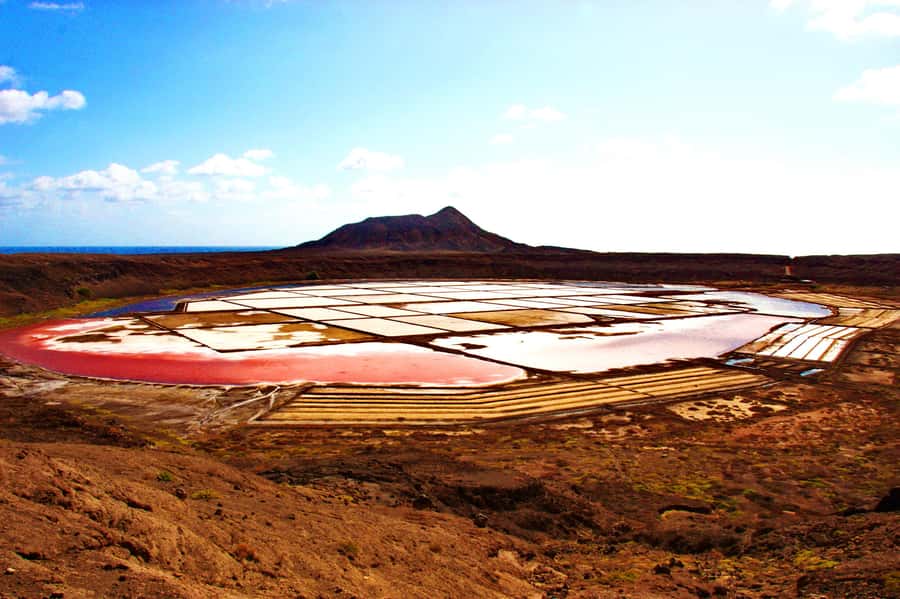
Sal’s most remarkable sight is a salt lake inside an old volcanic crater, where the ground shifts from turquoise to pinkish white as the light and salt change. This four-hour tour connects that strange natural setting with the human story of Sal, from Pedra de Lume’s early salt industry to Santa Maria’s fishing and tourist life.
I like the mix of scenery and everyday culture, especially the walk through Santa Maria and the stop devoted to local crafts, festivals, old utensils, and the island’s water supply. I also like that the tour includes hotel pickup, a local guide, transportation, and a snack instead of leaving you to piece these parts together yourself.
The main thing to consider is the walking. You may spend 30 to 50 minutes on foot in Santa Maria, and the tour is not suitable for wheelchair users. If mobility is a concern, book the private option and ask for a personalized route.
Key points to know before booking
- Pedra de Lume’s salt lake sits inside a volcanic caldera, a rare setting and the visual centerpiece of the tour.
- The tour links several sides of Sal, including Pedra de Lume, Espargos, the airport area, the Santa Maria salt pans, and central Santa Maria.
- Guide Chan receives especially strong praise for clear explanations, answering questions about both Cape Verdean history and present-day life.
- A 30 to 50 minute city walk gives the tour real substance, but comfortable shoes and a reasonable level of fitness matter.
- The Water Route stop adds useful local context, showing how people on a dry island dealt with the shortage of fresh water.
- The $94 price is easiest to justify for visitors who want a guided overview, hotel transport, several stops, and a local food break in one half-day outing.
Why this tour gives you a better first look at Sal
Sal is often sold through its beaches, wind sports, and sunny resort weather. Those are good reasons to visit, but they do not explain how the island developed or why places such as Santa Maria and Pedra de Lume matter.
This tour fills in that missing piece. You move from the island’s oldest settlement to its salt works, airport history, craft traditions, water supply, and modern tourist center. It is not a long museum visit or a specialist archaeology tour. Instead, it is a compact introduction that helps you read the island as you see it.
I would consider it particularly useful early in a stay. After four hours, you will have a clearer sense of where Sal’s communities are located and how tourism changed the island. You will also have seen several places that are inconvenient to connect by yourself without renting a car or arranging separate transport.
The tour costs $94 per person. That is not the cheapest way to see Sal, but the price includes pickup and drop-off, private transportation, a licensed local guide, insurance, a baby seat for children from birth to four years, drinks, and a snack. The value depends on how much structure you want. If you already have a rental car and prefer to explore slowly, you may find it high. If you want one organized outing with local explanation and no driving, it is easier to defend.
A few more things to do in Sal worth a look
- Cultural Tour on Santiago Island
★ 4.4 · 5 reviews
Pedra de Lume, Sal’s oldest settlement
After pickup, the drive to Pedra de Lume takes about 30 minutes by bus or coach. Pickup is available in Santa Maria, Espargos, Murdeira, at the airport, or at another agreed location, so the exact road time depends on where you begin.
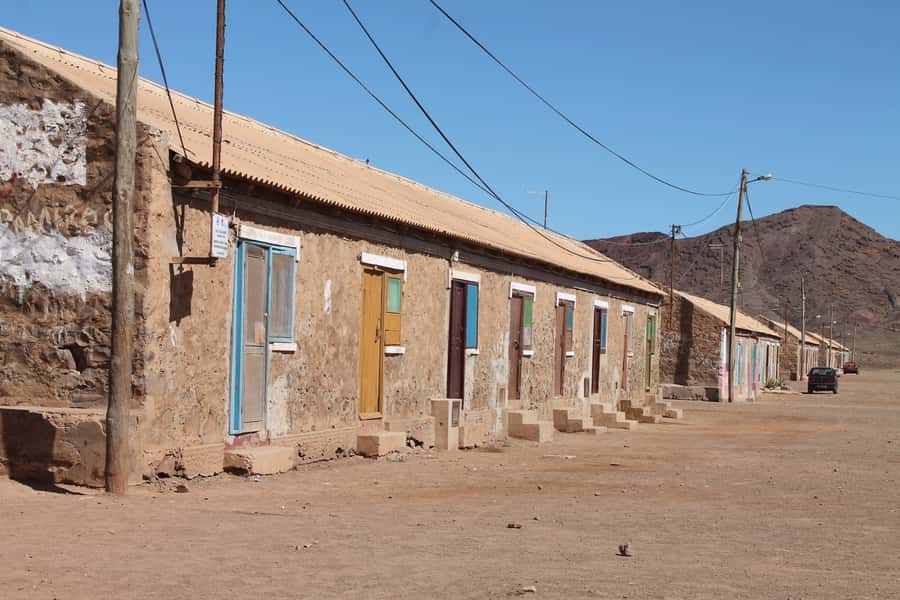
Pedra de Lume was founded in 1804 by Manuel António Martins and is described as the oldest settlement on Sal. The first walk here is short, about 25 minutes, but it gives you a chance to hear about the settlement, its attractions, and local life before reaching the salt pans.
I like this opening because it starts with people rather than only scenery. You are not simply driven to a viewpoint, photographed, and moved on. The guide can explain why this place developed and how salt helped shape the island’s early story.
Do not expect a large old town packed with monuments. The appeal is the setting and the explanation. Pedra de Lume is a small locality, and the experience works best if you pay attention to the guide’s account of its past rather than expecting a long list of grand buildings.
Inside the Pedra de Lume salt crater
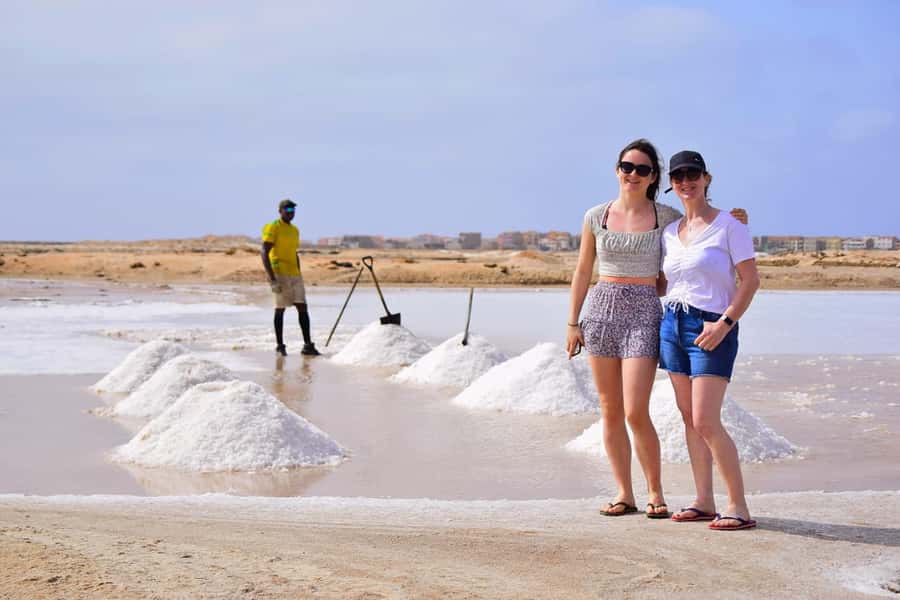
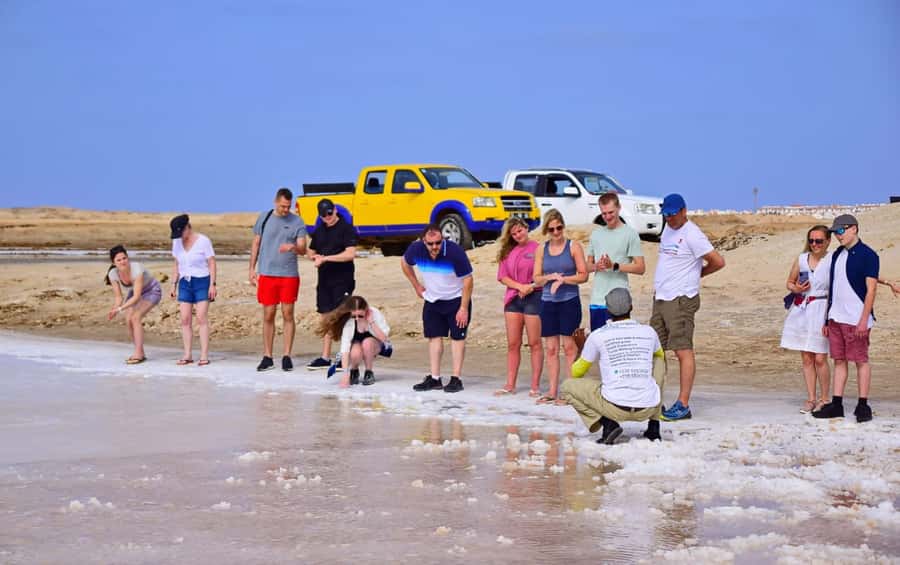
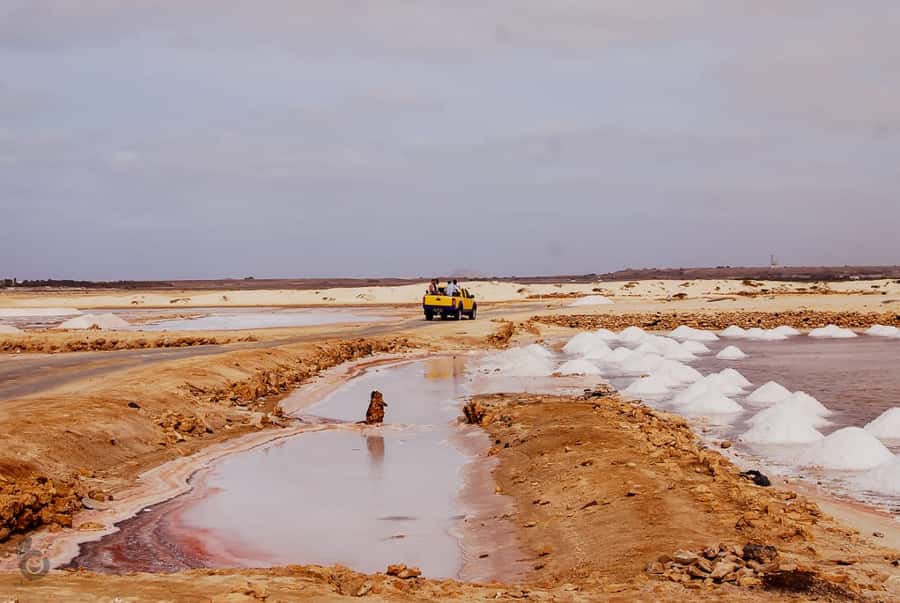
The salt pans are the tour’s visual centerpiece. They sit inside the caldera of a volcano, making this more unusual than a standard salt works beside the coast. The soil is coated with salt, and its colors can range from turquoise to pinkish white.
You have roughly 20 minutes for the guided visit, photographs, sightseeing, and walking. That is enough for a close look and an explanation, but it is not a slow half-day visit. Keep your camera ready, and wear shoes you can walk in comfortably.
The site is a protected area with national natural, historical, and cultural heritage status. It also appears on Cape Verde’s indicative list for UNESCO. Those designations do not turn the stop into a formal museum, but they help explain why this odd, fragile place matters beyond its appearance.
The salt crater can be bright and exposed. Bring sunglasses, a hat, sunscreen, and water. The tour information does not say that swimming or floating is included, so you should treat this as a sightseeing and walking stop rather than a bathing activity.
The airport and Espargos connection
The route then passes Amílcar Cabral International Airport. You will not have a long airport visit, but the guide uses the drive to explain the story of aviation in Cape Verde.
That may sound like a small detail, but air travel is central to Sal’s modern development. The airport connects the island to its visitors and helps explain why Sal became Cape Verde’s most touristic island. This part of the route gives you context for the hotels, resorts, and international visitors you see later.
The tour continues toward Espargos, where you have a photo stop, guided explanation, and a visit connected with arts and crafts. Espargos is useful as a counterpoint to Santa Maria. Santa Maria is the better-known beach and resort center, while Espargos helps you see another side of daily island life.
Craft shopping is included in the route, but personal purchases are not included in the price. If you want to buy something, carry only a small amount of spending money and keep your expectations sensible. This is a short cultural stop, not a dedicated shopping excursion.
Same island, a different sort of day:
- Sal: Island Experience Tour with a Certified Local Guide
★ 4.8 · 3,249 reviews - Sal: All-Inclusive Salt Lake, Blue Eye and Shark Bay Tour
★ 4.7 · 2,033 reviews - Experience on Sal Island with native and certified guide (including sharks)
★ 5.0 · 1,166 reviews - From Sal Island: Blu eye, Salt lake, Lemon Sharks & Palmeira
★ 4.6 · 1,003 reviews
Santa Maria’s streets, salt pans, and pier
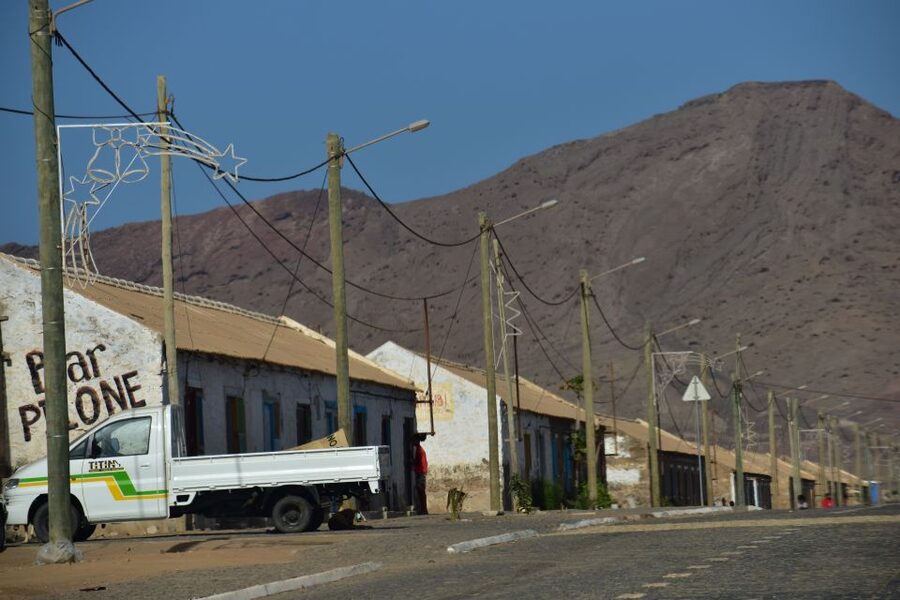
The Santa Maria portion brings the tour back to the island’s best-known city. You will walk through the main streets, hear about the city’s history, look at local handicrafts, and learn how to identify them.
The city walk takes about 30 to 50 minutes, according to the tour information. Another listed stop in Santa Maria lasts about 15 minutes and includes photographs, guided touring, shopping, and scenic views. The route then reaches Santa Maria Pier for another visit of around 20 minutes.
This is where the tour feels most connected to present-day Sal. You can see how the old city, fishing traditions, crafts, salt production, and modern tourism overlap. The pier also gives you a natural place to pause and take in the sea views before the return drive.
You will be walking on city streets, so comfortable shoes matter more here than fashionable footwear. If you have a mobility issue, tell the operator before booking. A private tour can be adjusted, but the group version requires moderate fitness and is not suitable for wheelchair users.
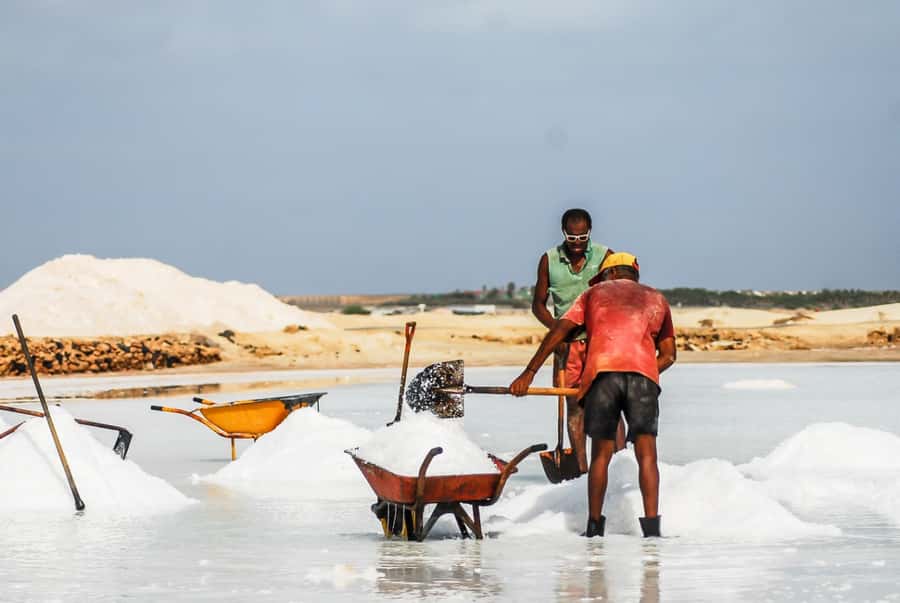
The Santa Maria salt pans are another protected area. They do not replace Pedra de Lume as the main natural attraction, but they reinforce the importance of salt to Sal’s identity. Seeing both sites helps you understand that salt is not just a colorful photo subject. It is part of the island’s economic and cultural story.
The Water Route and local Cape Verdean culture
Near the end, the tour turns to the Water Route. This section explains how people on Sal dealt with the lack of fresh water, an especially useful subject on a dry island where water cannot be taken for granted.
You also learn about cultural festivals and see accessories used during them, along with replicas of older household utensils. These details make the experience more personal. A salt crater tells you about geology and industry. Old tools, festival items, and water systems tell you how people organized daily life.
I like this part because it goes beyond a quick list of landmarks. You are given a way to think about Cape Verdean culture through practical needs: water, work, celebrations, and local craft. The material is presented during a compact tour, so do not expect a full museum collection or a long workshop. Its value is in the explanation and in connecting small objects to island life.
A snack with sea views
The final stop is a restaurant with sea views, where you receive a snack featuring local flavors, along with a refreshing local juice and an aperitif. Extra food and drink are not included, so you should bring water and budget for anything else you may want.
This is a pleasant way to finish a tour with several driving and walking sections. It gives you time to sit down and process what you have seen instead of ending abruptly at the last photo stop.
The snack is best viewed as a taste of local food, not a full meal. If you are hungry after four hours, plan for additional food on your own. The included refreshment adds value, but it should not be the reason you book the tour.
The guide makes the difference
The guide is important here because many of the stops need explanation. A salt pan can look like a colorful patch of ground if nobody explains its role. An airport can seem like a simple pass-by unless someone connects it to Cape Verde’s airline story and Sal’s tourist growth.
Guide Chan receives particularly strong praise for answering questions and explaining life in Cape Verde both in the past and today. If Chan leads your group, you can expect a guide who is comfortable moving between historical facts and everyday cultural details. The tour also operates in English, French, Spanish, and Portuguese.
The experience is available as a private group, which is worth considering if you want to ask many questions, travel with children, or need adjustments for mobility. The standard group format is a better fit if you want a fixed four-hour introduction and do not need a customized pace.
What to bring and what to leave behind
Pack light. Large bags and luggage are not allowed, and you will have an easier time walking with only the basics.
Bring:
- Comfortable shoes
- Sunglasses
- A hat
- Sunscreen
- Water
- Comfortable clothing
The sun and salt can make the outdoor stops feel more demanding than the four-hour duration suggests. Water is especially important because the tour includes walking through Pedra de Lume and Santa Maria, plus time outdoors at the salt pans.
Hotel pickup and drop-off are included from Santa Maria, Espargos, and Murdeira. Airport pickup is also possible, along with another location agreed in advance. This makes the tour useful on a travel day, but do not bring your luggage because large bags are not permitted.
You can cancel up to 24 hours before the start for a full refund, and the reserve-now, pay-later option keeps your plans flexible. Starting times depend on availability, so check the schedule before you book.
Who should book this Sal tour?
I would choose this tour if you want a broad introduction to Sal rather than a beach-only day. It suits you if you enjoy local stories, short walks, scenic stops, crafts, and practical cultural details. It is also a good choice if you do not want to drive or arrange several separate visits.
Families may appreciate the included baby seat for children from zero to four years, along with pickup and drop-off. Still, parents should remember that the tour includes outdoor walking, sun, and several transitions between stops.
History-minded visitors will get the most from the explanations of Pedra de Lume, salt production, aviation, Santa Maria, and the island’s water supply. You do not need specialist knowledge. A general interest in how places developed is enough.
I would hesitate if you want a slow, unstructured day or a long stay at each attraction. The tour covers several locations in four hours, so some stops are brief. I would also choose the private option if walking is difficult or if your group needs a flexible pace.
Should you book this four-hour Sal experience?
Book it if you want to understand more than Sal’s beaches. The salt crater at Pedra de Lume is the headline sight, but the real value comes from linking it with Santa Maria, Espargos, the airport, local crafts, water history, festivals, and Cape Verdean food.
At $94 per person, it is a midrange guided outing rather than a bargain sightseeing bus. The price makes sense when you count the transport, guide, insurance, pickup, several stops, and included snack. It is less compelling for independent visitors with their own car who prefer to spend a long time at one place.
My practical choice would be to book this early in your stay, bring light clothing and sun protection, and ask about the guide and walking pace before confirming. If Chan is available, his ability to answer questions about Cape Verdean life adds real value. If you want a concise, culturally focused introduction to Sal, this tour earns its place in your plans.
FAQ
How long does the Sal historical and cultural tour last?
The tour lasts four hours. It includes transportation between stops, visits to Pedra de Lume and Santa Maria, guided walks, cultural explanations, and a local snack with drinks.
Where can pickup and drop-off take place?
Pickup and drop-off are available in Santa Maria, Espargos, and Murdeira. Pickup can also take place at Amílcar Cabral International Airport or another location agreed with the customer.
Which languages are available?
The tour is offered in English, French, Spanish, and Portuguese.
Is transportation included?
Yes. Hotel pickup and drop-off, private transportation, a licensed local guide, and liability insurance are included. A baby seat is also included for children from zero to four years.
What should I bring?
Bring comfortable shoes, sunglasses, a hat, sunscreen, water, and comfortable clothes. Large bags and luggage are not allowed.
Is the tour suitable for wheelchair users?
No. The group tour includes a 30 to 50 minute walk through the city and is not suitable for wheelchair users. The private tour can be personalized for people with mobility issues.
Just added in Sal
- Sal Island: Private Shark Watching & Floating Experience★ 5.0 · 8 reviews
- Sal Island tour: Blue Eye, Salt Lake, Sharks w/ Local Guide★ 3.9 · 14 reviews
- Sal Island in a Group – A Full Day Exploring the Highlights★ 5.0 · 3 reviews
- Sal Island: Pedra de Lume, Wellness and Relax Experience★ 4.0 · 18 reviews
- Sal: Half-day tour around the island★ 4.7 · 4 reviews
- Sal Island: Catamaran cruises on Sal Island★ 3.7 · 3 reviews
- Sal, Cape Verde: Half day on Cuba Libre sailing yacht★ 4.3 · 27 reviews
- Sal Island Exclusive – Full Day Customized Just for You★ 3.8 · 9 reviews
Guided, compared.
Island Experience Tour with a Certified Local Guide
Read our review →
Electric Beach Bike – Guided Tour in Sal Island
Read our review →

Island tour with German-speaking guide for cruise guests
Read our review →Browse the lists this tour appears in